





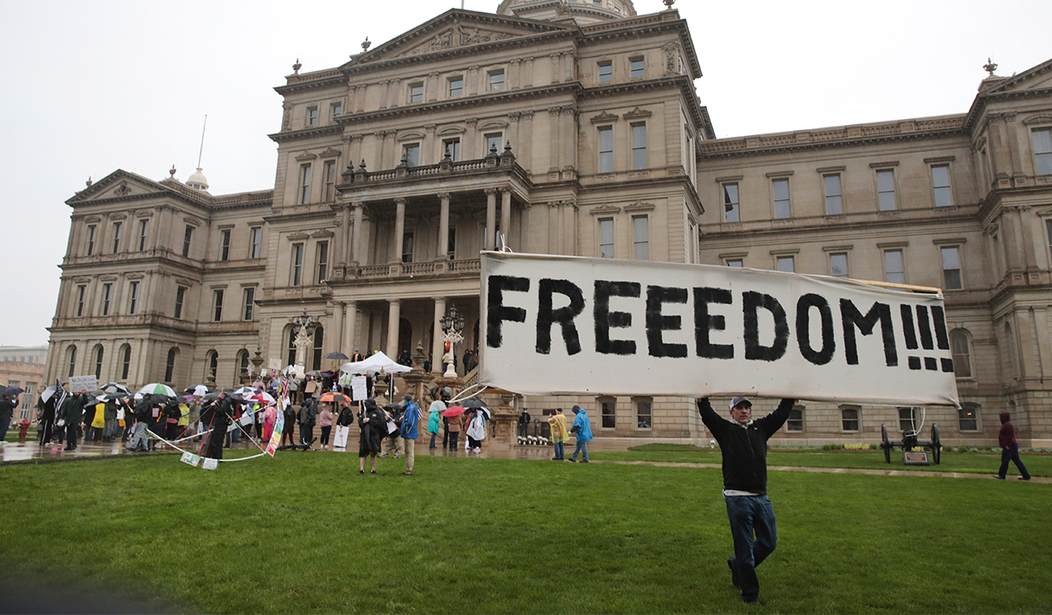
Critics of the lockdowns have been warning about the negative consequences of shutting down the economy and locking people inside their homes. While the media presents constant updates about the death toll and number of coronavirus cases, rarely is the damage caused by the lockdowns presented for the public to see. One has to search for it, but it's there.
For example, a new study analyzing income and poverty amid the coronavirus pandemic found that nearly 8 million Americans fell into poverty over the Summer. According to James X. Sullivan, one of the study's authors and a professor at Notre Dame, it's the largest jump in poverty during a single year since the government first began tracking poverty 60 years ago. It's also close to double the second-largest rise in poverty, the oil crisis of 1979 and 1980.
(Via The Hill)
Early in the pandemic, the authors said, "the stimulus payments and expanded unemployment insurance changed what would have been an increase in poverty into a reduction." But the estimates have been rising since June this year, with at least 11.7 percent of Americans living in poverty this November. Another thirty percent of Americans are living off of twice the federal poverty line, which is roughly $2,126 per month for one person and $4,366 for a family of 4.
Using data from the monthly Current Population Survey, the researchers have launched the COVID-19 Poverty Dashboard, which estimates the percentage of Americans below the federal poverty line, which is $12,760 for individuals and $26,200 for a family of 4, and multiples of the poverty line each month. But the study goes beyond income.
“The profound disruptions from the pandemic such as the closures of schools, stores, churches and other facilities, the uncertainty about future income streams, concerns about the health of family and friends, and other disruption could lead to these increases in hardship,” the authors said in the study.
Not sure we needed a study to know that closing down the economy makes people poorer, but there it is. Even the WHO has recognized that lockdowns hurt poor people and should largely be avoided.
"Lockdowns just have one consequence that you must never ever belittle, and that is making poor people an awful lot poorer," said Dr. Nabarro, the WHO's Special Envoy on Covid-19, in October.
Perhaps at the beginning of the pandemic, over fears that hospitals would be inundated with coronavirus patients, a brief lockdown was prudent to give the medical community time to prepare. But, in the words of Dr. Nabarro, "by and large, we'd rather not do it."
Globally, it's estimated the coronavirus pandemic will push as many as 150 million people into poverty by the year 2021, according to estimates by the World Bank.
Poverty is one thing. Crushed dreams, despair, substance abuse, suicides, missed checkups, missed cancer screenings, deteriorating mental health, the loss of education, and rising crime rates are among the many others. At some point, the lockdown cure is worse than the disease.
Join the Conversation
VIP members get the ability to comment on articles.