





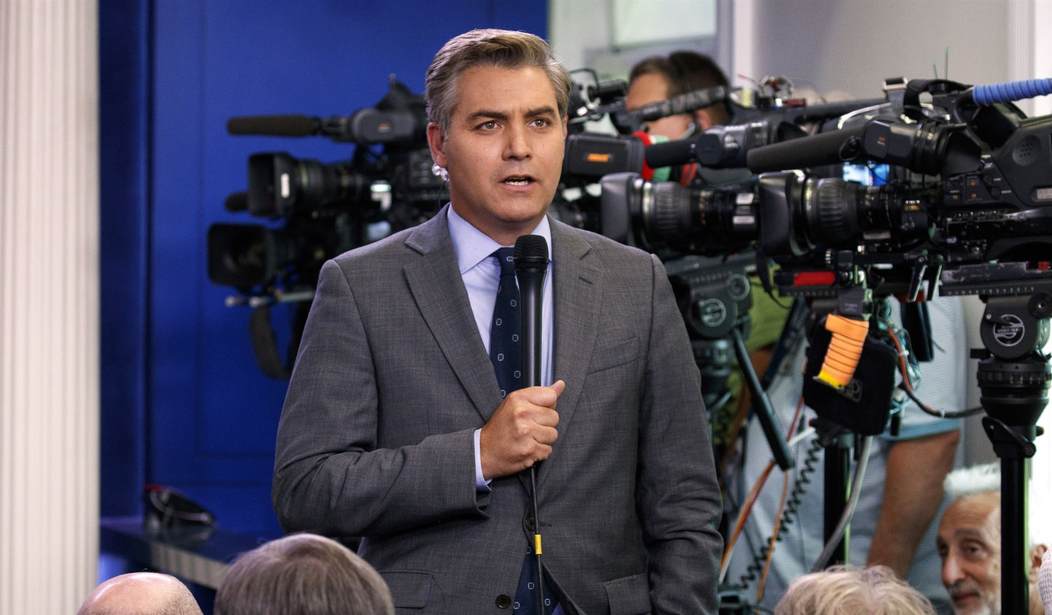
Everyone's favorite journalist, CNN's Jim Acosta, on Sunday said journalists inside the Washington, D.C. Beltway are suffering from "Post-Trump Stress Disorder," a clear attempt to define what PTSD stands for.
"I'd love to hear from you both about how D.C. journalists are adjusting to the Biden era," Stelter said. "Jim, this is your first week anchoring here on Saturday and Sunday afternoons. Do you feel like you're rundown, like your lineup is really different than it would have been in the Trump years?"
"When you asked me if I was run down I thought you were asking me how I felt during the Trump era," Acosta said as Stelter laughed. "I think that's we're all dealing with a Post-Trump Stress Disorder."
According to Acosta, President Donald Trump doesn't always have to be in the news in order for CNN and other outlets to cover the news.
"It doesn't have to have Donald Trump in the headlines for us to continue to exist, especially when he's putting out these statements," Acosta said. "You know, when he was in office he was doing things that were beneath the office of the presidency. Now he's doing things beneath the office of the post-presidency. He's not going to change but we need to change with the times."
Stelter chimed in, saying the "Big Lie" is still out there, a reference that Democrats and talking heads make when talking about Trump's repeated claims that the 2020 election was "rigged" and "stolen" from him.
NEW: CNN's Brian Stelter and Jim Acosta discuss their struggles with "post-Trump stress disorder," and admit that journalists are having a hard time finding interesting content with Trump no longer in the White Housepic.twitter.com/BHwlYWalPY
— Breaking911 (@Breaking911) April 4, 2021
Even though people like Jim Acosta and Brian Stelter hate to admit it, they miss Trump. The former president was unpredictable. He tweeted his reactions to things. He was always visible. He was always making his opinion known. Americans were interested in knowing what Trump was saying, whether they loved or hated him. That translated into ratings across the board. Now that Trump is gone and he's silenced on social media, Americans want to know what the former president thinks.
The reason D.C. journalists are suffering from "Post-Trump Stress Disorder" is because Trump lived rent-free in their head for the last 4.5 years. They were so focused on doing everything they could to beat him, to paint him to be an evil man that they don't know how to function with him out of the picture. They're no longer relevant and they can't stick to things like "Orange Man Bad" as justification for why they oppose policies, especially ones that were proving to be effective, like the Remain in Mexico policy.

Join the Conversation
VIP members get the ability to comment on articles.