





Two court decisions issued on Thursday have extended the legal protections for religious charities and businesses.
On the lower level, a district judge from North Dakota ruled Thursday that federal agencies cannot require healthcare providers to fund gender-transition procedures if doing so would violate their religious values and beliefs.
U.S. District Judge Peter Welte, the chief federal judge in North Dakota, presided over the case. The Catholic Benefits Association, an order of Catholic nuns and two Catholic care facilities brought the case before the court in late 2023.
During President Biden's administration in 2024, the U.S. Department of Health and Human Services (HHS) interpreted the Affordable Care Act’s Title IX prohibition of discrimination “on the basis of sex" to include gender identity. Under this interpretation, health care providers who were not willing to provide so-called "gender-affirming care" were guilty of discrimination and could lose all federal funding.
Though he ruled against the requirement of "gender-affirming care," Welte dismissed the motion for summary judgment because of the abortion and fertility treatment issues also listed by the plaintiff. The judge, who considered each of the issues separately, said the plaintiffs' arguments for these issues were “underdeveloped".
In his judgement, Welte also barred the U.S. Equal Employment Opportunity Commission from telling employers that failing to provide health plans that cover "gender-affirming care" for their workers would constitute discrimination and result in potential lawsuits.
“The case-by-case exemption procedure leaves religious organizations unable to predict their legal exposure without furthering any compelling antidiscrimination interests,” wrote Welte.
Shortly after taking office in 2025, President Donald Trump signed an executive order declaring that the federal government would not recognize gender identity, only male and female biological sex. Welte's ruling is the latest interpretation as the courts are tasked with balancing the religious rights of employers and the personal rights of their employees in new ways.
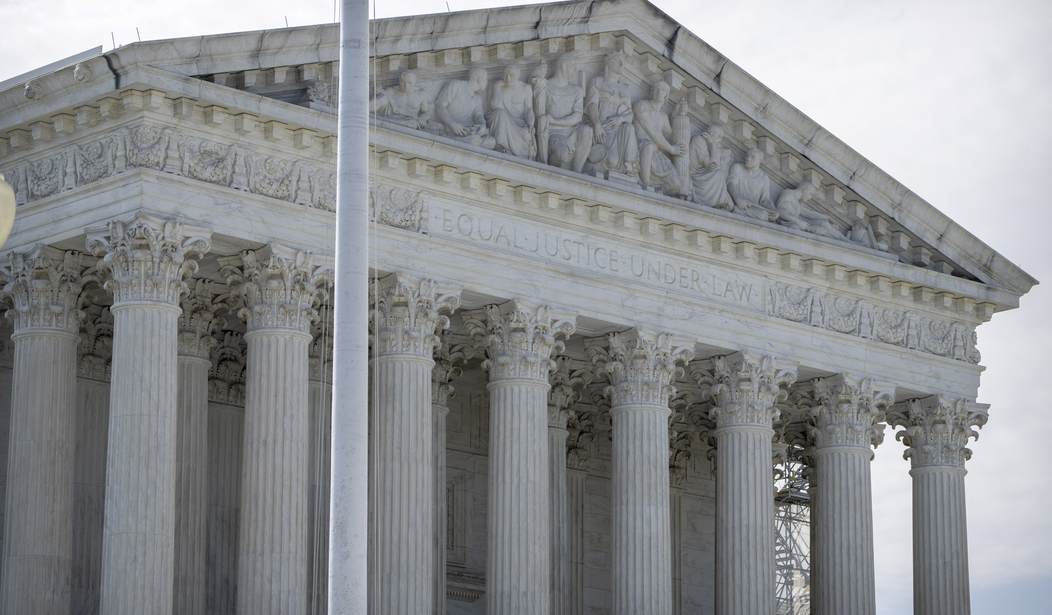
On Thursday, the Supreme Court of the United States (SCOTUS) also ruled unanimously that a Catholic Charities chapter in Wisconsin was improperly discriminated against based on religion when it was denied a tax exemption.
The Catholic Charity was previously denied the tax exemption which applied to nonprofits operated primarily for religious purposes. The exemption was denied by the Wisconsin Supreme Court on the grounds that the charity did not only serve Catholics and that the charity did not proselytize as a direct part of its ministry.
The Supreme Court's decision addressed the issue of the tax exemption being dependent on subjective standards outlined by the federal government.
Simply put, petitioners could qualify for the exemption while providing their current charitable services if they engaged in proselytization or limited their services to fellow Catholics. Petitioners' Catholic faith, however, bars them from satisfying those criteria. Catholic teaching, petitioners say, forbids 'misus[ing] works of charity for purposes of proselytism.'"
The unanimous decision of the court was written by Justice Sonia Sotomayor.
"It is fundamental to our constitutional order that the government maintain neutrality between religion and religion," wrote Sotomayor. "There may be hard calls to make in policing that rule, but this is not one."



Join the Conversation
VIP members get the ability to comment on articles.