





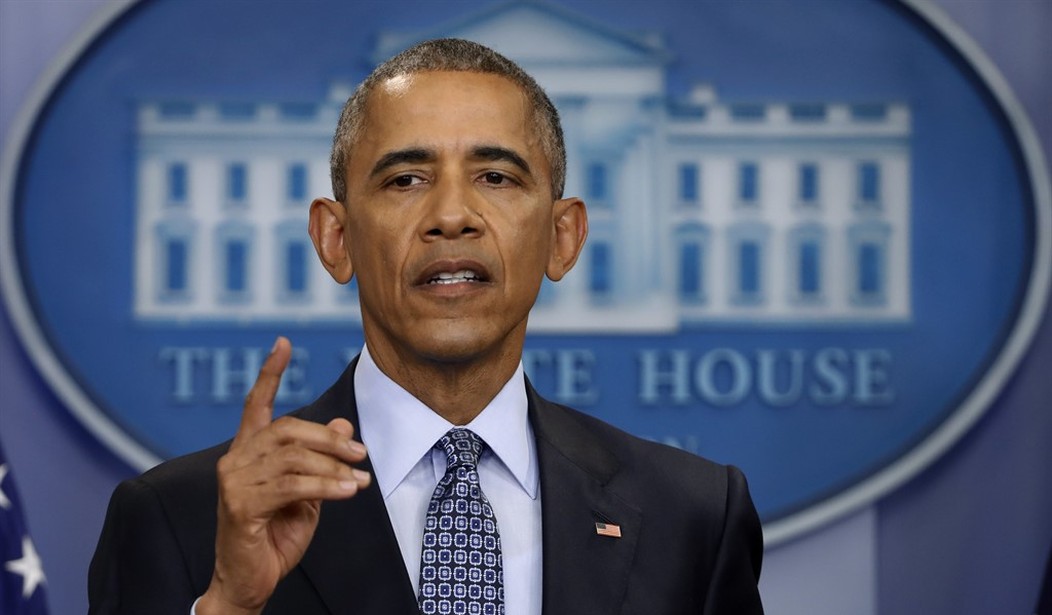
Republicans, including then-candidate Donald Trump, long criticized Obama administration officials for shying away from using the term “radical Islamic extremism” to describe, well, radical Islamic extremism.
“These are radical Islamic terrorists, and she won’t even mention the word, and nor will President Obama,” Trump said of Hillary Clinton at a presidential debate last year. “Now, to solve a problem, you have to be able to state what the problem is, or at least say the name.”
Following through on that pledge, the Trump administration even changed the U.S. government program "Countering Violent Extremism" to focus exclusively on Islamist extremism, thus changing the name to "Countering Islamic Extremism" or "Countering Radical Islamic Extremism."
Now, a former State Department official has explained why, exactly, the Obama administration refused to utter the phrase.
Writing in a New York Times op-ed, Richard Stengal said the reason was a “practical one” that had nothing to do with officials being “too timid or too politically correct to say it.”
“To defeat radical Islamic extremism, we needed our Islamic allies — the Jordanians, the Emiratis, the Egyptians, the Saudis — and they believed that term unfairly vilified a whole religion,” explained Stengal, the former under secretary of state for public diplomacy and public affairs.
“They also told us that they did not consider the Islamic State to be Islamic, and its grotesque violence against Muslims proved it,” he added.
Recommended
Stengal went on to argue that whatever the Trump administration wants to call it, they should stay the course with the previous administration’s strategy, which he says is working, noting that ISIS as a military force “is on the ropes in Iraq and Syria.”
And, at the very least, he said, Trump administration officials ought to reassure our Arab allies that references to “radical Islam” and “Islamic extremism” is only directed to the very small percentage of the world’s Muslim population who have embraced violence.
Still, however, Stengal seemed apprehensive about the new direction the administration is taking.
“It is not up to us to say what is Islamic and what is not. Only the voices of mainstream Muslims and independent clerics in Muslim countries can create a narrative that refutes the Islamic State’s and offers a more positive alternative,” he said, adding that doing so may help the group’s recruiting.







Join the conversation as a VIP Member