




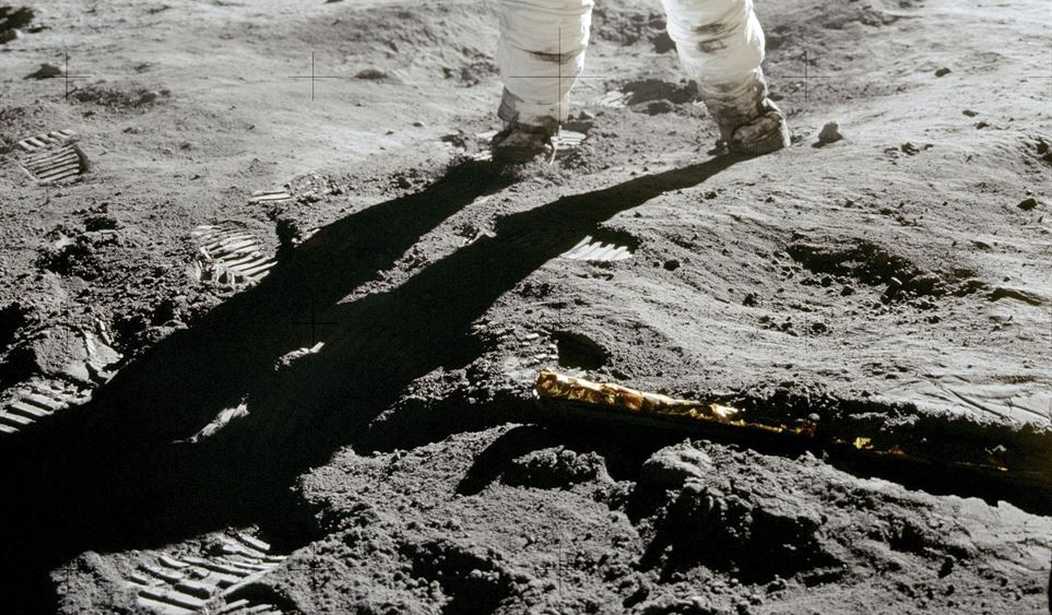
It's one small step for man, but apparently a giant leap too far for many Britons. According to a new poll of UK adults released in conjunction with the 50th anniversary of NASA's historic Apollo Eleven mission, a plurality of the British public said they would not take a trip to the moon, even if their safe return to earth were guaranteed. These results are interesting -- especially the response gaps that emerged between age groups and sexes. Take a look:
Would you want to go to the moon if your safe return could be guaranteed?
— YouGov (@YouGov) July 20, 2019
No I would not - 48%
Yes I would - 43%#Apollo50th #MoonLanding50 https://t.co/E49y6vXC79 pic.twitter.com/30CCwjSVD0
A solid majority of British men said they would embrace the journey, with a similarly-sized majority of women saying the opposite. Slim majorities of the three youngest age cohorts (respondents aged 18 to 44) were inclined to take the plunge, whereas adults aged 55 and older resounding rejected the idea. In total, the overall breakdown was (43/48) against seizing the hypothetical chance to take the adventure of a lifetime into space. Why would so many people say 'thanks but no thanks' to follow in the footsteps of Neil Armstrong and Buzz Aldrin? Here's a breakdown of the top reasons cited:
“Not interested”?? https://t.co/W7TRzoV6LL
— Guy Benson (@guypbenson) July 20, 2019
The only listed option that resonates with me is rejecting the 'guarantee.' That works in a hypothetical, but in reality, everyone understands there would be a significant amount of risk involved. Look no further than the fatal Challenger and Columbia disasters as modern-era evidence of that reality. So the real life choice would be much tougher (for me, at least) than answering the question as posed. I'd likely be more open to it if a consistent and established pattern of safety across many recreational roundtrips to the moon had been established -- although that would also potentially diminish a separate appealing element of the whole proposition: Doing something that almost no human beings had ever done before. If the novelty and uniqueness of the trip were significantly eroded, to the point that it was demonstrably safe and "normal" to make the once-impossible-seeming trip, would a moon excursion be worth all the time and money?
Recommended
Another fun wrinkle to think about: Would the poll results on this question among Americans be discernibly different? Part of me suspects that, as a whole, Americans would be a bit more adventurous, especially considering our national legacy with the space program. People from the US and UK, despite sharing a common language and a similar culture, are still quite different. Even to the point of understanding certain words differently -- including, apparently, "quite:"
Wait, WHAT? Americans, can you confirm? pic.twitter.com/JPwEHRwkS8
— Holly Brockwell (@holly) July 20, 2019
I'll leave you with this extraordinary, terrifying, and exhilarating presentation by Armstrong, prior to his death:








Join the conversation as a VIP Member