






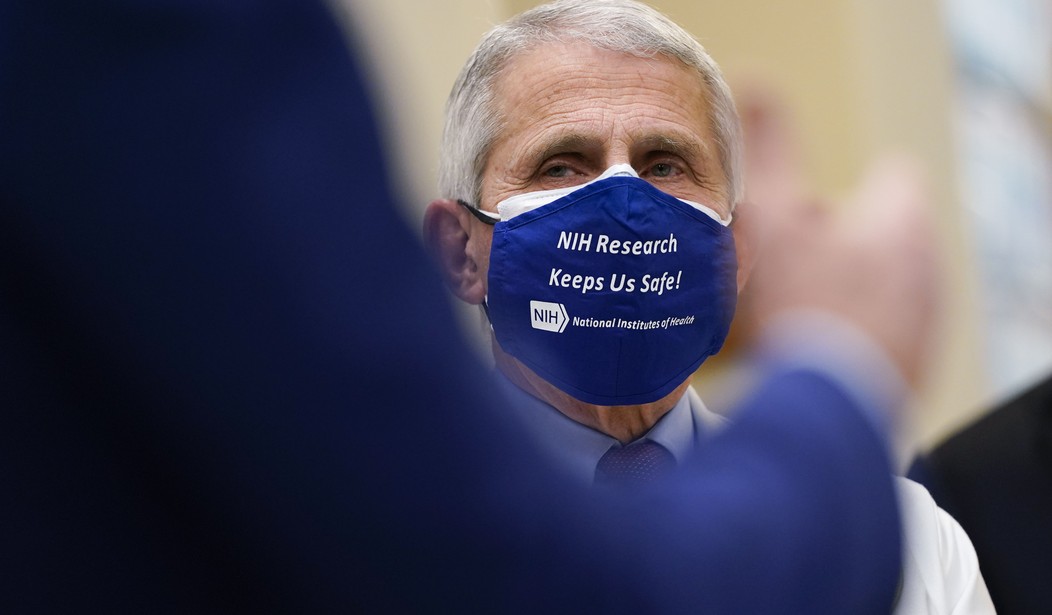
New findings reported Tuesday in a University of Louisville study challenge what has been the prevailing belief that mask mandates are necessary to slow the spread of the Wuhan coronavirus. The study notes that "80% of US states mandated masks during the COVID-19 pandemic" and while "mandates induced greater mask compliance, [they] did not predict lower growth rates when community spread was low (minima) or high (maxima)." Among other things, the study—conducted using data from the CDC covering multiple seasons—reports that "mask mandates and use are not associated with lower SARS-CoV-2 spread among US states."
The first ecological study of state mask mandates and use to include winter data:
— Phil Kerpen (@kerpen) May 25, 2021
"Case growth was independent of mandates at low and high rates of community spread, and mask use did not predict case growth during the Summer or Fall-Winter waves."https://t.co/FAyieg02tJ pic.twitter.com/FVaDF112Q0
"Our findings do not support the hypothesis that SARS-CoV-2 transmission rates decrease with greater public mask use," notes the U of L report. Researchers stated that "masks may promote social cohesion as rallying symbols during a pandemic, but risk compensation can also occur" before listing some observed risks that accompany mask wearing:
Prolonged mask use (>4 hours per day) promotes facial alkalinization and inadvertently encourages dehydration, which in turn can enhance barrier breakdown and bacterial infection risk. British clinicians have reported masks to increase headaches and sweating and decrease cognitive precision. Survey bias notwithstanding, these sequelae are associated with medical errors. By obscuring nonverbal communication, masks interfere with social learning in children. Likewise, masks can distort verbal speech and remove visual cues to the detriment of individuals with hearing loss; clear face-shields improve visual integration, but there is a corresponding loss of sound quality.
The study also noted that the mandates put in place by many states in line with CDC guidance at the time were "poor predictors of COVID-19 spread," according to the research:
In summary, mask mandates and use were poor predictors of COVID-19 spread in US states. Case growth was independent of mandates at low and high rates of community spread, and mask use did not predict case growth during the Summer or Fall-Winter waves. Strengths of our study include using two mask metrics to evaluate association with COVID-19 growth rates; measuring normalized case growth in mandate and non-mandate states at comparable times to quantify the likely effect of mandates; and deconvolving the effect of mask use by examining case growth in states with variable mask use.
Current guidance from the CDC—last updated April 19, 2021—states that masks "are a simple barrier to help prevent your respiratory droplets from reaching others" and "studies show that masks reduce the spray of droplets when worn over the nose and mouth."
Recently, the CDC updated its guidance to allow for fully vaccinated individuals to ditch their masks, a revision that has led to several states and companies updating their mask mandates to allow the same.



Join the Conversation
VIP members get the ability to comment on articles.