





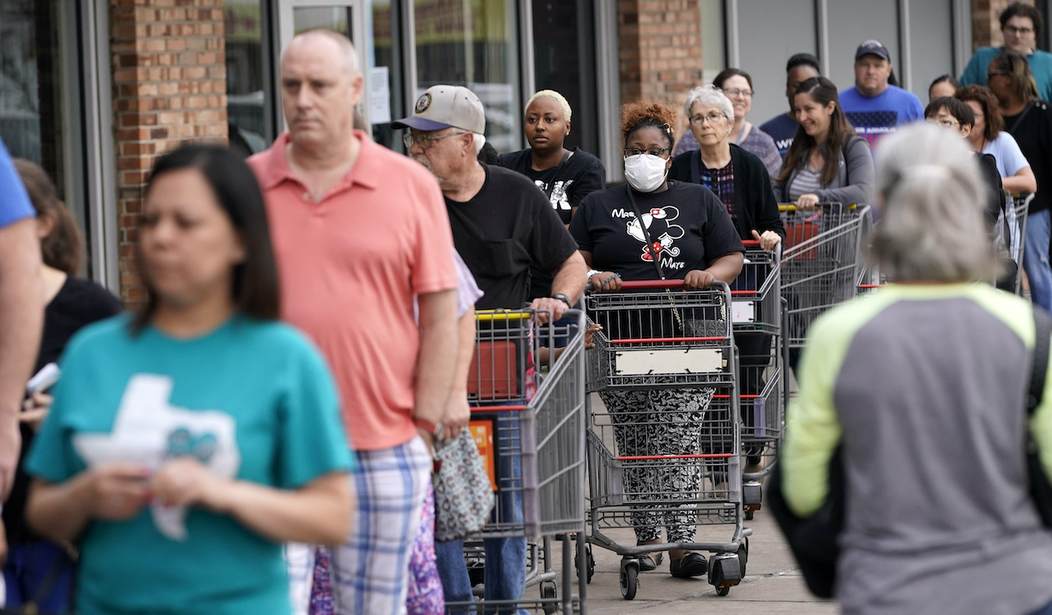
Americans might be facing three more years of high food prices as inflation continues to sky rocket and as the Biden administration continues to sit back and watch.
According to state Department special envoy Cary Fowler, the crisis the U.S. is facing is not going to go away in just a few weeks or months.
“This is probably a three-year crisis to work through all of these very serious problems, all of which the United States is addressing,” Fowler said, adding “We're dealing with a number of issues that are having an impact on inflation, that are not issues that can be easily solved…I think we're dealing with a multiyear crisis, and we ought to plan in that regard.”
The “serious problems” Fowler is talking about is the Russian war of aggression on Ukraine and how it has uprooted global grain markets, so-called climate change and of course the Wuhan Coronavirus.
The assistant secretary Ramin Toloui said that Russia’s invasion of Ukraine has further “directly destabilized global food supply chains for both food and fertilizer,” destroying vital agricultural infrastructure.
He says that the Russian blockade of the Black Sea has prevented Ukrainian farmers from exporting crops, interrupting their customary plans to prepare future harvests, resulting in “millions of tons of wheat are trapped in silos and on ships.”

Toloui claimed that a food shortage in Russia would be beneficial because they will lift the sanctions and be friends with the U.S. when they will realize it's become necessary to do so.
Fowler said the “short-term solution” to the crisis would still equal about three years, emphasizing the problem cannot be solved “with a snap of a finger.”
“At least in the food space, we're dealing with a number of issues that are having an impact on inflation,” Fowler said, adding “we're dealing with COVID and supply chain problems, and we're dealing with conflict. And we also have historically low grain stockpiles, and we're in the high point of a cycle for fertilizer prices. So, if you really wanted to have a huge impact on food prices, you’d probably have to be dealing with all of those. And unfortunately, that's rather difficult and can’t be done overnight.”









Join the conversation as a VIP Member