





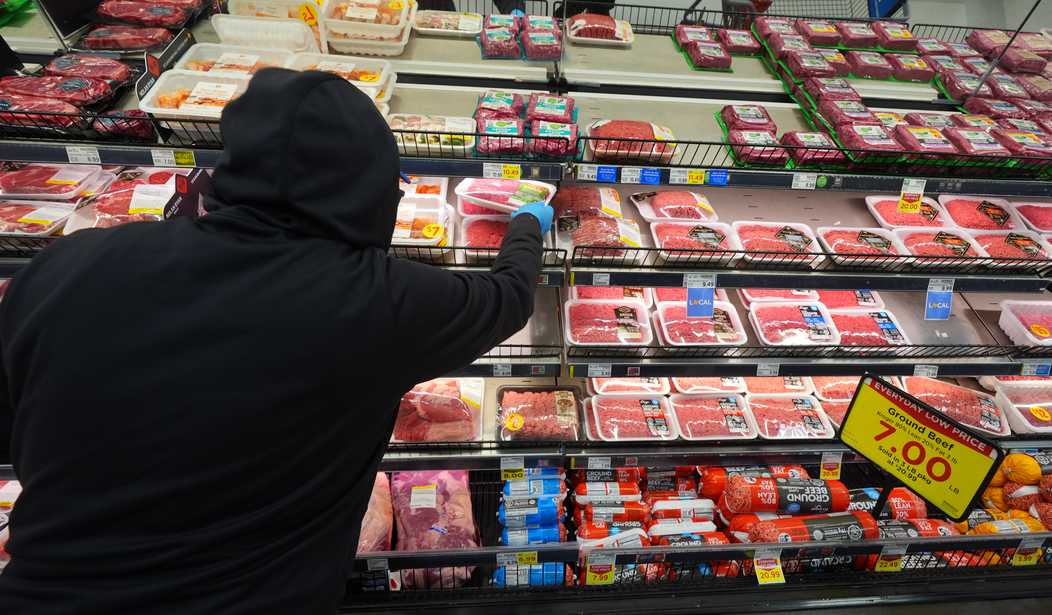
The Department of Justice has announced that it has expanded a major investigation into American grocers over the price of skyrocketing prices of beef. The investigation, led by the department's antitrust division will now target producers including Kroger, Publix, Walmart, Albertsons, Aldi, Ahold Delhaize USA, Costco, Amazon.
🚨 IT'S OFFICIAL: The Trump DOJ Antitrust Division has EXPANDED a MAJOR investigation into 8 American grocers over high beef prices
— Eric Daugherty (@EricLDaugh) September 2, 2026
The following chains are now under scrutiny: Kroger, Publix, Walmart, Albertsons, Aldi, Ahold Delhaize USA, Costco, Amazon
"Beef prices are a… pic.twitter.com/utBmzRn7y5
"@JusticeATR has expanded its investigation to include 8 of the largest grocers when it comes to beef affordability," the DOJ's X account wrote in a statement.
"Beef prices are a critical concern to Americans, and a priority for this Justice Department."
🚨@JusticeATR has expanded its investigation to include 8 of the largest grocers when it comes to beef affordability. @ASGWoodward sent letters to the following regarding the recent increases in the retail price for beef:
— U.S. Department of Justice (@TheJusticeDept) September 2, 2026
-Kroger
-Publix
-Walmart
-Albertsons
-Aldi
-Ahold…
Unfortunately, this is not a problem that breaking up a monopoly, or launching a government investigation, can solve.
Grocery stores, including corporate chains, operate on notoriously thin net profit margins, generally between one to five percent. In fact, large corporate chains often provide groceries at lower prices than smaller, standalone stores. Walmart, Costco, and Amazon can use their scale, purchasing power, and distribution networks to drive down costs and pass at least some of those savings on to shoppers. Walmart, in particular, has built its business around offering some of the lowest grocery prices in the country.
The real reason beef is expensive is a basic supply-and-demand mismatch, made worse by government. The United States does not currently have enough cattle to comfortably meet American demand for beef in part thanks to the Biden administration, while tariffs have raised the cost of imported supply. Even the Trump administration has acknowledged the pressure. Last month, President Trump temporarily suspended tariffs on lean beef for a period of 90 days, allowing up to 300,000 metric tons into the country in an effort to bring down ground-beef prices. The administration said the additional imported beef could sell for up to 25 percent less than current prices.
🚨 JUST IN: In a huge win, President Trump has struck a deal to MASSIVELY lower the price of beef for working families — new beef is coming in 25% cheaper
— Eric Daugherty (@EricLDaugh) August 21, 2026
“For the next 90 days, the United States will allow up to 300,000 metric tons of product for ground beef to be imported with… pic.twitter.com/GvxDxf6vq4
The more permanent fix is revitalizing American cattle herds. The problem is that cattle are not something the country can churn out overnight. Ranchers need to retain breeding stock, raise calves, and wait for those animals to grow into market-ready cattle. With the U.S. herd at a roughly 75-year low and supplies expected to remain tight into 2027, prices are not going to come down overnight.
Suspending tariffs on imported beef will be the best short term way to help ease some of those pressures, but the lasting answer is making ranching profitable enough for American producers to rebuild the herds that Americans depend on.
Editor’s Note: Thanks to President Trump’s leadership and bold policies, America’s economy is back on track.
Help us continue to report on the president’s successes and combat the Democrats' lies about America's economic revival. Join Townhall VIP and use promo code FIGHT to receive 60% off your membership.

Join the Conversation
VIP members get the ability to comment on articles.