
“They don’t make things like they used to.”
It is a familiar phrase, especially from people nostalgic for the era of their youth. On its own, it is harmless enough, but it becomes more consequential when that same nostalgia begins to shape a country’s economic thinking. Today, Americans young and old increasingly view new technology, especially artificial intelligence, with suspicion and even open hostility. Rather than seeing innovation as something that could make life more productive, abundant, and prosperous, too many see it as a threat to oppose. And that encourages people to assume that the safest course is to preserve the world exactly as it is.
What that view lacks is not merely perspective, but gratitude.
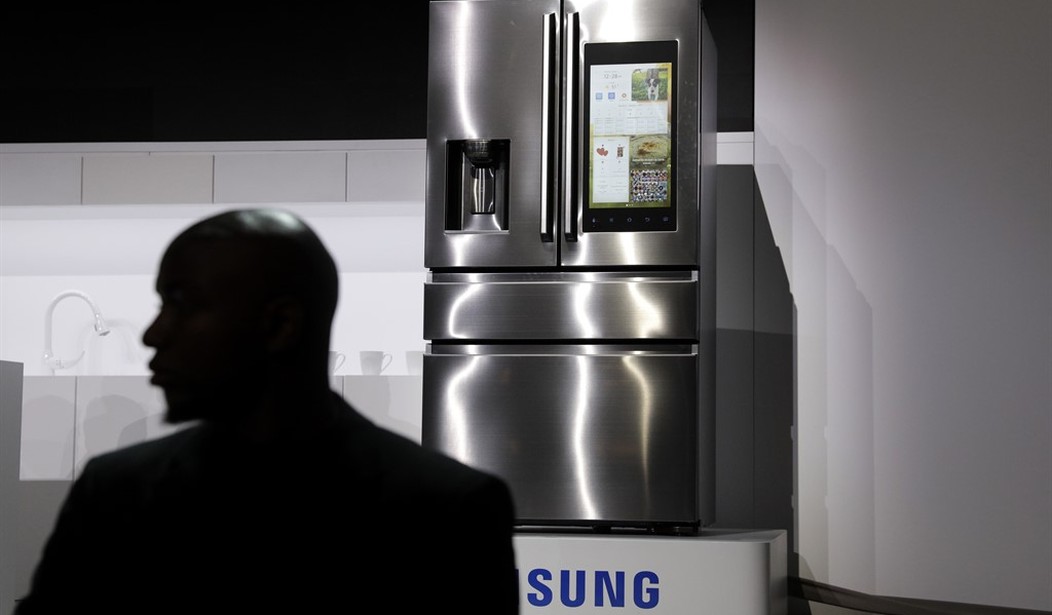
Consider the refrigerator. Older Americans often insist that the refrigerator from their youth was superior to anything available today. It never broke, never needed replacement, and did not come stuffed with the electronics that now seem to fail at the worst possible moment. The story is comforting, and not even remotely true, as Emma Camp, a journalist for the Wall Street Journal, points out.
Good news for you I *also* have a video about that!pic.twitter.com/2BYkmCupi2 https://t.co/VfhFezn82t
— Emma Camp (@emmma_camp_) August 25, 2026
"A lot of you saw this video I made about why modern refrigerators are better than vintage ones. The answer is free market capitalism, by the way. A lot of people said we were wrong. A lot," Camp said. "'No,' they protested. 'Fridges made today are worse because they aren't meant to last. Modern refrigerators break down after a few years.'"
"This is also wrong," she said. "For starters, the percentage of American households with refrigerators more than 10 years old has barely budged since 1990. And this Norwegian study found that the lifespan of fridges and freezers has barely shifted in 80 years."
Not only that, but modern refrigerators are far better than older ones. They use far less electricity, which lowers household costs, they offer more usable storage, more consistent temperature control, better insulation, improved freezer capacity, and features such as adjustable shelving and humidity-controlled compartments that help keep food fresh longer. In other words, the refrigerator of decades past may have been simpler, but the modern one is markedly better at being a refrigerator.
"Just because a few really old fridges and freezers are still around doesn't mean every old appliance could have lasted that long. This kind of thinking is called survivorship bias," Camp said. "Who knows, maybe one day your grandkids will be nostalgic for your refrigerator."
The same selective memory applies to nearly everything people insist were better “back then.” Old cars may have been easier to work on with a wrench and a spare Saturday, but they were markedly less safe, less fuel-efficient, and far more likely to leave a driver stranded by the side of the road.
Landline phones rarely needed charging, but they could do little more than sit in one room and make a call.
Television sets may have survived for decades, but they were enormous, heavy, power-hungry boxes delivering grainy pictures, a handful of channels, and the occasional need to adjust the antenna.
The old products people remember fondly were often simpler, but simple is not synonymous with better, nor is it a guiding principle when it comes to economics. But it appears to be one.
Across the country, people increasingly want things to remain as they are, or, more precisely, to return to an imagined version of the past. Affordability concerns have encouraged Americans to reminisce about the lower prices of decades ago. Cheaper groceries, cars, homes, and electronics, with far less attention paid to what those goods cost relative to income, how much less they offered, or how much harder many were to obtain.
The same instinct drives calls to rebuild American towns around older models of employment, a single manufacturing plant, a stable union job, and an economy organized around the industries of the last century.
What gets lost in these conversations is the case for building what comes next. AI data centers are the factories of the future, yet many would rather fight their construction than welcome the investment, jobs, and technological capacity they represent. The same goes for housing: instead of making it easier to build, the preferred response is often to blame “greedy landlords” and impose price controls.
Rather than encourage genuine progress through innovation, construction, and competition, too many Americans want to preserve an economy that no longer exists. They demand yesterday’s prices, yesterday’s jobs, and yesterday’s technology, and ignore the productive capacity, risk-taking, and constant reinvention required to sustain American prosperity.
That is no way to lead the country into the future.
A nation that treats every new industry as a threat, and every economic change as a decline will not preserve its entrepreneurial spirit or its position of global leadership. It will simply make itself poorer, less innovative, and eventually less capable, while congratulating itself for protecting a past that no longer exists.