





Institutional racism and systemic racism are terms bandied about these days without much clarity. Being 84 years of age, I have seen and lived through what might be called institutional racism or systemic racism. Both operate under the assumption that one race is superior to another. It involves the practice of treating a person or group of people differently based on their race. Negroes, as we proudly called ourselves back then, were denied entry to hotels, restaurants and other establishments all over the nation, including the north. Certain jobs were entirely off-limits to Negroes. What school a child attended was determined by his race. In motion pictures, Negroes were portrayed as being unintelligent, such as the roles played by Stepin Fetchit and Mantan Moreland in the Charlie Chan movies. Fortunately, those aspects of racism are a part of our history. By the way, Fetchit, whose real name was Lincoln Perry, was the first black actor to become a millionaire, and he has a star on the Hollywood Walk of Fame and, in 1976, the Hollywood chapter of the NAACP awarded Perry a Special NAACP Image Award.
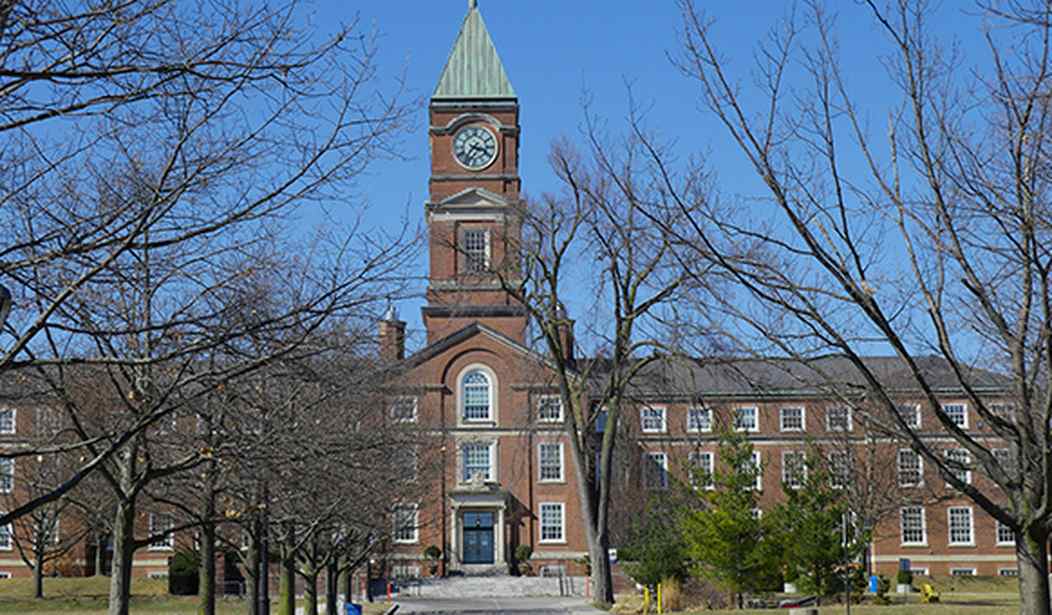
Despite the nation's great achievements in race relations, there remains institutional racism, namely the widespread practice of treating a person or group of people differently based on their race. Most institutional racism is practiced by the nation's institutions of higher learning. Eric Dreiband, an assistant attorney general in the Civil Rights Division of the Department of Justice, recently wrote that Yale University "grants substantial, and often determinative, preferences based on race." The four-page letter said, "Yale's race discrimination imposes undue and unlawful penalties on racially-disfavored applicants, including in particular Asian American and White applicants."
Yale University is by no means alone in the practice of institutional racism. Last year, Asian students brought a discrimination lawsuit against Harvard University and lost. The judge held that the plaintiffs could not prove that the lower personal ratings assigned to Asian applicants are the result of "animus" or ill-motivated racial hostility towards Asian Americans by Harvard admissions officials. However, no one offered an explanation as to why Asian American applicants were deemed to have, on average, poorer personal qualities than white applicants. An explanation may be that Asian students party less, study more and get higher test scores than white students.
In court filings, Students for Fair Admissions argued that the University of North Carolina's admissions practices are unconstitutional. Their brief stated: "UNC's use of race is the opposite of individualized; UNC uses race mechanically to ensure the admission of the vast majority of underrepresented minorities." Edward Blum, president of Students for Fair Admissions, said in a news release that the court filing "exposes the startling magnitude of the University of North Carolina's racial preferences." Blum said that their filing contains statistical evidence that shows that an Asian American male applicant from North Carolina with a 25% chance of getting into UNC would see his acceptance probability increase to about 67% if he were Latino and to more than 90% if he were African American.
In 1996, California voters passed Proposition 209 (also known as the California Civil Rights Initiative) that read: "The state shall not discriminate against, or grant preferential treatment to, any individual or group on the basis of race, sex, color, ethnicity, or national origin in the operation of public employment, public education, or public contracting." California legislators voted earlier this summer to put the question to voters to repeal the state's ban on the use of race as a criterion in the hiring, awarding public contracts and admissions to public universities and restore the practice of institutional racism under the euphemistic title "affirmative action."
When social justice warriors use the terms "institutional racism" or "systemic racism," I suspect it means that they cannot identify the actual person or entities engaged in the practice. However, most of what might be called institutional or systemic racism is practiced by the nation's institutions of higher learning. And it is seen by many, particularly the intellectual elite, as a desirable form of determining who gets what.
Walter E. Williams is a professor of economics at George Mason University. To find out more about Walter E. Williams and read features by other Creators Syndicate writers and cartoonists, visit the Creators Syndicate webpage at www.creators.com.



Join the Conversation
VIP members get the ability to comment on articles.