





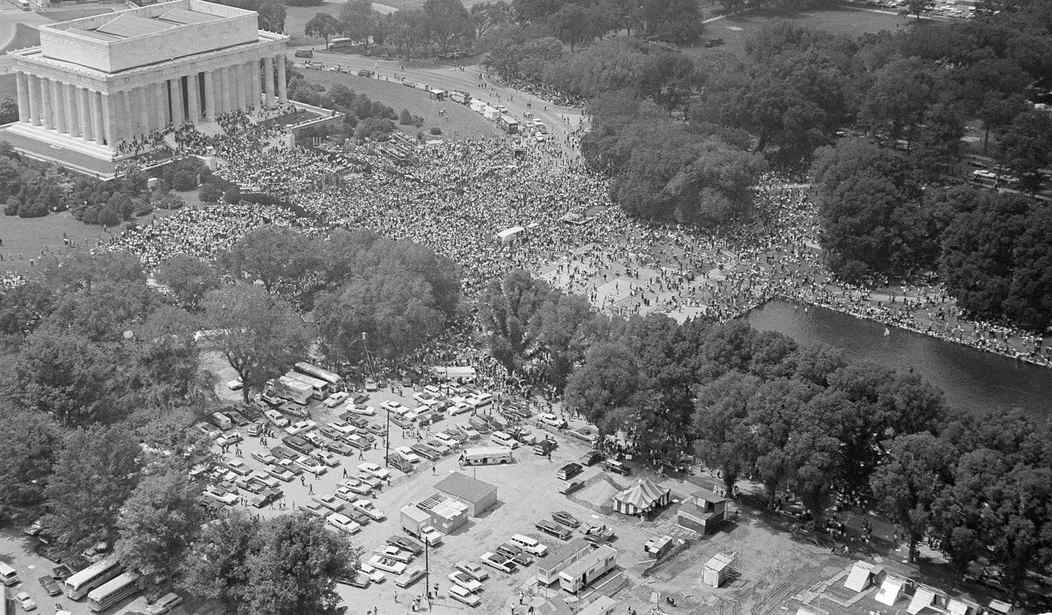
He helped pave the way for Martin Luther King Jr. and others to end Jim Crow — but few know his name.
So respected was this civil rights pioneer that, at his funeral in 1961, future Supreme Court Justice Thurgood Marshall served as a pallbearer, and King delivered his invocation.
His name is John Wesley Dobbs.
I learned about his incredible story after reading Bill Steigerwald’s powerful 2017 book, “30 Days a Black Man,” which documents Dobbs’ civil rights contributions.
Born into poverty in 1882 in rural Kennesaw, Georgia, Dobbs’ parents were former slaves — his mother’s biological father was a slave owner.
Smart and driven, Dobbs educated himself by reading constantly. Though he attended college briefly, he had to drop out to care for his ill mother and never earned a college degree.
In his early 20s, he passed the federal civil service exam and became a railway clerk for the U.S. Post Office.
For 32 years, he sorted mail overnight on trains from Atlanta, armed with a pistol. Rising to the position of supervisor — a remarkable feat for a Black man in the Jim Crow era — he earned enough to support his family of six daughters while gaining respect in Atlanta’s African American community.
A gifted orator who memorized hundreds of poems and Shakespearean lines, Dobbs believed the best way to end Jim Crow was through the ballot box.
He worked tirelessly to register thousands of Black voters in Atlanta and used his growing influence with the white Democratic power structure to get the city to hire its first Black police officers.
It was in 1948 — at age 66 — that Dobbs risked his life to bring national media attention to the injustice 10 million Black Americans were suffering daily under Jim Crow.
Up North, a Pulitzer Prize-winning journalist from the Pittsburgh Post-Gazette named Ray Sprigle decided to go undercover as a light-skinned Black man in the Jim Crow South for a month.
Teamed with Sprigle by the NAACP, Dobbs guided and protected him during their 3,000-mile car journey.
Dobbs introduced Sprigle to sharecroppers, families of lynching victims and local leaders. They visited segregated schools and stayed in the homes of Black farmers and doctors.
Sprigle, deeply moved and angered by what he saw and experienced, said he was ashamed to be an American.
His newspaper series documenting life in the Deep South shocked white readers in the North.
Time magazine praised Sprigle’s series. So did national Black leaders and Eleanor Roosevelt. It was syndicated to about a dozen major newspapers from New York to Seattle — but nowhere in the South.
To protect Dobbs, Sprigle never mentioned him by name. The general public barely knew of Dobbs’s role until Steigerwald wrote about his story for the Post-Gazette in 1998.
Dobbs died in 1961 — the same week that Atlanta’s public schools were integrated.
By that time, all six of his daughters had graduated from Spelman College and gone on to become professors, educators and community leaders. One of them, Mattiwilda, became a famous opera singer in Europe.
But Dobbs’ legacy extended even further: In 1974, his grandson, Maynard Jackson Jr., became the first Black mayor of Atlanta.
Long before landmark laws were passed and marches filled the streets, Dobbs’ work helped push the nation toward the civil rights breakthroughs that finally dismantled Jim Crow.
And now you know John Wesley Dobbs’ name.
Find Tom Purcell’s syndicated column, humor books and videos of his dog, Thurber, at TomPurcell.com. Email him at tom@tompurcell.com.
Editor’s Note: Do you enjoy Townhall’s conservative reporting that takes on the radical left and woke media? Support our work so that we can continue to bring you the truth.
Join Townhall VIP and use promo code FIGHT to receive 60% off your membership.


Join the Conversation
VIP members get the ability to comment on articles.