





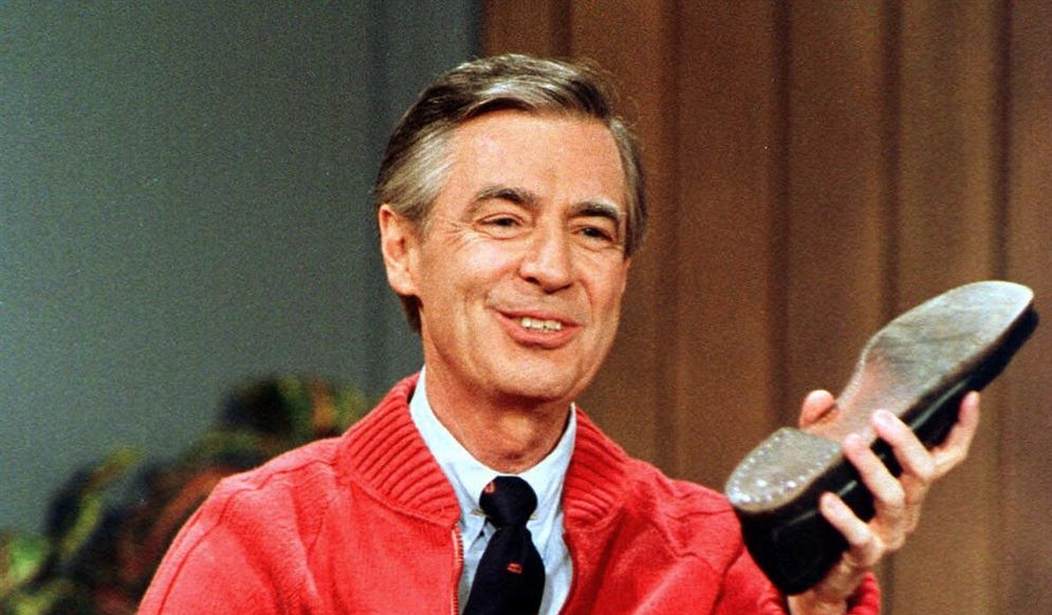
This summer’s biographical documentary about Fred Rogers was the most successful such film of all time and is likely to be nominated for an Academy Award. The movie touched audiences in surprising ways, perhaps most of all because Mr. Rogers’ quiet encouragement of civility and conversation, of open minds and open hearts, speaks so eloquently to our uncivil discourse.
National leaders from both parties engage in taunting, demonizing their opponents, even calling for violence against those they disagree with. Fringe elements engage in violent protests, confronting public figures in restaurants and at their homes. University students harass free speech and shut down speakers they disagree with.
We now dislike people and not just their ideas. Americans tend to live in political enclaves where their neighbors think just like they do. Single Americans won’t even datesomeone who disagrees with them over President Trump, according to the makers of dating apps. If we dislike the opinions of a family member or lifelong friend, we unfollow or unfriend them.
Technology and expansive government have created a society which increasingly recognizes only the isolated Individual and the State. Where can we go to find community and conversation?
In the ancient world, conversation was very public. In Greek city-states there was an agora, a veritable marketplace of ideas. The Romans had their Forum. Medievals chatted in the north porch of the cathedral. Architects of the Enlightenment designed salons with curved walls and sparse furniture to encourage conversation.
In America, we used to have conversations in local barbershops, the Grange, artistic societies, and Elks and Lions Clubs. We had community picnics and dances, quilting bees, and barn-raisings. We even offered hospitality in our own homes; in the 1800’s, thousands of parlor songs were published, meant to be sung together around the piano. All these institutions still exist (except parlor music), but they have faded into the background of our public life.
And yet, let’s not romanticize our history of civil discourse.
Read speeches and debates from the time of the ratification of the Constitution, and you will see that Federalists and Anti-Federalists were frequently uncivil. Political cartoons were especially brutal.Soon thereafter, the great observer Alexis de Tocqueville noted that America’s strong egalitarianism leads us to self-confidence and even self-righteousness. We don’t want to listen to others, because our commonsense is as good as anyone else’s.
Long before the Kavanaugh hearings, Congress was the home of incivility. In 1850, Senator Henry Foote brandished a pistol during a floor argument with Senator Thomas Hart Benton. Six years later, Congressman Preston Brooks nearly beat to death Senator Charles Sumner with a walking cane over Sumner’s recent abolitionist speech.
A century later Congress was better behaved, but civil discourse was changing thanks to technology. In 1985, critic Neil Postman wrote, “Americans no longer talk to each other, they entertain each other. They do not exchange ideas, they exchange images. They do not argue with propositions; they argue with good looks, celebrities and commercials.” That same year, AOL was founded, one of the earliest players in the internet revolution. Today over two billion users of Facebook engage in rancorous debate and uncivil discourse on a daily basis.
Our public discourse is broken but not completely severed. It can be repaired, if slowly.
First, we need to find ways to strengthen American families. We must encourage strong marriages, parenting skills and fatherhood. Healthy families are where healthy conversations start. Second, we need to promote other mediating institutions – churches and clubs and voluntary organizations – and that includes protecting the religious freedom of churches and non-profits. Third, we need to work with social media companies, to encourage them to devote some of their creative energy to promoting healthy civil discourse without censorship of free speech.
In truth, we do not have a great national legacy of civil discourse. But we know that we want better, and we must pursue the aspirational goal of civil and fruitful public debate. We see the price of failure in the news every day. But watch Fred Rogers on the big screen or on re-runs of Mr. Rogers’ Neighborhood, and we see the civility that each of us must bring to our own neighborhoods and the public square.
Join the Conversation
VIP members get the ability to comment on articles.