





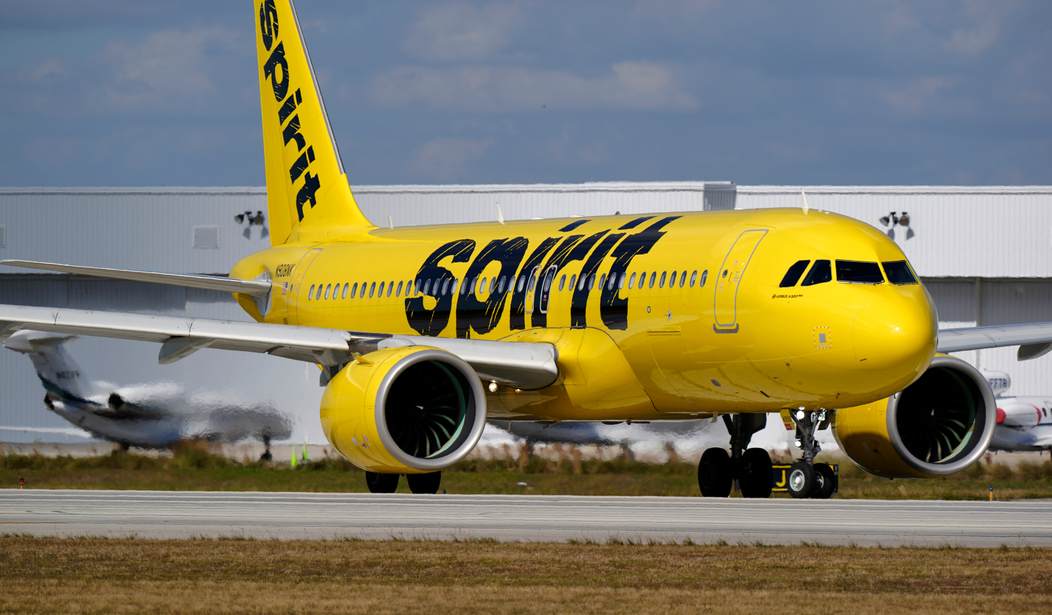
Spirit Airlines didn’t just hit turbulence. It flew straight into a policy-made storm.
In a functioning free market, failure is not a tragedy. It’s a feature. Bad business models collapse. Poorly run companies get punished. Capital gets reallocated. Stronger competitors rise. That’s how markets correct themselves and how consumers ultimately benefit.
So let’s be clear from the start. If Spirit Airlines failed because it couldn’t compete, couldn’t manage its balance sheet, or couldn’t deliver a product people wanted, then so be it. Let it fail. That’s capitalism.
But that’s not what happened here. Spirit was struggling, yes. It was imperfectly run, yes. But in a brutally competitive industry dominated by a handful of legacy giants, this wasn’t just about mismanagement. It was about survival. The proposed merger wasn’t some anti-competitive power grab. It was a lifeline. In modern aviation, scale isn’t a luxury. It’s a requirement to compete.
Spirit’s collapse wasn’t simply the result of market forces. It was the result of political interference that boxed the company into a corner and then left it there to suffocate.
All Washington had to do was nothing.
Step aside. Let the deal go through. Let the market decide whether the combined JetBlue–Spirit entity could compete, deliver value, and survive. If it worked, consumers would benefit from a stronger low-cost competitor. If it failed, then it would fail on its own merits.
That’s how capitalism is supposed to function.
Instead, the Biden administration cheered on regulators to block the merger, imposing a theory of what the airline market should look like rather than letting it evolve.
The logic from Washington was predictable. Bigger airline equals less competition. Less competition equals higher prices. Therefore, block the deal.
Simple. Clean. Wrong.
What happened here wasn’t principled antitrust enforcement. It was political theater. Spirit, a Florida-based airline, became a convenient target for an administration eager to appear tough on consolidation, regardless of the real-world consequences. This wasn’t about monopolies. It was about messaging.
The JetBlue-Spirit merger wasn’t about eliminating competition. It was about survival in an industry already dominated by a handful of legacy giants. Spirit operated on razor-thin margins in a brutally competitive environment, squeezed between rising costs, operational disruptions, and a post-pandemic travel landscape that punished low-cost carriers disproportionately.
The merger offered a lifeline. Scale. Network expansion. Pricing power. A chance to compete more effectively against entrenched incumbents.
Washington didn’t just say no. It slammed the door.
And now we’re supposed to pretend Spirit’s collapse exists in a vacuum.
It doesn’t.
This is the same administration that claims to champion the consumer while systematically making it harder for businesses to adapt, consolidate, and survive. The same regulators who talk endlessly about “competition” while ignoring the realities of global industries where scale is not optional, it’s essential.
Airlines are not mom-and-pop shops. They are capital-intensive, highly regulated, and structurally complex businesses. You don’t survive in that environment by staying small and ideologically pure. You survive by evolving.
Spirit tried. Washington stopped it.
And here’s the deeper problem.
When government intervenes this aggressively in private markets, it doesn’t just distort outcomes. It rewrites incentives. It tells struggling companies that their fate won’t be decided solely by customers, costs, or competence, but by politics. By whether regulators approve of your strategy. By whether your growth plan fits the ideological mood of the moment.
That’s not capitalism. That’s central planning with better branding.
Let failing companies fail. But don’t kneecap them first and then act surprised when they collapse.
Because that’s exactly what happened here.
Spirit may not have been a perfect business. In fact, it wasn’t. But it deserved the chance to fight for its future in the marketplace, not in a courtroom shaped by political priorities.
The real lesson isn’t about one airline.
It’s about a broader trend where government increasingly substitutes its judgment for that of the market, often with disastrous results. Block consolidation. Restrict scale. Then watch as weaker players disappear anyway, leaving consumers with fewer options and less competition, not more.
That’s the irony no one in Washington wants to admit.
In trying to “protect” the market, they broke it.
If Spirit had failed on its own terms, that would be capitalism doing its job.
But when failure is engineered, or at the very least accelerated, by political decisions, it stops being a market outcome and starts being a policy failure.
And that failure belongs squarely in Washington.
Tom Carter is the President and Co-Founder of The American Conservative Values ETF (ACVF), an actively managed, diversified large-cap ETF that is dual listed on the NYSE and NYSE Texas.
Editor's Note: Do you enjoy Townhall's conservative reporting that takes on the radical Left and woke media? Support our work so that we can continue to bring you the truth.
Join Townhall VIP and use promo code FIGHT to receive 60% off your membership.



Join the Conversation
VIP members get the ability to comment on articles.