







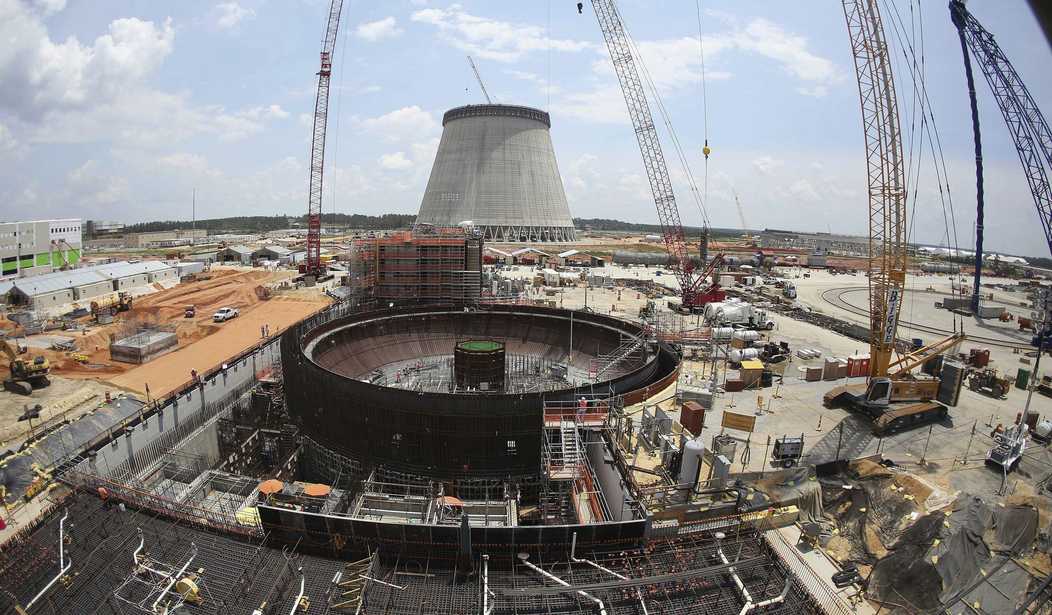
Taxpayers can breathe a sigh of relief knowing the Trump administration has scrapped a plan to bail out a handful of struggling coal and nuclear companies. According to a draft Trump administration memo released earlier this spring, the Department of Energy (DOE) was preparing to bail out a few well-connected, but economically uncompetitive power plants - a move that would greatly expand the role of government and leave taxpayers and ratepayers on the hook for the cost. Administration officials originally justified this move in the interest of “national security” but reports this week indicate that the DOE’s plan to intervene in U.S. power markets has been shelved due to growing opposition from advisers on the National Security Council and National Economic Council.
The president successfully campaigned to drain the swamp and get government out of the free market, but if he wants to fulfill his promise, he should officially scrap any more planning on this energy bailout plan.
This White House has used bogus “national security” claims before to justify questionable policies implemented without Congress - chiefly on trade. These types of actions should concern all supporters of free markets and limited government.
The proposed plan would have forced buyers to purchase power from higher-priced coal and nuclear plants, a scheme that would be extremely expensive and market-distorting. Independent analysis indicates taxpayers could be on the hook for $17 billion annually and it would artificially raise the cost of electricity prices on consumers. A competitive energy market has delivered substantial savings to utility users, and government shouldn’t work to reverse that progress.
It is true that some traditional American energy producers are facing financial strain, but that is primarily the result of a surplus of clean energy and cheap natural gas. An American energy renaissance is exactly what the president campaigned on and he should not be unhappy with the result.
Unfortunately, a byproduct of a free and competitive market is that sometimes less efficient businesses go under. The last thing any government should do is step in and rescue struggling businesses - especially with taxpayer-backed funds.
Taxpayers shouldn’t be viewed as a bottomless piggy bank with an endless stream of revenue, nor should consumers be burdened with higher energy bills. For those reasons, it should be no surprise that a broad collection of consumer groups, taxpayer groups, and renewable and nonrenewable energy companies have all rejected this bailout idea.
Earlier this year, National Taxpayers Union and a coalition of free market groups warned President Trump that a bailout “would represent an appropriate government intervention in energy markets” and “Section 202(c) is reserved for national emergencies and security threats. It must be used judiciously and only when merited by the broad national interest - not to prop up individual companies that are dealing with financial difficulties.”
I recently attended an event at the Heritage Foundation, where a panel examined the state of the U.S. electrical grid as well as options for innovations and strategic actions. During the Question and Answer period I asked a pointed question whether or not supporters of the free market should be concerned that the Trump administration is using national security as a strawman to subsidize coal and nuclear companies. However, the answer I heard from an energy executive was extremely worrisome as he seemed to defend the proposed bailout. He cited examples of how other countries look at the U.S. as a leader in nuclear power and that it is important we have a well-functioning and reliable energy system. It was concerning that he did not address the many problems that would be caused by government intervention, such as moral hazard and higher costs for taxpayers and consumers.
Shelving the bailout plan was good news, but there is much more work to be done as policymakers should level the playing field for all energy types. They should strive to eliminate all energy subsidies, tax credits, expenditures, and unnecessary regulations. Regulatory overreach has increased operating costs for many coal and nuclear plants, which has contributed to their financial difficulties.
To that end, when all market distortions are out of the way, different energy sources will compete and decide who wins and who loses - without having the government’s thumb on the scale.

Join the Conversation
VIP members get the ability to comment on articles.