





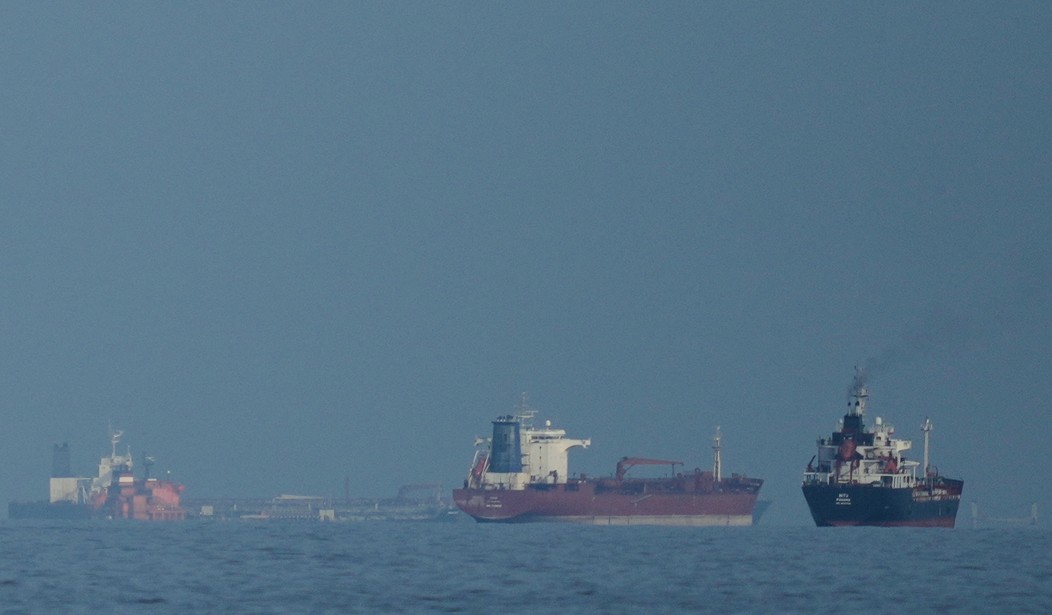
History occasionally turns upon places that scarcely register on a map. The Strait of Hormuz is one such place. Barely 21 miles wide at its narrowest point, this slender ribbon of water carries around one-fifth of the world's traded oil and a substantial share of global liquefied natural gas (LNG). Every supertanker passing through its shipping lanes helps fuel factories in Asia, heat homes across Europe, and keep American motorists on the road. Every interruption sends tremors through financial markets and government ministries alike.
Today, Hormuz has become far more than a maritime chokepoint. It is the economic heartbeat of a geopolitical struggle whose consequences stretch from the Gulf to Washington, Brussels, Beijing, and beyond. As Iranian lawmakers debate a proposed agreement with Oman over future management of the Strait, diplomats speak cautiously of progress while military tensions continue simmering beneath the surface. Hope and uncertainty coexist.
For President Donald Trump, the outcome carries significance extending well beyond the Middle East. Energy prices, inflation, and public confidence increasingly intersect as America moves toward the 2026 midterm elections. Commodity markets thrive on certainty. Whenever uncertainty prevails, oil prices climb. Insurance premiums rise, freight costs increase, tanker operators hesitate, and refiners seek alternative supplies. Those costs ultimately appear on household utility bills, supermarket shelves, and gas station forecourts.
Brent crude has already reflected those anxieties, while natural gas markets remain equally sensitive. Europe still depends heavily upon Gulf LNG following years of upheaval in global energy markets, while Asia remains similarly exposed. Every additional dollar added to the price of a barrel of oil ripples across the global economy. Economic history demonstrates a simple political truth. Voters rarely follow the complexities of maritime diplomacy or naval deployments. They immediately recognize rising living costs. Every visit to a gas station becomes an economic referendum. Every increase in household energy bills shapes perceptions of government competence, regardless of whether the causes originate thousands of miles away.
That reality places the White House in a difficult position. President Trump entered office promising strength abroad while avoiding prolonged military entanglements. Those objectives remain politically attractive. Maintaining them becomes considerably harder whenever overseas instability fuels domestic inflation. Recent polling illustrates the challenge. A Reuters/Ipsos survey found Americans concerned that military action involving Iran would leave the Middle East less stable, outnumbering those expecting greater stability, by almost three to one. Many also expect fuel prices to rise over the coming year, while support for military confrontation remains limited. Polling captures a moment rather than a destination, yet sustained pressure on household finances has repeatedly proved more influential than diplomatic rhetoric or battlefield developments.
The negotiations over Hormuz therefore deserve attention far beyond specialist circles. Reports suggest Iranian lawmakers continue debating provisions covering shipping management, transit arrangements, compensation mechanisms, and restrictions affecting vessels linked to hostile states. Washington insists upon unrestricted commercial navigation, yet questions remain over implementation, enforcement, and political approval within Tehran. Even if negotiators eventually reach agreement, commercial confidence will take longer to restore. Global shipping operates through a complex web of ownership, insurance, financing, and registration. A tanker may sail under one national flag, belong to owners in another country, carry cargo sold by a third company and rely upon insurers based in London or Singapore. Determining which vessels qualify under future restrictions could prove commercially and legally contentious.
Shipping companies value predictability above almost everything else. Insurers demand clarity. Commodity traders seek stable rules. Investors reward certainty. Any lingering ambiguity over Hormuz therefore risks extending market volatility long after diplomats declare success. The consequences extend well beyond the shipping industry. Higher transport costs feed inflation, encouraging central banks to delay interest-rate reductions. Manufacturers absorb higher input costs, airlines face rising fuel bills, and consumers ultimately shoulder much of the burden. Economic confidence rarely collapses overnight. Instead, it erodes gradually as successive increases in everyday costs reshape public expectations.
Congressional elections traditionally revolve around familiar concerns: living standards, inflation, employment, taxation, and family finances. Foreign policy enters the equation whenever international events begin affecting those domestic priorities. Hormuz provides exactly that connection. Decisions taken around one of the world's narrowest waterways could influence political fortunes in one of the world's largest democracies.
Investors recognize this reality. Financial markets scrutinize every diplomatic signal emerging from Muscat, Tehran, and Washington because confidence itself has become a strategic commodity. A durable agreement safeguarding commercial navigation would calm energy markets, ease inflationary pressures, and encourage broader diplomatic engagement. Continued uncertainty would achieve precisely the opposite. Maritime chokepoints possess extraordinary leverage over international affairs. The Suez Crisis reshaped Britain's global influence. The Tanker War, during the Iran-Iraq conflict, transformed Gulf security calculations. Today, Hormuz occupies a similarly pivotal position where commercial interests, military strategy, and domestic politics converge.
The coming weeks could therefore prove decisive. A credible agreement restoring confidence in freedom of navigation would stabilize energy markets and strengthen the global economy. Failure would prolong volatility, sustain inflationary pressures, and leave international tensions dominating political debate on both sides of the Atlantic. Ultimately, the Strait of Hormuz represents far more than a narrow passage connecting the Persian Gulf with the Arabian Sea. It has become a measure of the resilience of the global economy, the credibility of diplomacy, and the capacity of governments to shield ordinary families from the consequences of international conflict.
In an age when distant crises quickly influence household budgets, this narrow waterway casts an exceptionally long political shadow. The American midterm elections remain months away. Yet if fuel prices continue rising and economic uncertainty deepens, voters may judge events unfolding in the Gulf almost as closely as those on Capitol Hill. Geography still shapes history. Few places illustrate that enduring truth more vividly than the Strait of Hormuz.
Struan Stevenson was a member of the European Parliament representing Scotland (1999-2014), president of the Parliament's Delegation for Relations with Iraq (2009-14) and chairman of the Friends of a Free Iran Intergroup (2004-14). He is an author and international lecturer on the Middle East.
Editor's Note: Do you enjoy Townhall's conservative reporting that takes on the radical Left and woke media? Support our work so that we can continue to bring you the truth.
Join Townhall VIP and use promo code FIGHT to receive 60% off your membership.


Join the Conversation
VIP members get the ability to comment on articles.