







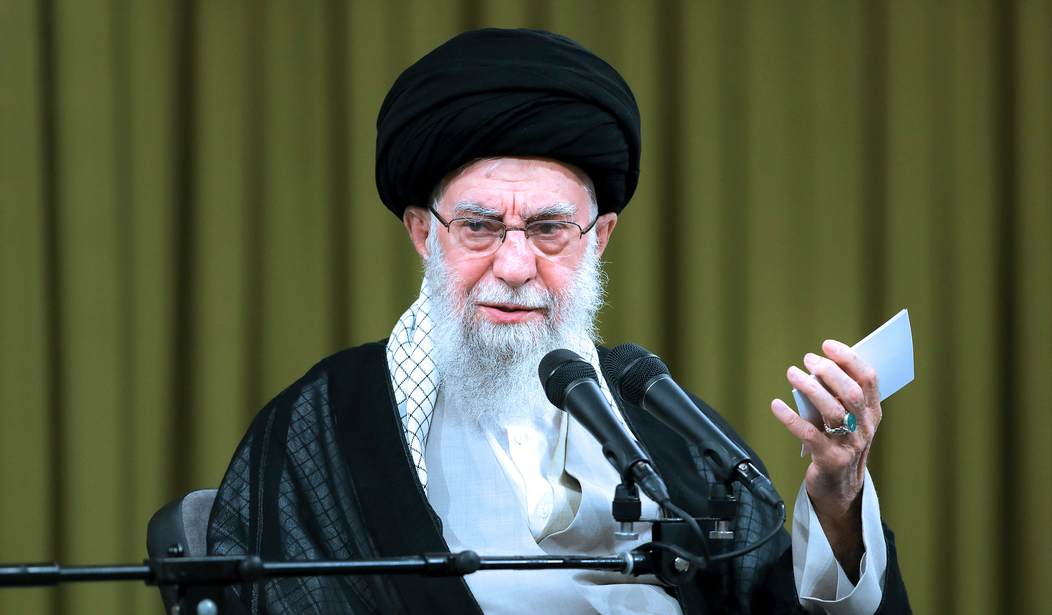
History rarely announces itself politely. It arrives in convulsions, in defiance, in moments when fear finally changes sides. Iran is now at such a moment. After 47 years of clerical dictatorship, corruption, executions, and economic ruin, the Islamic Republic is hurtling toward an irreversible end. Both Iranian society and the ruling regime are racing, at unprecedented speed, toward a new reality, one that the mullahs can neither control nor survive.
The nationwide uprising that erupted in Tehran's Grand Bazaar in the final days of 2025 has exposed the regime's fatal weakness. What began as a merchants' strike against price hikes and collapsing purchasing power has become a political revolt spanning more than 145 cities across 28 of Iran's 31 provinces. The chants heard on Iran's streets are not calls for reform or relief. They are demands for regime change: "Death to the dictator," "Neither Shah nor Supreme Leader," and "This is the year of blood – Khamenei will be overthrown."
For decades, the regime survived by alternating repression with false promises, while Western governments clung to the illusion that moderation might emerge from within. That illusion has now collapsed, just like Iran's economy. Annual inflation officially stands at around 43 percent, but for essential goods it exceeds 100 percent. The rial has lost roughly 70 percent of its value in a single year. Tehran and other major cities face chronic shortages of water, electricity, and gas. Extreme poverty is widespread, while air pollution kills an estimated 60,000 people annually. Ninety-two percent of Iranians, according to a poll conducted on behalf of the regime itself, are dissatisfied with conditions in the country.
This is not mismanagement. It is deliberate plunder. Iran's national wealth has been looted to finance the Islamic Revolutionary Guard Corps (IRGC), regional proxy wars, and a reckless nuclear and missile program. Every barrel of oil sold by the regime is converted into bullets fired at Iran's youth. Ali Khamenei's response to this uprising has been entirely predictable and utterly desperate. Live ammunition has been used against demonstrators in multiple cities. Internet blackouts and mass arrests have become routine. Hospitals, including one in Ilam, have reportedly been raided by the IRGC to seize wounded protesters, an unforgivable crime under any international standard.
Even more telling was Khamenei's appointment of Brigadier General Ahmad Vahidi, a founding commander of the terrorist Quds Force, as deputy commander-in-chief of the IRGC. Vahidi is wanted under an international arrest warrant for his alleged role in the 1994 AMIA bombing in Buenos Aires, which killed 85 people. By elevating an internationally wanted terrorist at this critical moment, Khamenei has sent a clear message that the regime sees its only path to survival in repression, terror, and bloodshed. Yet repression is no longer working.
According to the National Council of Resistance of Iran (NCRI), the regime carried out 2,200 executions in 2025, including many political prisoners. Eighteen political detainees are currently on death row solely for alleged links to the People's Mujahedin of Iran (PMOI/MEK). Still, the protests continue. Still, the resistance grows. The emergence and expansion of the PMOI's "Resistance Units" across Iran's provinces is a decisive factor. These organized networks, driven largely by Iran's younger generation, have transformed spontaneous anger into sustained defiance. There are credible reports that Resistance Units have effectively liberated two cities in Ilam Province, underscoring how rapidly the balance of power is shifting. At the same time, rumours are swirling that Khamenei himself is preparing an escape route to Moscow, the ultimate symbol of a collapsing dictatorship.
Regionally, the regime stands exposed. The fall of Assad's grip in Syria and the crippling blows suffered by Tehran's proxies have stripped Khamenei of his strategic depth. Domestically, the regime's social base has evaporated. Its latest sham elections produced record-low participation, a silent referendum against clerical rule. The Iranian people have learned from history. They reject both the failed monarchy of the Shah and the present theocracy. Attempts by the regime, and some foreign media outlets, to hijack the uprising by promoting monarchist slogans have been widely exposed as fabrications, in some cases linked to plainclothes IRGC agents. The message from the streets is unmistakable. Iranians want a democratic, secular republic based on popular sovereignty.
Four decades of Western appeasement have achieved nothing but emboldening tyranny. Equally, the notion that foreign military intervention could deliver freedom has been comprehensively discredited. The truth is simpler, and far more powerful. Regime change in Iran is the responsibility of the Iranian people themselves, and they are rising to that responsibility. The NCRI has articulated a clear and credible roadmap for a post-theocratic Iran. Within a maximum of six months after the regime's overthrow, power would be transferred to the people's elected representatives through free elections for a constituent assembly. A provisional government would oversee the drafting of a new constitution guaranteeing the separation of religion and state, equal rights for women, autonomy for Iran's nationalities, and the abolition of the death penalty.
This time, the West must not stand idle. Silence only serves the oppressor. Europe, in particular, must immediately designate the IRGC as a terrorist organisation and halt the regime's oil revenues, which are directly financing repression. To continue business as usual is to be complicit in murder. Iran has reached an exceptional moment in its history. There is no return to the status quo. The clerical regime has no way forward and no way back. A society that has decided to overthrow its oppressors cannot be ruled by fear forever. The last days of Iran's theocracy are no longer a matter of speculation. They are unfolding, in real time, on the streets of Iran.
Struan Stevenson is the Coordinator of the Campaign for Iran Change (CiC). He was a member of the European Parliament representing Scotland (1999-2014), president of the Parliament's Delegation for Relations with Iraq (2009-14), and chairman of the Friends of a Free Iran Intergroup (2004-14). He is an author and international lecturer on the Middle East.
Editor’s Note: Do you enjoy Townhall’s conservative reporting and opinion? Support our work by joining Townhall VIP! Use the promo code FIGHT to get 60% off your VIP membership!

Join the Conversation
VIP members get the ability to comment on articles.