





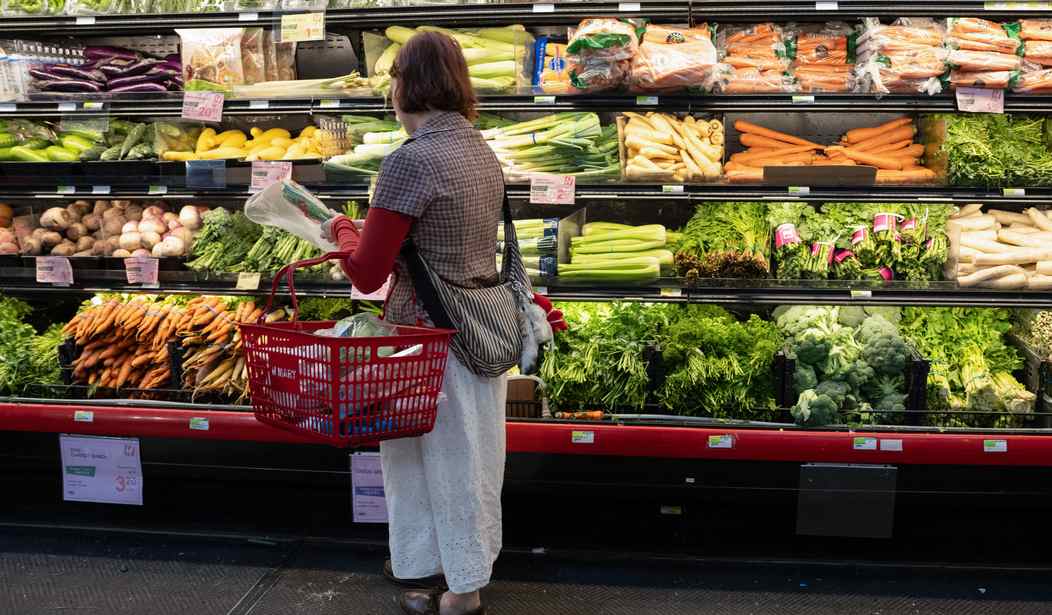
Americans are learning that geopolitics can show up in the grocery aisle.
Rising food prices are being blamed on the conflict with Iran and disruptions to shipping through the Strait of Hormuz. That explains part of the pressure, but not all of it. Fuel, transportation, and farming supply costs are highly interconnected. When energy routes are threatened, farmers pay more to grow crops, shipments become more expensive, and consumers feel the shock at the checkout line.
The larger problem is that the United States still relies on distant chokepoints and fragile supply chains for critical materials that could be sourced much closer to home.
That’s where the “Donroe Doctrine” comes in. It is a modernized, Trump-era reinterpretation of the Monroe Doctrine of 1823, reframed around economic competition and supply-chain security. China's rapidly expanding influence in Latin America is underpinned by its Belt and Road Initiative. Fortifying the Donroe Doctrine with trusted partners to make our supply chains more reliable, therefore, is all the more critical.
The Western Hemisphere remains an underused strategic supply base. The United States should be locking in access to energy, minerals, agriculture, and infrastructure throughout Latin America, not as charity, but as a strategy. A hemisphere that trades, builds, and produces together is less vulnerable to Persian Gulf disruptions and less dependent on Beijing.
China understands this competition. It invests in ports, builds railways, secures mineral supplies, and embeds itself in Latin America’s trade infrastructure as a strategy for regional influence. If Beijing funds the mine and controls the port, it shapes the supply chain.
The United States cannot answer China’s incursion into Latin America with speeches alone. It needs a better offer.
America’s better offer depends on private capital. Governments do not build mines, run logistics networks, or manage commodity flows at scale. Private companies do. The Donroe Doctrine will succeed only if Washington aligns national security priorities with private investment and makes the Western Hemisphere a better place to build, finance, and operate.
For example, Glencore, one of the world’s largest mining and commodity trading companies, shows the scale that allied private investment can bring. Its copper portfolio spans South America, including the MARA and El Pachón projects in Argentina, which could help make the country a major copper producer. El Pachón alone holds roughly 6 billion metric tons of resources and will require billions of dollars in capital investment. Glencore's Collahuasi copper mine in Chile, jointly owned with Anglo American, is one of the world's largest copper deposits and employs more than 5,000 people.
Every major project financed by Western capital gives the region an alternative to Chinese state-backed investment. Every port, rail link, and offtake agreement tied to those projects strengthens supply chains aligned with American interests.
Other private sector partners have roles to play, too.
Mosaic’s fertilizer production and distribution networks in Brazil and Paraguay can help strengthen hemispheric food security. Newmont's Yanacocha gold mine in Northern Peru, the largest in South America, plays a critical role in providing financial stability amid geopolitical tensions. Cargill anchors the agricultural side of the equation through global grain trading and logistics.
These companies do not simply follow government policy. They invest where projects make business sense, and that is why they are important. A lasting strategy cannot depend on subsidies or short-term aid programs. It must align market incentives with national security goals.
The Donroe Doctrine should not be seen as a political slogan or a return to old ideas. It should be understood as a supply chain strategy built on three pillars.
First, secure access to critical minerals such as copper and nickel through investment in Latin America. Second, strengthen fertilizer and agricultural supply chains in the hemisphere to reduce exposure to faraway disruptions. Third, support infrastructure and logistics that connect these resources to global markets under Western control.
The tools already exist. The Development Finance Corp., Export-Import Bank, and U.S. diplomatic engagement can reduce project risk and accelerate timelines. The goal is to help private capital move faster and with greater confidence than Chinese investment.
Americans will support the Donroe Doctrine when they understand how it affects their wallets. When fertilizer shipments from the Middle East are disrupted, American consumers feel the impact. When supply chains are anchored in the Western Hemisphere, those shocks are easier to handle.
The United States cannot eliminate every global risk, but it can build stronger supply chains closer to home.
That means treating Latin America not as a secondary theater but as the foundation of American economic security. It means recognizing that mines in Argentina and Chile, fertilizer networks in Brazil, and ports across the region are as strategically vital as any base or bilateral defense agreement.
The Donroe Doctrine will succeed only if it delivers real economic value to the region. If the United States and its allies provide investment, jobs, infrastructure, and reliable partnerships, Latin America will choose them over China.
If not, Beijing will keep writing the checks.
Steve Bucci, who served America for three decades as an Army Special Forces officer and top Pentagon official, is a visiting research fellow at The Heritage Foundation.
Editor’s Note: Do you enjoy Townhall’s conservative reporting that takes on the radical Left and woke media? Support our work so that we can continue to bring you the truth.
Join Townhall VIP and use promo code FIGHT to receive 60% off your membership.


Join the Conversation
VIP members get the ability to comment on articles.