





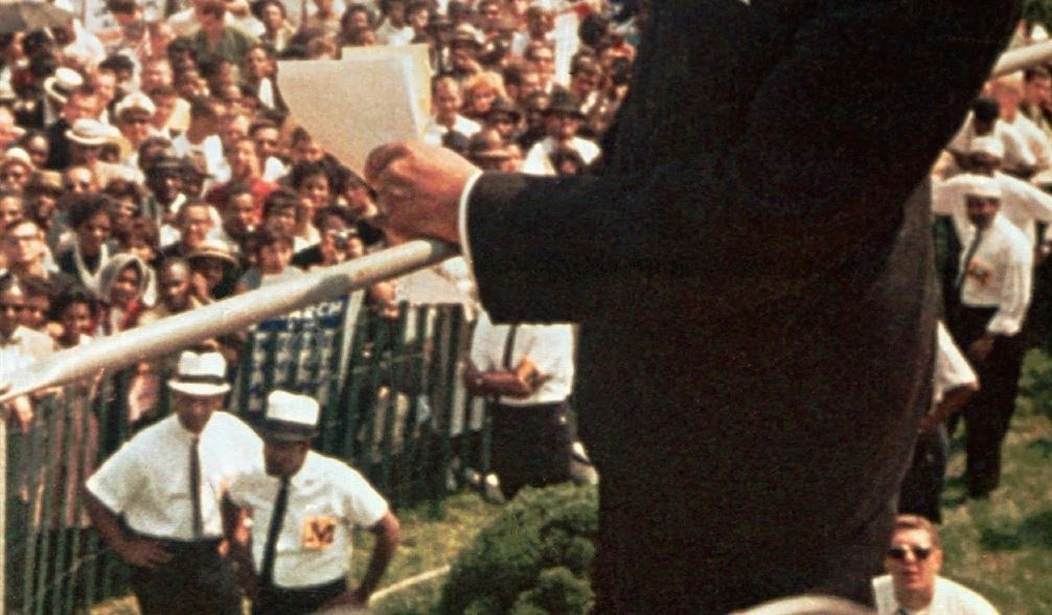
This past week, the nation noted the 60th anniversary of Dr. Martin Luther King Jr.'s famous "I Have a Dream" speech.
The speech is without question a historic landmark, both in terms of recalling the unique stress of the time and in terms of King's eloquence in capturing the situation.
But beyond being interesting, why do we bother at all with history?
It brings to mind Albert Einstein's famous definition of insanity: "doing the same thing over and over again and expecting different results."
Einstein essentially touched the question about why we study history. Our track record of success and failure is spotted. Looking back, we get a sense of what works and what doesn't. Regarding our failures, Einstein was conveying we should be honest about them, learn from them and have the courage to change.
Given that King spoke that day to all Americans -- not just Black Americans or white Americans -- we should assess where we are today given how King defined then what was wrong. What have we learned, and what remains for us to learn?
We need to ask why, 60 years later, race still occupies such a large part of our public consciousness.
King's complaint was not about our national charter. He referred to the "magnificent words of the Constitution and the Declaration of Independence."
His complaint and indictment were that the nation was not living up to that charter.
In the grand scheme of things, King, in that speech, defined the movement he led as about leading America to its full potential, as defined by the ideals and principles in its founding documents.
He implored that the struggle to realize the American charter of freedom and protection of the rights of all citizens take place "on the high plane of dignity and discipline." He urged Black Americans to not "satisfy our thirst for freedom by drinking from the cup of bitterness and hatred."
And King's final appeal was to see our nation as a nation under God.
It is a critical point.
King's vision, as expressed that day, was that the American ideal of freedom would be made possible when "all of God's children, Black men and white men, Jews and Gentiles, Protestants and Catholics, will be able to join hands and sing in the words of the old Negro spiritual: 'Free at last! Free at last! Thank God Almighty, we are free at last.'"
Although our realities today are far different from August 1963 -- certainly the material state of Black Americans is far, far better -- there is a prevailing sense that things are not good.
If we take King's words at face value, then it is questionable we have learned much since then.
When he spoke about failing to live up to the "magnificent words" of our founding documents, he got applause from the crowd.
It is questionable that would be the case today. Many on the left see our nation as fundamentally flawed. They see government and politics as the answer, not individual freedom.
The nation's deplorable fiscal situation today reflects this change in attitude. Government spending now takes two-thirds more from our national economy than when King spoke in 1963.
King's appeal that the struggle take place "on the high plane of dignity" is also, sadly, lost. The divisions and hate between citizens today are an unfortunate and troubling reality.
And, what should trouble us most, is we have moved in the opposite direction from King's vision that ultimately our freedom will be realized as children of God.
The political left sees our future in socialism and secularism.
If, over the 60 years since King spoke, we pursued freedom in terms of personal responsibility, limited government and faith, we would be far, far better off today.
Join the Conversation
VIP members get the ability to comment on articles.