





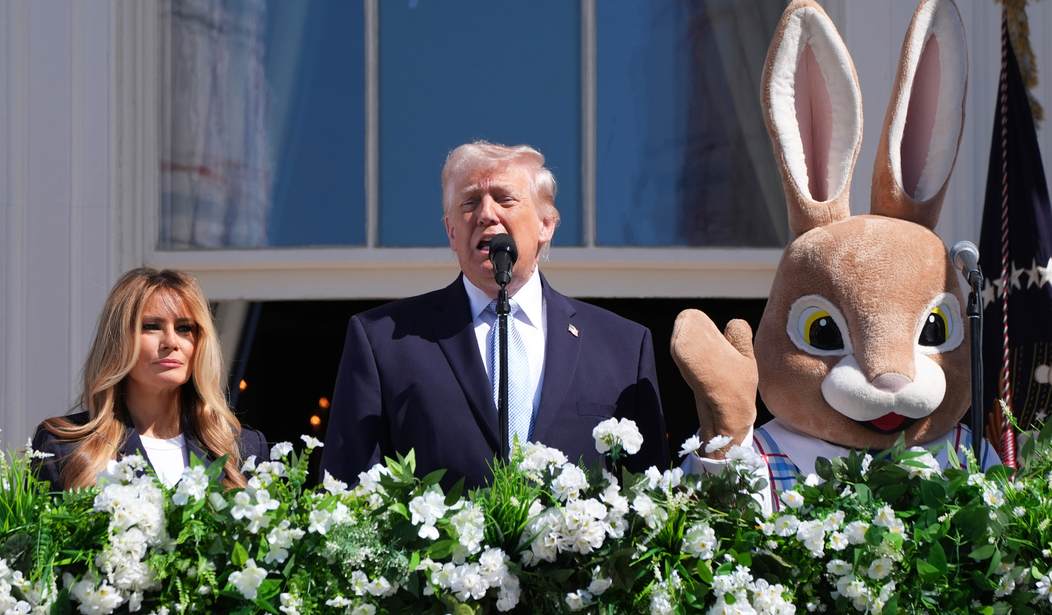
President Trump's recent post that “a whole civilization will die tonight” sparked immediate outrage across Washington and around the world. Critics rushed to label the statement reckless, while supporters argued it was either strategic messaging or protected speech in the heat of a crisis involving Iran and a fragile cease fire. As with so many of Trump's communications, the reaction revealed less about the remark itself and more about the deep divisions in how Americans interpret presidential power, language, and deterrence.
Some commentators have gone further, suggesting the President’s words could amount to a war crime. Others dismiss the criticism entirely, framing it as protected free speech. Both interpretations miss the legal and constitutional reality. A war crime is not committed through rhetoric alone, no matter how provocative. It requires specific unlawful acts, carried out with intent and effect under the laws of armed conflict. At the same time, invoking the First Amendment as a shield for presidential speech misunderstands its core purpose, which is to protect citizens from government restraint, not to immunize government officials when they speak in their official capacity.
That distinction matters, especially when considering the unique role of the presidency. The President does not speak as a private citizen but as the head of state, commander in chief, and the most visible representative of American power. His words can deter adversaries, reassure allies, or escalate tensions in ways no private citizen ever could. In that sense, the “bully pulpit” is not merely rhetorical theater. It is an instrument of diplomacy. President Trump's supporters argue that his blunt language toward Iran reflects that reality, signaling consequences in unambiguous terms during a volatile moment in the negotiations.
Iran’s leadership has spent decades using far more explicit language against the United States, routinely invoking phrases like “death to America” and “great Satan,” while supporting proxy forces that have killed Americans and destabilized the region. Against that backdrop, supporters of the President argue that strong language is not only understandable but necessary to break through in a language adversaries will understand. Critics counter that such rhetoric risks normalizing catastrophic thinking.
Many journalists and pundits criticized the President’s remark as incompatible with American values, arguing that it undermines the nation’s global role and fails to distinguish between a hostile regime and the Iranian people. Those concerns reflect an important truth about the need for precision in diplomatic language. It is always preferable to separate adversarial governments from civilian populations, especially in moments of heightened tension. However, critics often overlook that deterrence itself relies on credible signaling. A message that lacks force or clarity may fail to prevent escalation, particularly when dealing with regimes that routinely test the boundaries of international norms.
The United States has long embraced a tradition in which presidents use rhetoric as a tool of policy influence, from Franklin Roosevelt’s fireside chats to modern social media messaging. The bully pulpit is not a ceremonial platform but an active component of executive leadership. When crises emerge, presidents are expected to communicate clearly, decisively, and sometimes forcefully. President Trump's defenders argue that his comments fit within that tradition, particularly in confronting adversaries who themselves rely on ambiguity and escalation to advance strategic aims.
None of this is to suggest that words are without consequence. In moments of international crisis, language can shape perceptions, influence markets, and alter military calculations. But it is equally true that restraint is not synonymous with silence, and clarity is not synonymous with escalation.
The challenge for American leadership is to balance these competing imperatives while maintaining credibility. President Trump’s statement, however stark it may have been, must be understood within this broader framework of strategic communication rather than treated as an isolated or literal prediction of intent. The real question is not whether the language was harsh, but whether it served a purpose in preventing greater conflict.
Free speech and the use of the bully pulpit both remain essential to democratic governance, but they operate in different contexts and carry different responsibilities. President Trump’s comments should be viewed through that lens, as part of the ongoing struggle to define deterrence in a dangerous world. In the end, words matter, but so do the intent and the outcomes they produce.
Shaun McCutcheon is a Free Speech advocate, an Alabama-based electrical engineer, the founder of Multipolar, and was the successful plaintiff in the 2014 Supreme Court case McCutcheon v. FEC.
Editor’s Note: Do you enjoy Townhall’s conservative reporting that takes on the radical Left and woke media? Support our work so that we can continue to bring you the truth.
Join Townhall VIP and use promo code FIGHT to receive 60% off your membership.


Join the Conversation
VIP members get the ability to comment on articles.