





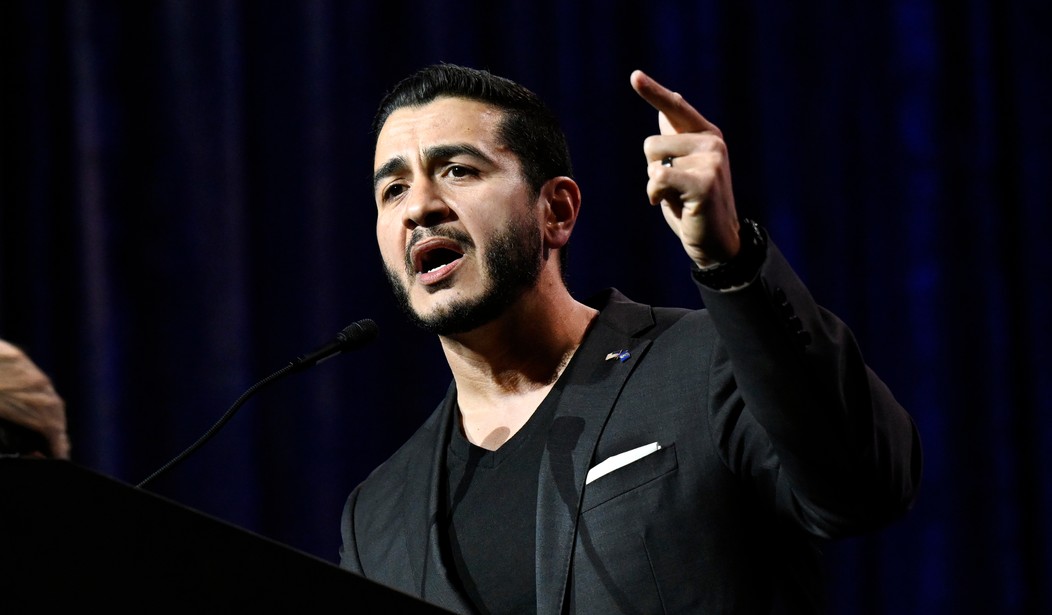
Democratic Senate candidate Abdul El-Sayed wants to make prescription drugs more expensive.
As part of his campaign, El-Sayed has called for the elimination of pharmacy benefit managers (PBMs), the firms that negotiate between pharmaceutical manufacturers, insurers, and pharmacies. Through his "Ban the Middlemen" policy, El-Sayed argues that removing PBMs from the healthcare system would lower costs for patients.
That’s not true. In fact, it’s likely that banning PBMs would allow drug manufacturers to drive prices higher and run roughshod over providers.
Besides threatening hundreds of thousands of jobs for PBM workers nationwide, El-Sayed's proposal reflects a fundamental misunderstanding of how pharmaceutical markets work. By restricting — or outright eliminating — the entities that negotiate drug prices, he risks weakening one of the few forces capable of pushing back against the pricing power of major pharmaceutical companies.
PBMs have become a favorite political punching bag in Washington. The Federal Trade Commission released a report in 2024 accusing large PBMs of engaging in anti-competitive practices and has pursued legal action related to insulin pricing. Members of Congress on both sides of the aisle have increasingly targeted PBMs as they search for answers to rising healthcare costs.
El-Sayed has enthusiastically joined the bandwagon. But identifying a convenient villain is not the same thing as truly solving a problem.
The candidate's argument rests on the assumption that PBMs are merely unnecessary middlemen “extracting profits” from consumers. But PBMs perform functions that exist in virtually every complex marketplace. They negotiate prices, process claims, manage pharmacy networks, and encourage the use of lower-cost generic drugs. Like distributors in the food industry, payment processors in finance, or brokers in other markets, they help coordinate transactions in an extraordinarily complicated system.
Eliminating them would not make drug costs disappear. It would simply remove one of the few entities whose business model depends on negotiating lower prices from pharmaceutical manufacturers.
El-Sayed's proposal assumes that, if a negotiator is removed from a negotiation, consumers somehow emerge with a better deal. Common sense suggests otherwise. When one side gives up bargaining power, the side selling the product gains leverage. Taking out PBMs would be a boon for huge pharma manufacturers.
Pharmaceutical companies already have enormous influence over pricing, particularly for patented drugs with limited competition. Eliminating PBMs would hand those manufacturers a gift: fewer obstacles between themselves and the consumers ultimately paying the bill.
Rising healthcare costs are a complex issue. Bringing them down will be an uphill struggle. Any politician serious about tackling it will have to reckon with insurance coverage, operating costs, government subsidies, and excessive regulations. Rather than engage with that complexity, El-Sayed has embraced a simplistic narrative in which every problem can be traced back to a politically convenient target. He’s making PBMs a scapegoat for the complicated problems plaguing American healthcare.
Michigan voters should be wary of that mindset. The United States Senate is not a place for slogans. Senators are expected to evaluate complicated legislation affecting trillions of dollars in economic activity and millions of Americans. They must understand how markets function and how policy changes ripple through entire industries.
As a physician, El-Sayed frequently points to his healthcare credentials as evidence of his expertise. But expertise should produce better analysis, not more fashionable talking points.
Instead of pursuing meaningful reforms to improve transparency while preserving competition, El-Sayed has embraced a proposal that would weaken price negotiations and strengthen the position of pharmaceutical manufacturers.
Michigan voters deserve representatives who can distinguish between genuine change and political theater. El-Sayed's attack on PBMs may generate headlines and applause from activists, but it offers no reason to believe he would lower costs for the families in Michigan.
If this is the standard of economic reasoning El-Sayed brings to one of the most complex sectors of the American economy, voters should think carefully before entrusting him with a seat in the United States Senate.
Sam Raus is the David Boaz Resident Writing Fellow at Young Voices. Follow him on X: @SamRaus1.
Editor's Note: Do you enjoy Townhall's conservative reporting that takes on the radical Left and woke media? Support our work so that we can continue to bring you the truth.
Join Townhall VIP and use promo code FIGHT to receive 60% off your membership.


Join the Conversation
VIP members get the ability to comment on articles.