





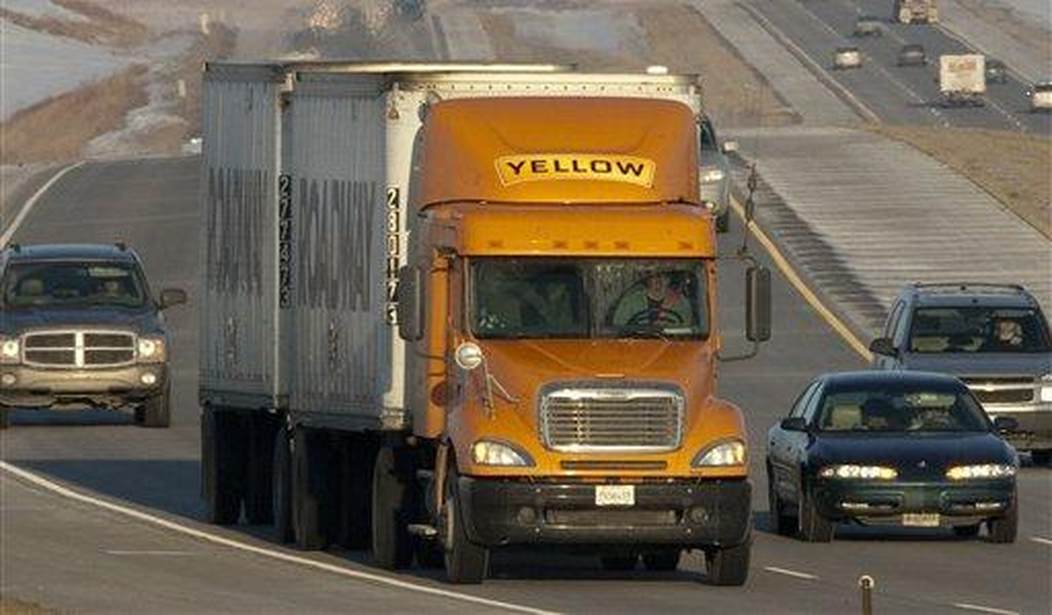
JOHNSTOWN, Pennsylvania -- Two months ago, 30,000 truckers at Yellow lost their jobs when one of the nation's oldest and largest trucking companies filed for Chapter 11 bankruptcy protection. Last week, Convoy, the digital freight broker that was supposed to reinvent the wheel and disrupt the trucking industry in a positive way, also abruptly shuttered its doors.
These kinds of closings by both freight carriers lay bare the uncertain state of trucking, an industry that is an indicator of the mood of the consumer and also the beating heart of our economy.
"In my opinion, this industry is heading in the wrong direction, and when trucking and supply chain freight is heading in the wrong direction, so is the country. I am just not sure that people understand there is a problem," said Rick McQuaide, who runs a freight company in Cambria County, Pennsylvania, as well as in Florida.
"The damage started when people went on a spending spree during COVID-19. The government was giving out cash, and people started ordering things in a way they have never done before," McQuaide explained.
As a result, McQuaide said, new trucks were on the road to meet the consumers' needs.
Beginning last year, that need started to recede when consumers' spending spree started to ebb, and, as a result, several different things have happened in the industry, beginning with too many trucks in comparison to the amount of freight that is available.
That, McQuaide said, hits the truckers and truck companies hard: "The economy is slowing from its frenzy, people aren't buying anymore, which means there are more trucks on the road than there are loads, and it's forcing the rates down."
McQuaide said his company's rates are about 20% lower than last year.
"In other words, last year, we go from Pittsburgh to Allentown, maybe $1,200. This year, we're lucky to get $900," he said, adding, "You have more truckers fighting for the same loads that exist now, and that's driving the rates down."
Truckers are making less than they did in per-mile peak earnings, McQuaide said.
"Inflation plays a big part of that -- at the same time, operating costs are going up."
McQuaide, who also owns and runs a logistics company that has a series of warehouses holding imports and exports, says the freight recession is real.
"It isn't just in the trucking world. It is also in air freight and in the rail industries."
He said he worries not enough people are considering the wider implications of people not spending and truckers not having anything to move.
"This slump is real," he said flatly.
McQuaide said the trucking industry, or any form of transportation that is moving goods, is the ultimate economic indicator of where the country is heading.
"It provides very valuable insights into the health of where the economy is going and into the mindset of the consumer: Are they spending, or are they feeling uncertain and moving within," he asked rhetorically.
September data from the government contradicted McQuaide's concerns, showing a surge in consumer spending -- 0.4% to be exact. But economists, like McQuaide, were cautious in reaction.
The Associated Press reported that many households have been spending their money unwisely, tapping into shrinking savings accounts and pulling out the credit cards.
Data also show that when people are spending, they are rethinking forking out money on the big things, such as dishwashers, shiny new stainless stoves and refrigerators, which backs up what McQuaide is seeing on the freight side.
"That is what we are seeing on the freight side, and that is not a good omen for the U.S. economy. That spending had kept us out of a recession," he said. "Now that consumers are pulling back, we should be paying more attention to what that means."



Join the Conversation
VIP members get the ability to comment on articles.