





WEST BRANCH, Iowa -- It is a testimony to the promise of our country to stand inside the home of young Herbert Hoover. The scope of where the Hoover family began, lived and ended each day can be observed in the blink of an eye.
One room served as a bedroom for the future president, his parents and his two siblings; the other room was their living room, dining room and kitchen. The rooms are literally side by side.
They had little. Soon after, they had less. Yet Hoover persisted.
"This cottage where I was born is physical proof of the unbounded opportunity of American life," Hoover once wrote.
And he was right.
Few today know much about the poor little Quaker boy who was orphaned at age 9, separated from his siblings and sent off to Oregon to be raised by an uncle. Most students learn that he was America's president when the stock market crashed in 1929, and that he failed to right the country as it slipped and fell into the Great Depression.
It was a dark time in our history: In one day, some people lost entire fortunes, homes, livelihoods and the promise of a better life. There was 25 percent unemployment and instant poverty; there were soup lines and low wages. Vacant lots soon became an assembly of makeshift homes built with bolts of cloth, cardboard boxes and castoff wood. Built by the newly homeless, they were called "Hoovervilles."
No one will dispute that this is what happened, yet there is so much more to this man that is important for us to know -- today and tomorrow. Why? Because what happened before us guides us to what may happen to us again and serves as an instruction on how not to repeat our worst mistakes.
Forgetting history is shameful for any people. Omitting, ignoring or destroying history is worse. In truth, it is the highest moral and intellectual sin that a country's people can commit.
Hoover never finished high school, failed his college entrance exam and, once admitted to college, wasn't exactly the best of students. But he found a way to persevere once he found his niche: problem-solving, which led to an academic major, and then a career as a geologist and an engineer.
And he was quite brilliant at it. Hoover and his wife, Lou Henry Hoover, a fellow Stanford University graduate, would soon travel several continents and find themselves in precarious situations, such as being trapped in China at the beginning of the country's Boxer Rebellion. Their dedication and his tactical eye eventually earned him a reputation for bringing troubled mining operations to life. His well-earned expertise also earned them great wealth.
Yet Hoover never strayed far from his humble Quaker upbringing; he remained modest and loved hard work. He appreciated solitude and felt awkward when showered with attention.
What he loved most was "doing." And he rose to that occasion in 1914 when more than 100,000 Americans became trapped in Europe without cash, food or shelter as the continent descended into World War I.
Hoover essentially reached into his pocket and got all those Americans home on his dime, with a promissory note and nothing else. Of the millions he spent, all but $400 of what he donated was returned.
That says a lot about the grace of the Americans he helped.
It says even more about the confidence and respect he earned.
That moment forever changed his life: After Germany invaded Belgium and cut off the food supply to the non-agrarian country, he was called upon to help them survive the crisis.
He sprang into action, coordinated an unprecedented relief effort and, in the entirety of the war, saved the lives of millions of war victims by distributing five million tons of food to them. He went on to lead the American food-relief effort after the war, become a national hero and serve as the U.S. secretary of commerce.
His political views were so well-hidden (he served in the administrations of Democrat Woodrow Wilson and Republican Calvin Coolidge) that, when people began to wonder whether he would run for president, a question often arose: "Well, is he a Republican or a Democrat?"
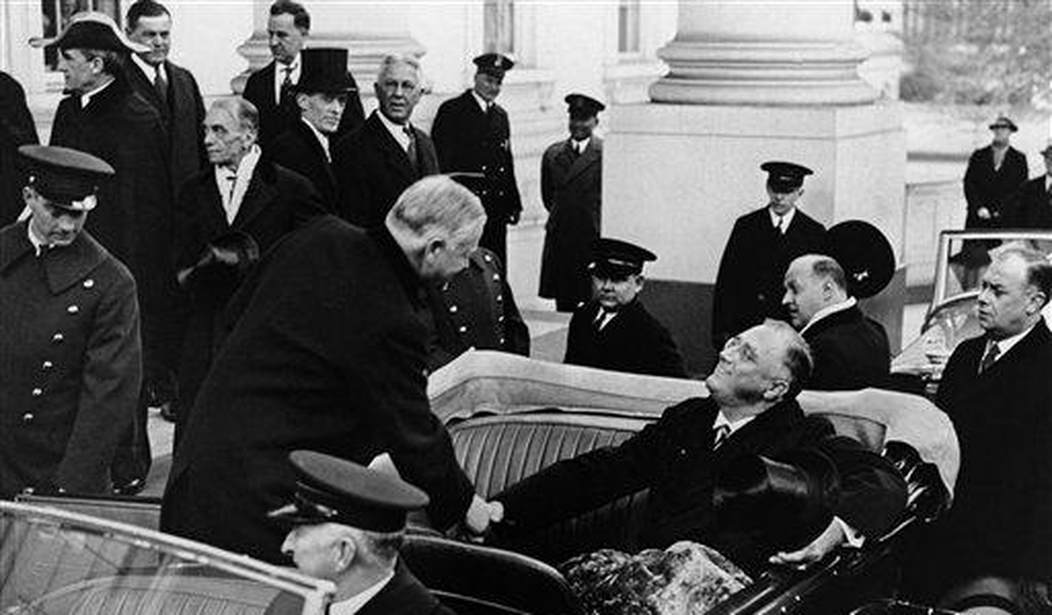
When he lost his re-election campaign to Franklin Roosevelt in 1932, Hoover took it hard. FDR made it harder because he used Hoover much the way House Speaker Paul Ryan or Senate Minority Leader Nancy Pelosi are used by opposing parties today for political gain.
Hoover found reputation redemption in President Harry Truman, respect from Presidents Dwight Eisenhower and Richard Nixon, and a deep friendship with President John F. Kennedy.
The Herbert Hoover National Historic site, where his first home sits in West Branch, contains a sprawling detailed instruction on the life and accomplishments of the 31st president.
The artifacts, photos and interactive displays place you into our history over 100 years ago: struggles, accomplishments, technological innovations, other inventions, wars and economic despair -- all things that we should always absorb and never forget.
Hoover was the first man elected U.S. president who had never previously been elected to office or been a general.
There is much to learn from his successes and, if we are wise enough, from his failures -- that is, if we take time from this moment, and from who and what we are today, to understand who we once were.
If not, we will once again stumble badly before we figure out who we will become.


Join the Conversation
VIP members get the ability to comment on articles.