






What is the overriding lesson learned about this year of promised “hope” and “change,” given the politics, public scandals and shifting social behavior that have permeated American pop culture?
I don't think Americans know yet what they want. But they are pretty clear on what they don't want.

They don't want Bush, they don't want a bailout of Wall Street banks or Detroit automakers, and they don't want Washington to try to spend its way to some minimal recovery.
They didn't want New Jersey Governor Jon Corzine and, now, they don't seem to want House Speaker Nancy Pelosi, Majority Leader Harry Reid or U.S. Sen. Chris Dodd, D- Conn. – or a health-care-reform bill with a public option.
At least not this week.
The recession has impacted this confusion over our desires more than any other factor.
Typically, a recession is a time when people take stock of their lives; an economic crisis tends to remind people that they can cut out the things they realize they didn't need or pretended were not a problem.
People stop papering-over their problems with money – because, simply, they don't have the money.
They try to recollect the real meaning of their lives, to figure out what is important. Usually, they come back to the basics: family, faith, community, compassion.
That is why people beyond Washington look at two over-dressed White House party-crashers, or at staged beer-summits, as examples of what they never want to stand for.
Perhaps the most culturally representative political moment of this year was when Michaele and Tareq Salahi crashed President Obama’s first White House State Dinner. The excessive, fame-seeking, social-media-using wannabes uncovered this administration’s willingness to give staffers cover for no good reason – even if it was at the risk of throwing the guys that are supposed to protect you under the bus.
Perhaps the most politically representative moment of this administration was when the president went off his teleprompter for the first time and let racism out of the bag with one word: “Stupidly.” It came on the heels of the arrest of a black Harvard professor, Henry Louis Gates, a presidential friend, by a white Cambridge, Mass., policeman.
While we probably remain some time away from relocating our cultural center, we are on the road way to doing so.
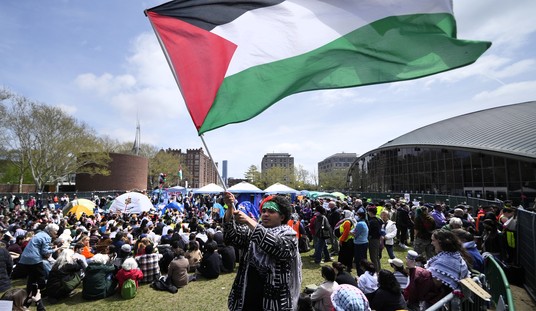
The “Tea Party” movement – born of frustration, maturing into an integral part of our politic fabric – is about reconnecting with the ideals of liberty and limited government.
While that movement caught both political parties by surprise, it really shouldn’t have. Throughout our history, Americans always cycle toward renewal when we feel disconnected from our leadership.
All of the renewed concern emanating from tea parties is not racism, as some pundits claim in order to dismiss the movement’s seriousness; it is a true concern about the government’s rising budget deficit and public debt and a reconnection with such ideas as a belief in hard work and a rejection of easy money.
Next, look for Democrats on the left to become just as disengaged as those on the right and in the middle; left-leaning true believers are less than thrilled with the health care reform efforts that have sputtered out of Congress.
Where are we headed?
Who knows – but we probably have been there before, and we’ll probably be back there again.
Join the Conversation
VIP members get the ability to comment on articles.