







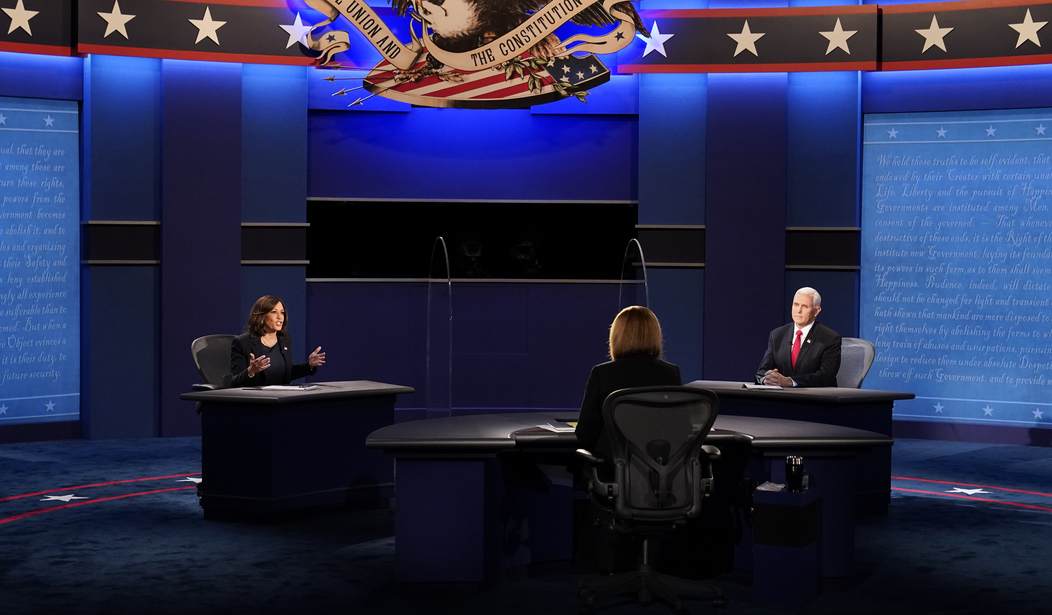
Finally, Americans got the (relatively) civil, substantive debate that has eluded them thus far this election cycle. On October 7, Vice President Mike Pence and vice-presidential hopeful Sen. Kamala Harris (D-Calif.) sparred for ninety minutes on a wide range of topics including tax reform, healthcare policy, and the coronavirus response. But for all the ground they covered, they kept voters in the dark about a critical issue that looms large over a struggling country. Neither Pence nor Harris touched on the ballooning national debt and the dire implications for taxpayers and future generations of Americans. Voters deserve better than the same, tired tiptoeing around the fiscal issues that really matter.
Vice President Pence and Sen. Harris cleared the embarrassingly low bar set by their running mates by avoiding personal barbs and diving right into tax policy early in the debate. Pence rightly heralded the success of the Tax Cuts and Jobs Act passed by Congress and signed into law by President Trump in December 2017. Pence noted that the landmark legislation cut taxes for the vast majority of Americans, bolstered hiring, and increased wages and benefits for workers.
Pence also pointed to the repeated, concerning statements by Team Biden that tax reform would go by the wayside under President Biden. Sen. Harris “assured” voters that the Biden administration wouldn’t raise taxes on Americans making less than $400,000 per year, even though eliminating the TCJA would do exactly that. The average American individual taxpayer is saving roughly $1,400 in taxes per year post TCJA, and the average family of four has seen $2,900 in annual savings.
Harris was on far firmer ground when she criticized the Trump administration for raising trade taxes (i.e. tariffs), all in the name of waging a losing trade war against the entire world. The vice-presidential hopeful could have added that tariffs on everything from washing machines to stuffed pasta to steel pipes have cost Americans roughly $57 billion per year – or more than $400 per household.
But in their discussion on tax policy, the candidates failed to mention the elephant (or donkey) in the room – runaway spending. Even in the three years before the coronavirus, an elephant-controlled executive branch and Senate supported record-setting deficits while paying lip service to the idea of spending reform. Despite record prosperity, the federal government spent far beyond its means resulting in a nearly-trillion-dollar deficit for fiscal year (FY) 2019. Without spending restraints, lawmakers and the president are sending a message to taxpayers that they’ll need to pay more money to Uncle Sam down the road even if they’re getting a reprieve now.
And this message has only been amplified in the seven months or so since the start of the coronavirus. While lawmakers on both sides of the aisle reasonably saw fit to help struggling households and businesses stay afloat via temporary relief, much of the $4 trillion deficit accrued this year went to an array of special interests, pols, and politically connected businesses. For example, the taxpayer-funded Paycheck Protection Program (PPP) wound up benefiting mammoth corporations and wealthy celebrities despite the program’s goal to support small businesses down on their luck. Taxpayers foot the bill for Robert de Niro’s chain of luxury sushi restaurants and hotels, while also having to shell out for Kanye West’s fashion company. And, at least nine lawmakers benefited from PPP loans despite clear and obvious conflicts of interest. This poorly targeted spending has resulted in the national debt skyrocketing from about $23 trillion to more than $27 trillion – more than $200,000 per household – in just over nine months.
Neither candidate touched on this pressing issue. Sen. Harris failed to explain how taxpayers are supposed to pay for a Biden administration’s proposed $11 trillion in new spending over the next 10 years. And, Vice President Pence failed to make the case that a second-term Trump administration would reverse course from the status quo of trillion-dollar deficits.
It’s surely time for a bipartisan convention to get the debt under control. But until then, the least the candidates could do is acknowledge the debt and champion fiscal accountability.
Ross Marchand is a senior fellow for the Taxpayers Protection Alliance.
Join the Conversation
VIP members get the ability to comment on articles.