







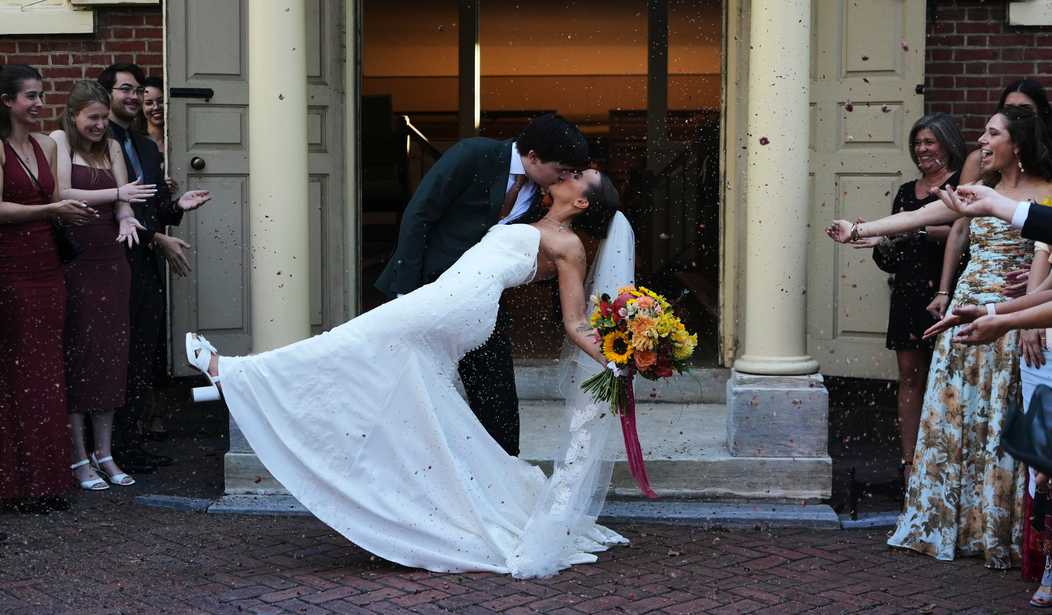
I once stood in an operating room and watched the woman I loved give birth to our child. I saw her courage. I saw her fear. I saw her body opened so that life could enter the world. I walked out of that room knowing something irreversible had happened. Not just biologically. Not just legally. Something in the moral structure of my life had shifted. I was no longer simply a man. I was a husband who had witnessed sacrifice. I was a father. And I believed—deeply—that what we had shared had bound us in a way that paperwork never could.
That is why I struggle when marriage is spoken of as if it were a contract.
A contract protects interests. It defines terms. It can be renegotiated when expectations are not met. There is nothing inherently wrong with contracts; they are necessary in business and law. But marriage was never meant to function like a business agreement. Historically, it was understood as a covenant—a promise that reshapes identity. Covenant does not merely regulate behavior. It changes who you are.
Across cultures and centuries, human beings recognized that some moments carry greater weight than others. Birth. Vows. Sacrifice. Death. These were not treated as routine events but as thresholds. They marked permanent transitions. Marriage framed those thresholds. It was the promise that said, “What we share here matters beyond convenience.”
When I watched my wife give birth, I did not see a procedure. I saw strength. I saw vulnerability. I saw a woman enduring pain so that our child could enter the world. That moment elevated my understanding of her. It deepened my respect. It made the word “wife” feel sacred. I cannot reduce that to biology. I cannot reduce it to emotion. It felt binding.
I suspect many women understand this instinctively. Many men do too, though we don’t always articulate it well. There is something in the human heart that knows certain shared experiences change the moral stakes of a relationship. They make it heavier. More serious. More real.
Somewhere along the way, however, our cultural language shrank. We began speaking about marriage primarily in terms of personal fulfillment and individual satisfaction. We replaced the language of covenant with the language of contract. Instead of asking, “What does this vow require of me in light of what we have shared?” we began asking, “Is this still working for me?”
That shift may seem subtle, but it changes everything.
If marriage is a contract, then its durability depends entirely on ongoing satisfaction. If expectations are unmet, exit becomes logical. But if marriage is a covenant, then shared history matters. Shared sacrifice matters. The moments when two people stood exposed before one another—emotionally, physically, spiritually—matter.
This is not an argument against autonomy or against acknowledging real harm. It is not a denial that extreme circumstances in marriages can fail. It is simply a plea to recover hierarchy. Not all experiences are equal. Relieving oneself in private is not the same as holding a newborn child at three in the morning while your wife sleeps from exhaustion. A difficult week is not the same as a shared threshold that permanently alters identity.
Without a hierarchy of value, permanence weakens. If everything is flattened into preference and process, then nothing binds.
I write this not to accuse, but to testify. For me, certain moments in marriage were not negotiable in their meaning. They were sacred. They elevated my understanding of commitment. They made the word “forever” feel less like poetry and more like an obligation freely embraced.
Many women long to be cherished in that way—not as replaceable, not as evaluated against alternatives, but as uniquely woven into a man’s story. Many men long to believe that the courage they witness, the sacrifices they share, and the children they raise create a bond that carries weight beyond mood or circumstance.
Marriage cannot survive as a mere contract. Contracts protect interests. Covenant protects meaning.
If we want marriages that endure, we must recover the courage to say that some promises are not temporary, that some shared experiences deepen rather than dilute obligation, and that certain thresholds—like the birth of a child—mark us in ways we cannot and should not ignore.
The question before us is simple: Do we still believe that some moments eternally bind?
If we do, then marriage remains something more than an agreement. It remains a covenant—serious, sacred, and worthy of the weight it was always meant to carry.
Editor’s Note: Do you enjoy Townhall’s conservative reporting that takes on the radical Left and woke media? Support our work so that we can continue to bring you the truth.
Join Townhall VIP and use promo code FIGHT to receive 60% off your membership.
Join the Conversation
VIP members get the ability to comment on articles.