







In the course of the 20th century, Venezuela went from being one of the poorest countries in Latin America to becoming the richest. In 1970, it ranked among the 20 richest countries in the world with a higher per-capita GDP than Spain, Greece and Israel, and only 13 percent lower than the UK.
Venezuela’s reversal of economic fortune started in the 1970s. From 1974 onwards, labor market regulations were tightened to a level that was unprecedented almost anywhere else in the world – let alone Latin America. Increasing state interference in the economy and massive over-regulation led to the situation in the once rich country constantly deteriorating.
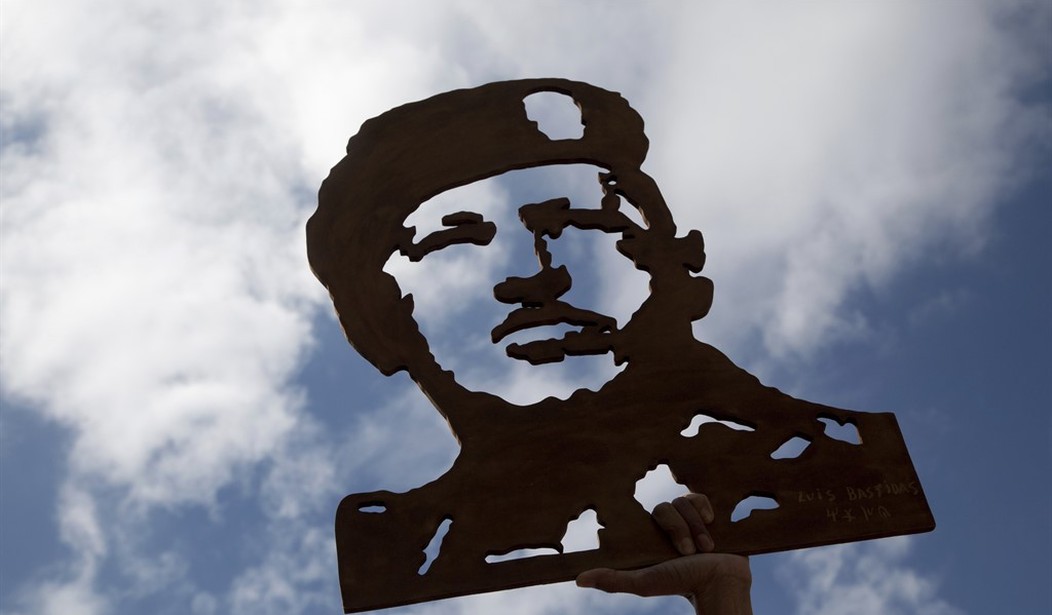
But the example of Venezuela shows that when the economic situation worsens, voters may well opt for a supposed solution that makes their situation much worse. Many Venezuelans put their faith in the charismatic socialist leader Hugo Chávez as the savior who would deliver their country from corruption, poverty and economic decline.
Chávez, who was elected president in 1998, had plenty of admirers among left-wing intellectuals and parties in Western countries. Jeremy Corbyn, leader of the British Labour Party from 2015 to 2020, praised Chávez, as “an inspiration to all of us fighting back against austerity and neoliberal economics in Europe.”
Thanks to Venezuela’s oil deposits – the largest in the world – and the oil price explosion that coincided with Chávez’s presidency, filling his government’s coffers to the brim, his large-scale experiment in 21st century socialism got off to a promising start, although it would eventually descend into economic disaster, hyperinflation, hunger and dictatorship.
In 2007, in an attempt to secure a controlling interest of at least 60 percent in Venezuelan oil ventures for PDVSA, the Chávez government forced foreign oil companies to accept minority stakes or face nationalization. When Chávez first came to power, over 50 percent of oil production profits went to the government. By the time of his death in 2013, the government take of over 90 percent was one of the highest in the world.
Following his re-election in 2006, Chávez nationalized an increasing number of industrial enterprises, starting with the iron and steel industries. Government takeovers of the cement and food sectors, power utilities and ports soon followed. Between 2007 and 2010 alone, around 350 businesses were moved from the private to the public sector. In many cases, executive positions in the newly nationalized enterprises were awarded to loyal party members. With one in three workers employed in the public sector by 2008, the government payroll ballooned.
Badly managed public enterprises received generous subsidies, which enabled them to retain more employees than they needed. The payment of oil revenues into a rainy-day fund had already been stopped in 2001, and investment in the oil industry – the very basis of the country’s livelihood – was also sacrificed in favor of ever more ambitious social spending plans. After Chávez’s death in 2013, his successor and former second-in-command Nicolás Maduro accelerated the nationalization of dairies, coffee producers, supermarkets, manufacturers of fertilizers and shoe factories.
A 2016 survey by the Central University of Venezuela found that four out of five Venezuelan households lived in poverty. Some 73 percent of the population experienced weight loss, with the amount lost averaging 20 pounds in 2016. In 2021, 77 percent of the Venezuelan population lived in extreme poverty.
Chávez had gradually abolished the separation of powers. Under his successor, Nicolás Maduro, the government became increasingly authoritarian. In recent years, Venezuela has increasingly developed into a classic socialist dictatorship: The political elite is corrupt to the core. Freedom of the press and freedom of assembly only exist on paper. Venezuela ranks fourth to last worldwide in Transparency International’s Corruption Perceptions Index.
Several United Nations institutions identified evidence of crimes against humanity by the Maduro regime in 2020 and 2021. According to the UNHCR, more than 7 million people had left Venezuela – equivalent to a quarter of the population. This is not only the largest refugee and migration movement in South America’s recent history, but there is hardly any other region in the world where so many people have left their country.
And how have socialists around the world, who once so euphorically praised Venezuela’s “Socialism for the 21st century,” responded? They react as they have after every failed socialist experiment: They say, “That wasn’t really socialism at all.” But next time, they promise, it will work.
Rainer Zitelmann is the author of "The Power of Capitalism," and "How Nations Escape Poverty."
Join the Conversation
VIP members get the ability to comment on articles.