





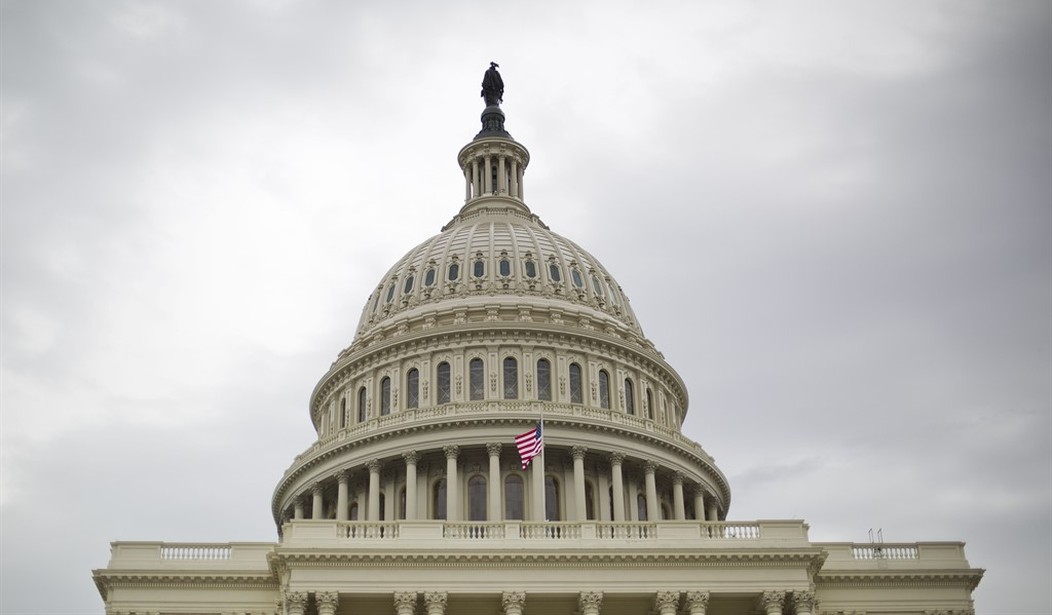
I've written a book chapter and a lot of columns over the years on the Regulations from the Executive In Need of Scrutiny (REINS) Act ---- a profoundly simple, powerful bill that would require regulators and bureaucrats to get their most expensive rules approved by Congress before they could take effect ---- and we've never been closer to seeing it signed into law.
The House is planning to take it up as one of the first orders of business in the new 115th Congress, and it is expected to pass, as it has in the House each of the last three Congresses.Each previous Congress it passed the House under a veto threat from President Obama, who was adamantly opposed to any of his regulatory handiwork being scrutinized by our elected officials.
Times have changed.
"I will sign the REINS Act should it reach my desk as President and more importantly I will work hard to get it passed," Donald Trump said in a statement his campaign provided me last year. "The monstrosity that is the Federal Government with its pages and pages of rules and regulations has been a disaster for the American economy and job growth. The REINS Act is one major step toward getting our government under control."
It took a while to get to this point. The REINS Act started as an idea in the head of a remarkable 78-year-old tea party activist in Alexandria, Kentucky named Lloyd Rogers.
In 2009, Rogers went to meet with his then-congressman Geoff Davis at a town hall meeting. Both were outraged about an EPA storm water management consent decree that cost the three northern Kentucky counties in a consolidated sewer district about a billion dollars, doubling water fees.
He handed Davis a piece of paper that quoted Article I, Section 1 of the United States Constitution:"All legislative Powers herein granted shall be vested in a Congress of the United States, which shall consist of a Senate and House of Representatives."
The paper also had a simple legislative proposal: "All rules, regulations, or mandates that require citizens, state or local government financial expenditures must first be approved by the U.S. Congress before they can become effective."
Davis took the idea back to Washington and huddled with his key advisers to develop the simple idea into a robust, workable piece of legislation. That idea became the REINS Act, and was made a part of the official Pledge to America document on which Republicans won control of the House in 2010.
The REINS Act cuts to the heart of abuse of regulatory power by requiring any major regulatory action to pass the House and Senate and be signed by the president (or have a veto-override), before it can take effect. It seems obvious. The best ideas always do.
The REINS Act's first Senate sponsor was Jim DeMint, but when he retired it was fittingly taken up by Rand Paul, on whose campaign Rogers was a tireless volunteer.When Geoff Davis retired, the bill's lead sponsorship was taken over in the House by Indiana's Todd Young.This time around Doug Collins of Georgia is leading the charge in the House, while Paul and Young (newly promoted by the voters of Indiana) together lead the fight in the Senate under Mitch McConnell ---- a Kentuckian like Rogers, Davis, and Paul.
That Senate vote will be difficult, as many Democrats ---- aghast though they might be at the regulations and deregulations to come from Trump appointees in the federal bureaucracy ---- understand thatlack of accountability is a great long-term advantage for their big government ideology.But ten Democrats running for reelection in 2018 are sitting in states that voted for Trump, and they may have a difficult time explaining to voters why they should re-elect someone unwilling to even vote on major regulations.And the House making it a top priority will build strong momentum for the Senate fight.
As we work to restore the U.S. Constitution, there is no better place to start than at the beginning, with Article I, Section 1. Thanks to Lloyd Rogers, a Republican Congress, and Donald Trump, we may be poised to do just that.



Join the Conversation
VIP members get the ability to comment on articles.