







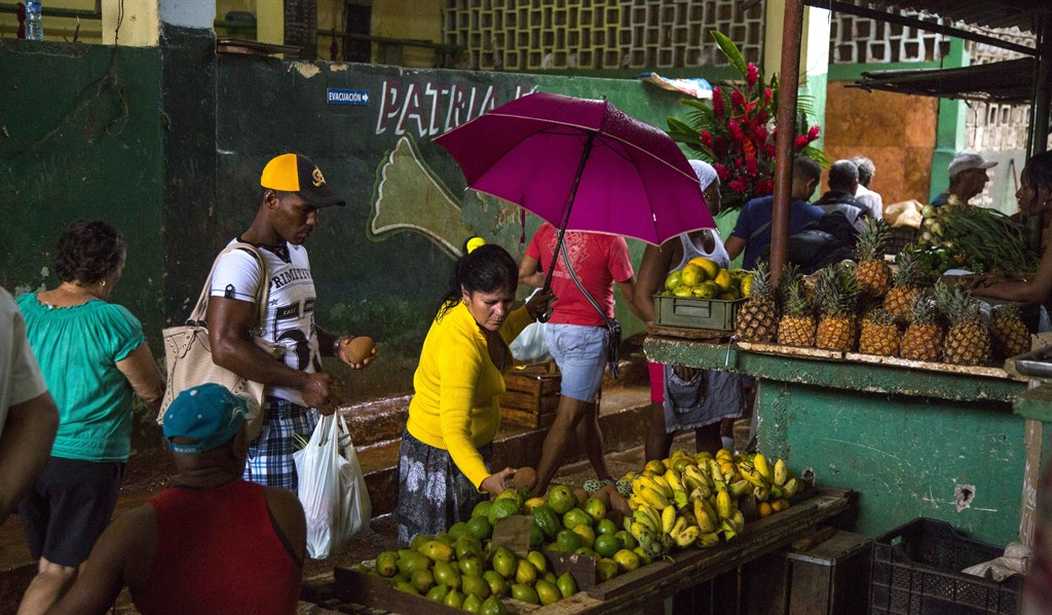
US-EU trade talks are already stalled over agriculture issues. And yet the European Union’s new “Farm to Fork” strategy doesn’t just double down on the EU’s contentious agricultural regulations. It promises to use access to European markets to compel the United States and other countries to adopt EU-style organic farming, precautionary and other regulations if they want to remain trading partners with Europe.
“Farm to Fork” (or F2F) is being billed as “the heart of the European Green Deal.” Like recent energy, climate and other initiatives, it is largely an environmentalist wish (or demand) list – with little basis in science, practical experience or real world impacts. It sets out three primary objectives, which the EU intends to implement fully by 2030, barely nine years from now:
-Bring “at least 25% of EU agricultural land under organic farming” – from its current 7.5%
-Reduce “overall use and risk of chemical pesticides by 50% – forcing greater use of “natural” chemicals
-Reduce the use of manmade chemical fertilizers “by at least 20%” – again forcing “natural” substitutes
F2F is being billed as a continental and global agricultural transformation that will ensure a “just transition” to a “more robust and resilient food system,” guarantee “affordable food for citizens,” and simultaneously improve human health, protect biodiversity, and promote environmental sustainability.
It will almost certainly end up doing just the opposite, which is why the European Conservatives and Reformists Party is hosting a "Europe Debates" webinar on the topic this Wednesday, July 29.
The problems with “organic” farming are well documented, though largely ignored by environmentalists, policymakers, regulators, journalists and academics.
Organic agriculture requires far more land and much more human labor than modern mechanized farming with manmade fertilizers and crop-protecting chemicals, to get the same crop yields. Many of the “natural” fertilizers and other chemicals that organic farmers employ are equally or more dangerous to bees, other insects, birds, fish and terrestrial animals than modern manmade alternatives.
Low-yield organic agriculture raises food prices for consumers, particularly harming poor families and countries, many of which have been especially hard hit by the COVID-19 pandemic. It makes EU farmers increasingly uncompetitive in world markets. It creates a less resilient food system that is increasingly vulnerable to plant diseases, invasive species, floods, droughts and insects. As a result, it inevitably undermines the climate, “sustainability,” biodiversity and nutrition goals it promises to achieve.
Finally, Farm to Fork will also likely exacerbate the EU’s growing trade frictions with other nations. Even before F2F, agriculture issues were already imperiling US-EU bilateral trade agreements. Meanwhile, the US and some 35 other nations had formally complained to the World Trade Organization that current EU regulations on agricultural imports clearly violate internationally accepted norms, because they are not based in science. And now F2F promises to impose similar productivity-destroying regulations on even its poorest trading partners: African countries. In fact, the European Commission (EC) itself has admitted:
“It is also clear that we cannot make a change unless we take the rest of the world with us.… Efforts to tighten sustainability requirements in the EU food system should be accompanied by policies that help raise standards globally, in order to avoid the externalisation and export of unsustainable practices.”
Now the European Conservatives and Reformists Party (ECRP) is offering an opportunity to learn more.
This Wednesday, July 29, US Agriculture Secretary Sonny Perdue and new European Commissioner for Agriculture Janusz Wojciechowski will appear together in a webinar hosted by the ECRP.
The event is free and open to the public. It will be the first high-level discussion of these agriculture and trade issues between the US and EU since Farm to Fork was released. Other debate participants include: Anna Fotyga, Member of European Parliament, Poland & Acting President of the ECR Party; Hermann Tertsch, Member of European Parliament, Spain; Jon Entine, Founder and executive director of the Genetic Literacy Project; and Richard Milsom, Executive Director, ECR Party.
Please tune in: Wednesday, July 29 at 10 a.m. ET/4 p.m. CET
Go here for more information and here to register.
(The European Conservatives and Reformists Party https://www.ecrparty.eu/ is a conservative Eurosceptic European political party primarily focused on reforming the European Union on the basis of “Eurorealism,” as opposed to totally rejecting the EU. Its more than 40 political parties are united by center-right values, under the Reykjavik Declaration, and dedicated to individual liberty, national sovereignty, parliamentary democracy, private property, limited government, free trade, family values and the devolution of power away from a centralized EU and EC).
Quite clearly, humanity’s brief encounter with food uncertainty in the early days of COVID was a stark reminder that even the most advanced, technologically capable nations on Earth cannot take the safety and security of their food supply for granted. Poor countries are still dealing with COVID-related food uncertainty. Topics the panelists will be discussing are the following:
- What lessons have we or should we have learned from the COVID crisis or from past experience with organic agriculture, pesticide and fertilizer policies and practices?
- What policies could give our vast and complex food supply system the strength and resilience it needs to withstand whatever shocks and dislocations may hit us in the future?
- How will the US respond to these EU demands and threats under the Farm to Fork initiative?
- Inside the EU, who will bear the costs involved and how can the EU and EU nations assure equity, given the vast regional disparities across the EU?
-How will F2F impact the global competitiveness of European farmers?
- Does growing political opposition to the EU’s agreements with Latin America and Canada signal a reassessment of its broader trade strategy?
- Will the EU take an evidence-based scientific approach to the climate, sustainability, biodiversity and safety shortcomings of organic agriculture?
- How does the EU demand that impoverished African countries adopt European ideas, on organic farming, agroecology, the precautionary principle, pesticides, fertilizers and sufficient affordable energy, for instance – reflect EU ideals on justice, human rights and self-determination?
This week’s debate promises to be an invigorating and informative program.
Paul Driessen is senior policy analyst for the Committee For A Constructive Tomorrow (www.CFACT.org) and author of books and articles on energy, environment, climate and human rights issues.


Join the Conversation
VIP members get the ability to comment on articles.