





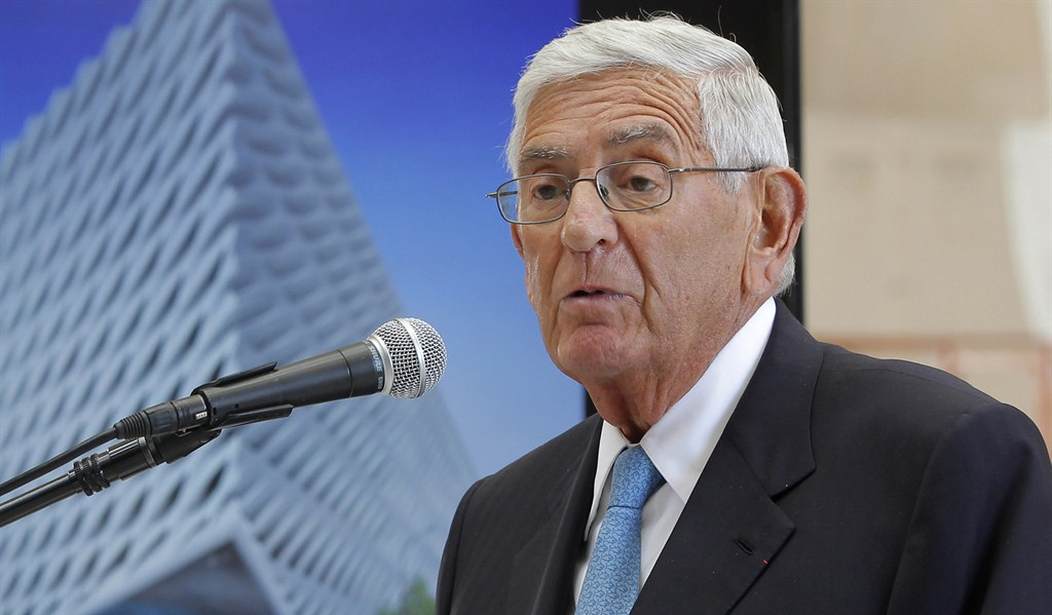
With metronomic regularity, some well-motivated billionaire announces that he wishes the government would increase his taxes. The latest entrant is Eli Broad. Writing in The New York Times, Broad praises private philanthropy and the capitalist system "that's yielded some of the greatest gains in prosperity and innovation in human history." Still, he concludes, "I simply believe it's time for those of us with great wealth to commit to reducing income inequality, starting with the demand to be taxed at a higher rate than everyone else."
Some pundits might mock Broad, pointing out that nothing is preventing him from sending bigger checks to Uncle Sam than current law requires. Or they might protest that the super-rich can well afford to say "raise my taxes" — they'd never feel it — whereas the comfortable but not quite rich might get caught in the net.
But Broad doesn't deserve disdain. In the first place, he's a great philanthropist who is a walking Horatio Alger story. The son of an immigrant house painter and seamstress, he attended public schools and worked his way through Michigan State by, among other things, selling garbage disposals door to door and operating a drill press at Packard Motor. He is the only former member of the United Auto Workers who went on to found two Fortune 500 companies in different industries — because he is the only person ever to have achieved that feat.
He has committed to giving 75 percent of his wealth away and has already donated hundreds of millions of dollars to education (especially urban public schools), the arts, and scientific and medical research. He deserves the benefit of the doubt about his motives.
Broad writes: "Some of us have supported closing the gulf between rich and poor by raising the minimum wage to $15 an hour, reforming our education system, expanding access to medical care, building more affordable housing." But, he concedes, "even in cities like my adopted hometown, Los Angeles, where many of these policies have been enacted, they have not adequately addressed the crisis. Our country must do something bigger and more radical."
Whoa. If something hasn't worked, maybe the answer is not more of the same.
Broad is worried about things that top most progressive lists — income inequality, the supposedly shrinking middle class, the climate crisis, and "skyrocketing" housing and health care costs (though not the $22 trillion national debt). There's plenty of doubt that the federal government is competent to address these problems with the proceeds of a wealth tax.
For one thing, housing costs tend to be local matters, and housing costs vary tremendously by region. The reason housing is so expensive in Broad's home state of California is the heavy burden of environmental regulations, rent control, and zoning. Housing in Los Angeles is 257 percent more expensive than in Dallas, Texas.
Reforming the education system is an excellent idea, and there's a strong case to be made that charters have begun to show results. But K-12 education is mostly a local, not a federal, matter.
How about a $15 minimum wage? It sounds good. People picture a hardworking dad or mom struggling to feed a family on $7.25 an hour and falling behind. But that's not reality. (Twenty-nine states plus the District of Columbia have higher minimum wages than the federal level.) The Bureau of Labor Statistics offers a detailed picture of minimum-wage workers. Half are under the age of 25. Three-fifths work in restaurants where their incomes may be supplemented by tips. By the way, what percentage of full-time workers would you imagine earns the minimum wage? According to 2017 figures from the Bureau of Labor Statistics, it's just 1.1 percent.
Nor is it clear that the "shrinking middle class" is an urgent national concern. Yes, the percentage of adults in the middle-income tier has declined since 1971 from 61 percent of the total to 52 percent. But slightly more entered the upper class than fell to the lower.
Rather than calling for the federal government to do more income redistribution, it might be useful to have states and localities examine what works in other jurisdictions. California might learn a thing or two about keeping housing costs down from Texas, and everyone can learn useful lessons from Utah's social welfare programs.
Hats off to Mr. Broad for wanting to do the right thing. Perhaps he might reconsider what that really is.
Join the Conversation
VIP members get the ability to comment on articles.