







MADISON — It’s been pretty clear that the New Green Deal would be a disaster for business and for consumers. Now a new study confirms just how disastrous the environmental/wealth redistribution plan would be for Wisconsin.
Wisconsin families would be shackled with $40,000 in new costs, and the Dairy State’s struggling agricultural sector would be crippled, according to the multi-state analysis authored by the Competitive Enterprise Institute (CEI) and Power the Future. Will Flanders, research director for the Wisconsin Institute for Law & Liberty, contributed to the study.
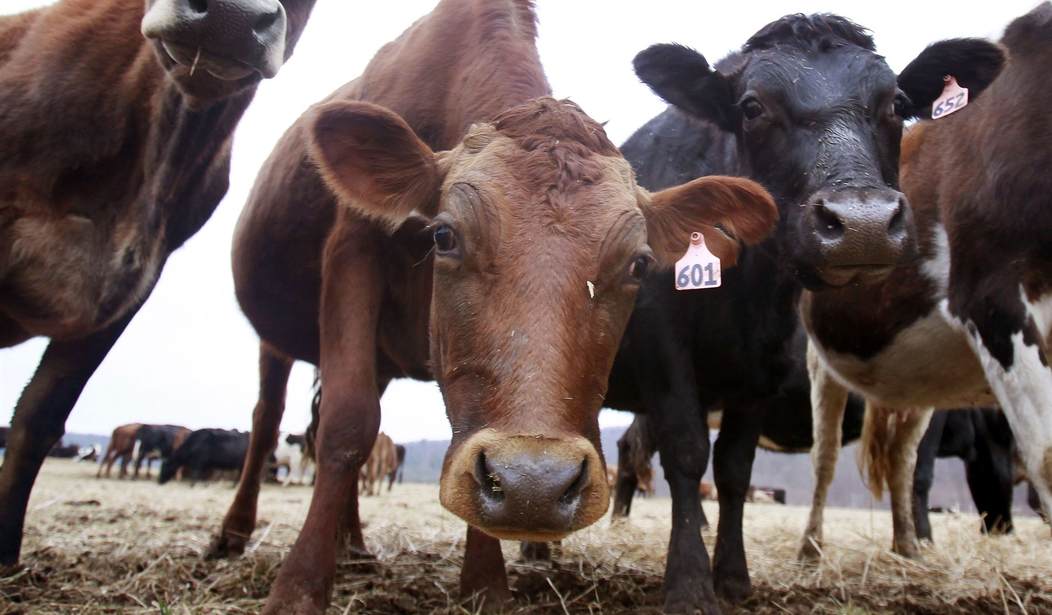
The Green New Deal — as championed by liberals such as U.S. Rep. Alexandria Ocasio-Cortez (D-New York), Rep. Mark Pocan (D-Wis.) and many of the Democratic presidential candidates — would cause $200 million in losses to Wisconsin farmers, while clobbering the state’s iconic dairy industry with $2.5 billion in additional costs.
CEI President Kent Lassman said the Green New Deal is not a serious proposal.
“At best, being most generous, it is simply negligent in getting its arms around the transition costs to the to the American life,” he said during a press conference at a Franklin manufacturing center. “At worst, it is political malpractice.”
The broader research looks at the Green New Deal’s impacts on 11 states. It measures additional electricity demand, costs associated with shipping and logistics, new vehicles, building retrofits, decreased crop yields, and the carbon tax on farmers.
In Wisconsin, households in the first year of implementation would face $75,000 in additional costs on the Green New Deal’s expensive ride to zero CO2 emissions within a decade. The increased costs would top $40,000 every year thereafter.
Flanders said the Green New Deal may play well in Washington, D.C., but it doesn’t cut it in get-real places like the Midwest, which rely on affordable, reliable energy. The Climate Change alarmist plan would “drive middle class families into poverty by imposing staggering annual costs,” he said.
For Green Deal-backing Democrats who have talked so much about the plight of the U.S. farmer, the sweeping CO2 reductions would be a liberal-inflicted blow on the ag industry. Wisconsin’s dairy farmers have slogged through a four-year milk price recession, protracted trade wars, anti-animal agriculture activists, and a punitive regulatory climate, said Cindy Leitner, president of the Wisconsin Dairy Alliance.
The study finds the Green New Deal would force dairy farmers to pay an additional $500 to $2,000 per cow per year in compliance costs.
“How does that translate? That means an average farmer in Wisconsin of 150 cows will pay between $75,000 and $300,000 per year in addition to what they are doing now,” Leitner said. “And if we think that we have seen a high exit of farms in Wisconsin in the past several years, this policy will close the door on any dairy surviving. It will be gone. This is very serious. This should not even be considered as a policy.”
Author's note: Empower Wisconsin’s Josh Waldoch contributed.


Join the Conversation
VIP members get the ability to comment on articles.