
I had to do a double-take. No, it wasn’t about the new Supreme Leader Ayatollah Mojtaba Khamenei reportedly being gay, which would be a death knell for this terrorist-supporting, murderous regime. If there’s one thing these people cannot tolerate, it’s gays, so he might end up in a permanent coma if this is true. The new leader is reportedly unconscious, suffering severe injuries in an air strike that cost him one or both of his legs. He is unaware that his father, Ayatollah Ali Khamenei, is dead or that there’s a war going on—one that his nation is losing. And that conclusion was published in an unlikely news outlet.
The Supreme Leader of Iran has died, the new one is in a coma and might die soon after a bunker buster was dropped on Tehran last night: was this Mojtaba falling into that permanent coma? The heart of the Iranian Revolutionary Guard Corps (IRGC) is gone. Most of the country's leaders are gone, and the military has been hollowed out. There are reports of mass defections within the IRGC, as the nation remains practically leaderless. Iran’s nuclear ambitions are permanently crippled, its ballistic missile infrastructure and arsenal are heavily degraded, and the navy is destroyed. Yet, some people want you to believe that we’re losing. We’re not.
And for Al Jazeera to admit that and not any U.S.-based outlet speaks to the level of rot within our newsrooms. The former is bad, which peddles terrorist propaganda daily, but not even they could mask what’s going on in Iran. It’s an a**-whooping. From the missile arsenal to the Strait of Hormuz, all the liberal talking points against this war were laid to waste…by Al Jazeera:
A good read in—checks notes— Al Jazeera:
— Steve Guest (@SteveGuest) March 17, 2026
“Seventeen days in, Iran’s supreme leader is dead, his successor is reportedly wounded and every principal instrument of Iranian power projection – missiles, nuclear infrastructure, air defences, the navy, proxy command networks – has… https://t.co/JkDT2zgrhA
Two weeks into Operation Epic Fury, the dominant narrative has settled into a comfortable groove: The United States and Israel stumbled into a war without a plan. Iran is retaliating across the region. Oil prices are surging, and the world is facing another Middle Eastern quagmire. US senators have called it a blunder. Cable news has tallied the crises. Commentators have warned of a long war.
[…]
But this narrative is wrong. Not because the costs are imaginary, but because the critics are measuring the wrong things. They are cataloguing the price of the campaign while ignoring the strategic ledger.
[…]
Iranian ballistic missile launches have fallen by more than 90 percent from 350 on February 28 to roughly 25 by March 14, according to publicly available data. Drone launches tell the same story: from more than 800 on Day 1 to about 75 on Day 15.
The figures drawn from US and Iranian military statements differ in detail but converge on the trajectory. Hundreds of Iranian missile launchers have been rendered inoperable. According to some reports, 80 percent of Iran’s capacity to strike Israel has been eliminated.
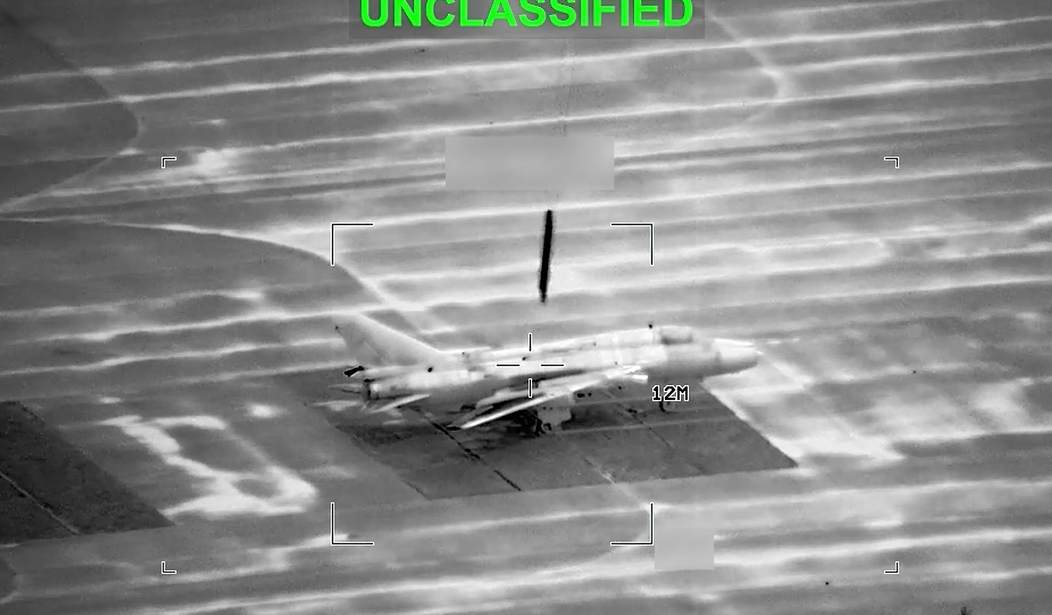
Iran’s naval assets, fast-attack craft, midget submarines and mine-laying capabilities are being liquidated. Its air defences have been suppressed to the point at which the US is now flying nonstealth B-1 bombers over Iranian airspace, a decision that signals near-total confidence in air dominance.
[…]
The campaign has moved through two distinct phases. The first suppressed Iran’s air defences, decapitated its command and control, and degraded its missile and drone launch infrastructure. By March 2, US Central Command announced local air superiority over western Iran and Tehran, achieved without the confirmed loss of a single American or Israeli combat aircraft.
The second phase, now under way, targets Iran’s defence industrial base: missile production facilities, dual-use research centres and the underground complexes where remaining stockpiles are stored. This is not aimless bombing. It is a methodical campaign to ensure that what has been destroyed cannot be rebuilt.
Iran now faces a strategic dilemma that tightens every day.
[…]
Iran entered 2026 with 440kg of uranium enriched to 60 percent purity – enough, if further enriched, for as many as 10 nuclear weapons. Before the June strikes, Tehran was less than two weeks away from enriching enough uranium for one nuclear bomb, according to US intelligence assessments. At that time, the International Atomic Energy Agency acknowledged that Iran’s accumulation of near-weapons-grade material had no clear civilian justification.
Reasonable people can disagree about whether diplomatic alternatives were fully exhausted…But the critics’ implicit alternative, continued restraint while Iran inched towards a nuclear weapon, is the policy that produced the crisis in the first place. Every year of strategic patience added centrifuges to the enrichment halls and kilogrammes to the stockpile.
[…]
The closure of the Strait of Hormuz is dominating the critical commentary. US Senator Chris Murphy has called it evidence that President Donald Trump misjudged Iran’s capacity to retaliate. CNN has described it as proof that the administration has lost control of the war’s escalation.
The economic pain is real: Oil prices have surged, a record 400 million barrels of oil will be released from global reserves, and Gulf states are facing drone and missile strikes on their energy infrastructure.
But this framing inverts the strategic logic. Closing the strait was always Iran’s most visible retaliatory card, and always a wasting asset. About 90 percent of Iran’s own oil exports pass through Kharg Island and then the strait.
China, Tehran’s largest remaining economic partner, cannot receive Iranian crude while the strait is shut. Every day the blockade continues, Iran severs its own economic lifeline and alienates the one major power that has consistently shielded it at the United Nations. The closure does not just hurt the global economy; it accelerates Iran’s isolation.
[…]
The most politically potent criticism is that the administration has no endgame. Trump’s own rhetoric has not helped: the oscillation between “unconditional surrender” and hints at negotiation, between regime change and denial of regime change, feeds the impression of strategic incoherence. Only 33 percent of American respondents in a recent Reuters-Ipsos poll said the president had clearly explained the mission’s purpose.
But the endgame is visible in the operational phasing, even if the rhetoric obscures it. The objective is the permanent degradation of Iran’s ability to project power beyond its borders through missiles, nuclear latency and proxy networks.
Call it strategic disarmament.
[…]
Seventeen days in, Iran’s supreme leader is dead, his successor is reportedly wounded and every principal instrument of Iranian power projection – missiles, nuclear infrastructure, air defences, the navy, proxy command networks – has been degraded beyond near-term recovery. The campaign’s execution has been imperfect, its public communication poor and its post-conflict planning incomplete. War is never clean. But the strategy – the actual strategy, measured in degraded capabilities rather than cable news cycles – is working.
Yeah, this is Al Jazeera. It’s a lengthy takedown of almost every trash liberal talking point spewed on CNN and MSNBC since this war began. It silences the so-called intelligence analysts who have said otherwise. It also makes Sen. Chris Murphy (D-CT), moron extraordinaire, once again look like the Hill’s biggest blowhard. The strait will reopen and remain open. There is no military on earth that can go toe-to-toe with us.
In every phase, we’re winning. Period. Even the terrorists’ top mouthpiece can’t hide it.