





As one of the first to chronicle and applaud its rise, I am not ready to pronounce the death of the tea party movement. But there are plenty of reasons to believe that what was a concerted and focused force in politics is becoming more that of a less focused and more diffused effort.
Some who have created their political fortunes under the tea party mantel, particularly its "leaders" in various parts of the nation, refuse to accept that what remains a great overall philosophy is no longer a "party" with which vast numbers want to identify. That has been established in numerous surveys of likely Republican voters around the nation. But the shift in support of the tea party itself does not mean the effort is dead.
First, even those who still feel called to don their Paul Revere outfits must recognize that movements such as what we saw leading up to the 2010 elections always lose some of their luster as they become more effective in impacting their targets. In other words, many a so-called establishment Republican takes a more conservative stand on many issues today as a result of the ferocity and power of the tea party movement in recent years.
Moreover, the economy is at least allegedly stronger than it was in the first years of the tea party's existence when it brought throngs of citizens to peacefully demonstrate in Washington D.C. and at other venues across the nation. Generally, as economic times get even marginally better, voters tend to moderate their views a bit.
This does not mean the demise of the tea party, but rather its solidification as a factor in Republican primaries and in General Elections. Note that it is as "a factor" but likely no longer the all-powerful deciding factor.
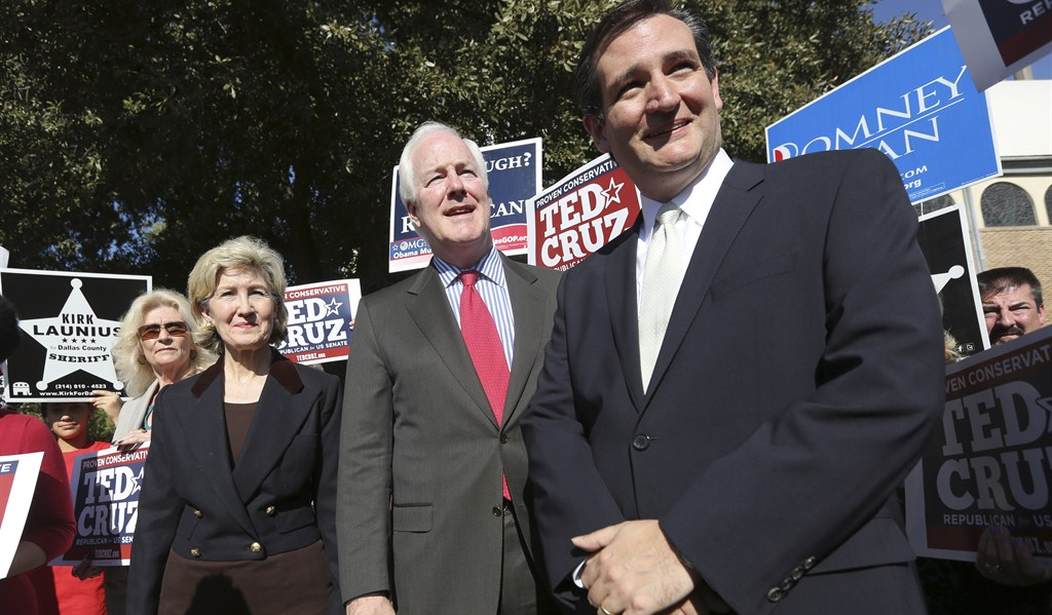
For example, few in Washington have attracted the ire of tea party types more than Sen. John Cornyn of Texas. Cornyn recently demolished his tea party-backed opponent Rep. Steve Stockman in the GOP primary vote on Cornyn's Senate seat. Sen. Cornyn has often been seen as soft on issues of importance to those who adhere to the Tea Party philosophy. He was recently rated the 17th most conservative member of the Senate, but for some in Texas, 17th begged the question, "why not the most conservative?"
Political pundits will either blow Cornyn's victory out of proportion and declare all things tea party dead, or, more likely, continue to lump conservatives and Republicans into a derisive "Tea Bagger" term that is both crude as to political language and incorrect as a description of that demographic's identity.
For example, Democrats in Georgia, one of a very few open Senate seats where they hope for a possible upset, are convinced that Republicans will nominate a weak candidate as a result of the strength of a tea party-dominated Republican primary process. But every indication suggests that the leading candidates for that nomination are more mainstream and while likely very conservative, not a firebrand whacko who could open the door to the daughter of former U.S. Sen. Sam Nunn. On her own, Michelle Nunn seems a somewhat uninspiring candidate and will struggle to escape from a political philosophy a bit left of that of the Georgia electorate.
On the 2016 presidential scene, past tea partyers might be pulled in different directions. Ted Cruz would, at the moment, seem to be the most likely candidate to enjoy tea party support. But former Arkansas Gov. Mike Huckabee might offer up a strong conservative alternative to Cruz's more "in your face" style. And Rand Paul would easily inherit not only the support of his father's past boosters, but a large swath of conservative voters looking for something new and refreshing from the GOP.
And, ironically, Jeb Bush, often viewed as the "ultimate insider" within the GOP establishment, continues to enjoy a strong conservative record as a former governor of Florida and would further split up the tea party crowd.
Cornyn's victory, while not a deciding moment for the tea party effort, is an early indication that "one snap of a finger" by past tea party leaders no longer guarantees a victory or defeat for a candidate. The movement is being forced to mature, enjoy its lasting impact, and adapt to its new role as a force, but not the deciding force, among Republicans.


Join the Conversation
VIP members get the ability to comment on articles.