







Editor’s note: The following commentary is an excerpt from remarks presented before the U.S. House Early Childhood, Elementary, and Secondary Education Subcommittee on Dec. 3, 2025, with minor edits made only for readability.
Parents know and love their children best. They are there when we enter the world, when we take our first step, start our first day of school, or need a shoulder to cry on. Through the parent-child relationship, the next generation is raised and cared for, equipping them to enter and contribute to society. Strong societies are built on a foundation of healthy, stable, thriving families.
But when the foundational right of parents to raise their child is ignored or undermined, it has severe consequences for children, families, and society as a whole. That’s why Congress should act now to end such brazen rejections of existing protections for children and parents.
Because of the primary role of parents, our laws have long recognized the fundamental right of parents to “direct the education and upbringing of one’s children.” For over 100 years, the U.S. Supreme Court has repeatedly affirmed the “natural duty of the parent to give his children education suitable to their station in life.” As the Court explained, “The child is not the mere creature of the state; those who nurture him and direct his destiny have the right, coupled with the high duty, to recognize and prepare him for additional obligations.”
Congress has played a pivotal role in safeguarding and promoting the authority of parents to guide the education and upbringing of their children. Two laws in particular—the Family Educational Rights and Privacy Act and the Protection of Pupil Rights Amendment—were intended to increase parental involvement in their child’s educational journey. Under FERPA, parents receive full access to their child’s education record, allowing them to prevent unauthorized changes without their approval. And under PPRA, parents have transparency into what their child is taught and can shield their child from invasive evaluations and questions about a child’s sexuality, family life, or religious beliefs.
Yet what should have been powerful tools for American families have been dulled by school officials who conspire to bypass the parental direction and involvement at the heart of FERPA and PPRA.
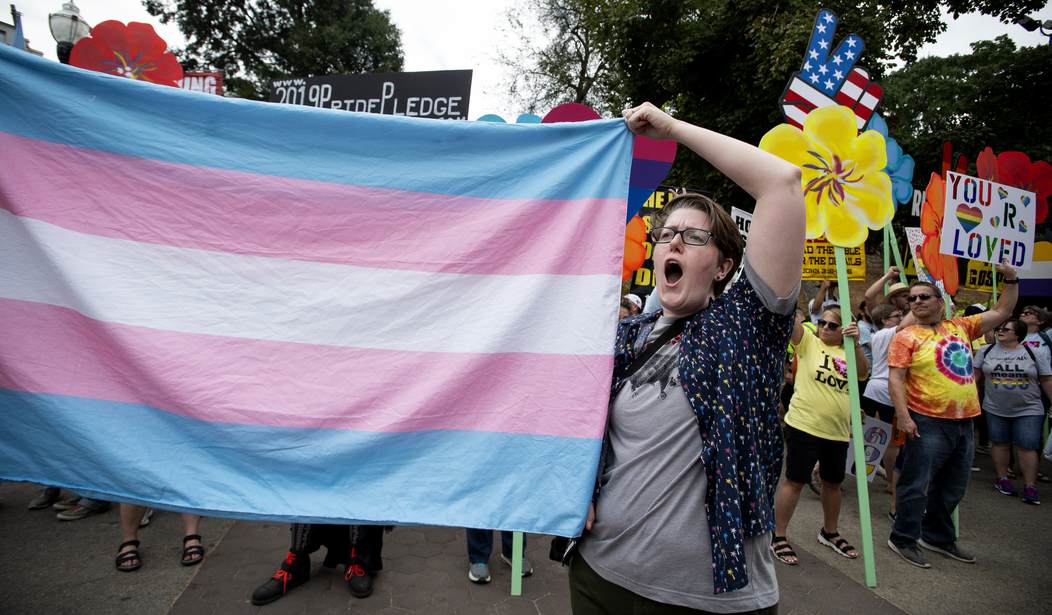
Nowhere is this more evident than in the growing threat from “secret-transition” policies. These are school district policies that withhold or conceal critical information from parents about their child’s identity, including that their child is being called by a different name or incorrect pronouns at school.
Over 1,000 school districts—impacting hundreds of thousands of children—have secret-transition policies that direct school officials to hide information from parents. These policies resulted in situations like that of the Vitsaxaki family in New York, whose middle-school daughter was treated as a boy by her school without her parents’ knowledge or consent. Or the Mead family in Michigan, where school officials actively concealed from the parents that they were socially transitioning the family’s middle-school daughter and even altered the child’s educational records before sending them home to the parents. And those are just two examples we have encountered where I work at Alliance Defending Freedom.
Secret-transition policies violate the letter and intent of FERPA and PPRA. They deprive parents of the information and involvement to which they are rightly entitled. These same policies are even used to threaten and punish caring teachers who believe parents should always be informed about what is happening to their children. Instead, teachers and staff are commanded to conceal information and deceive parents.
Worst of all, these violations of parental rights—including those rights protected by FERPA and PPRA—harm kids.
When children are deprived of the careful oversight that only parents can provide, they can be easily manipulated and pushed down paths that are detrimental to the child’s physical, mental, and educational development.
When parents are denied access to their child’s full educational record, they may not know that their child is struggling socially or academically and therefore cannot obtain professional help for their child.
When parents cannot readily review the curriculum, a child can be indoctrinated in radical ideology that undermines the family’s values and beliefs.
And when parents don’t know about a child’s mental health struggles—including the child questioning his or her identity—the child can be easily steered toward dangerous, often irreversible gender transition drugs and surgeries.
The original goals of FERPA and PPRA—to safeguard parental rights and facilitate greater parental involvement—are as important today as they were when these laws were enacted five decades ago. It is time for Congress to revisit them both, strengthen them to better safeguard parental rights, and explore additional measures to further stand with caring families seeking to care for and train up their children, consistent with their beliefs and values, free from unreasonable government interference.
Matt Sharp is senior counsel and director for the Center for Public Policy with Alliance Defending Freedom (@ADFLegal).
Editor’s Note: Do you enjoy Townhall’s conservative reporting that takes on the radical left and woke media? Support our work so that we can continue to bring you the truth.
Join Townhall VIP and use the promo code FIGHT to get 60% off your VIP membership!


Join the Conversation
VIP members get the ability to comment on articles.