







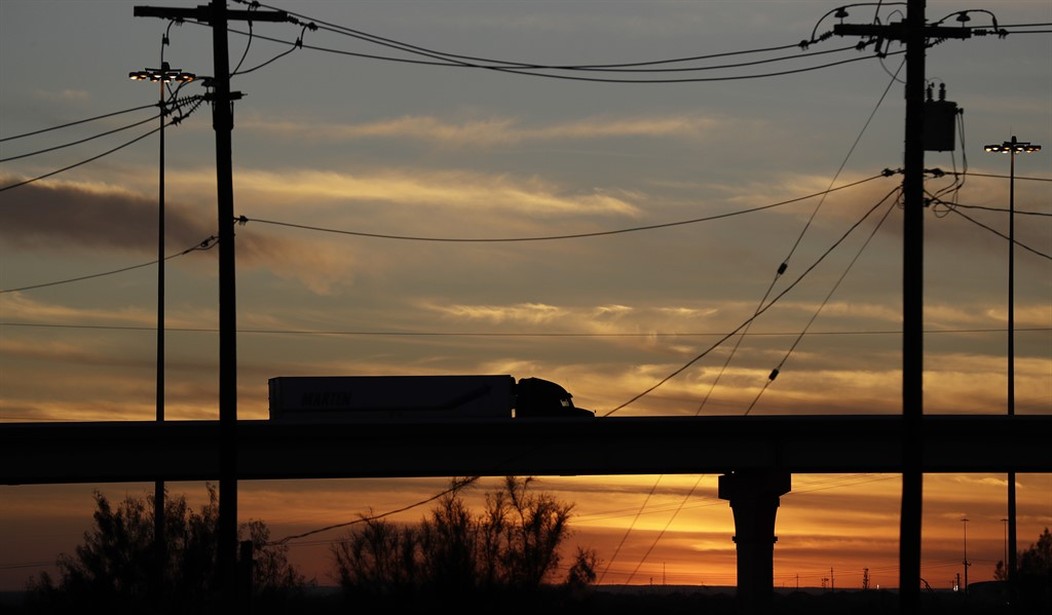
With the Trump administration and Republicans on Capitol Hill intent on curtailing government spending and lessening taxpayer burdens, they need look no further than efforts in Congress that would cost billions of dollars in infrastructure damage.
At issue are legislative proposals that would allow much heavier trailers on the nation’s highways. While these proposals rightly died in the previous session of Congress last year, like the return of the proverbial bad penny, their proponents will soon reintroduce them in the new session.
Current federal law generally limits the size of two trailers tethered together to no more than 28 feet in length each. Federal law also limits the weight of any single trailer to 80,000 pounds on the interstates. Both the weight and size limits are under near-constant attack from mega corporations that put pressure on federal and state lawmakers to relax them. The main thrust of their efforts is to get lawmakers to raise the current weight limit to 91,000 pounds or greater.
Set aside the obvious and documented dangers of allowing massive trucks on highways shared with motorists. The argument against such proposals also has a clear economic downside that consumers should understand.
As the public-safety focused Coalition Against Bigger Trucks notes in a recently released study, depending on the proposed heavier truck configuration, “between 65,157 and 82,457 local bridges nationwide would be put at risk if Congress allows heavier trucks on the nation’s highways.” The cost of replacing these local bridges ranges from an estimated $70.5 billion to $98.5 billion, depending on the gross vehicle weight.
And like most all infrastructure tabs, taxpayers are on the hook.
Beyond the infrastructure costs, increasing truck weights would have an inflationary impact at a time when policymakers are trying to bring down costs. Right now, there is fierce competition between trucking and other transportation modes, such as rail, to move goods. Shipping rates are kept in check, benefiting consumers. But raising weight limits would undermine that competition and in turn raise costs.
The competition that keeps shipping rates reasonable would erode. A study by transportation economist Mark Burton at Marshall University’s Appalachian Transportation Institute found that, “even a modest relaxation of the standards that govern truck sizes and weights will produce a measurable diversion of rail freight traffic to all-truck routings.”
That’s a bad result for businesses seeking competitive prices to ship their goods and for consumers, who will inevitably shoulder the higher costs to ship those goods. It’s also a bad result for a new administration working hard to bring down inflation, which polls show is top of mind for most consumers.
Unlike most policy proposals floated in Washington, D.C., this one has earned bipartisan contempt and is widely opposed by voters. From labor to law enforcement, opposition is strong.
Congress has been remarkably clear-headed and consistent in its opposition. Any increase “to truck size or weight would present both an unacceptable risk to motorist safety, including the safety of truck drivers themselves, and an unaffordable strain on roads and bridges in our communities,” several dozen lawmakers said in a joint letter back in 2020.
Congress has many important issues to tackle. The return of misguided measures to increase truck size is not one of them.
Kandrach is president of Consumer Action for a Strong Economy, a free-market oriented consumer advocacy organization.


Join the Conversation
VIP members get the ability to comment on articles.