





Five-plus months into the Trump administration, the outlines of a new foreign policy remain unclear. One of Donald Trump's frequent applause lines when he was a candidate was his promise to "rip up" the Iranian nuclear agreement, which Trump and other critics claimed was one-sided because it lifted crippling economic sanctions yet allowed too much room for Iran to pursue development of nuclear weapons. In April, the Trump administration certified that Iran was narrowly living up to the agreement to halt the development of nuclear weapons, but the administration nonetheless slapped new sanctions on Iran for its ballistic missile program and state-sponsored support for terrorism. This new approach might not be so aggressive as hard-line opponents of the Iranian nuclear deal hoped for, but it does deliver a needed shot across the bow to an Iranian regime that continues to threaten regional peace and suppress its people.
But what happens next? Iran continues to play an important and destructive role in Syria, backing the Assad regime in its murderous campaign against its own people. This week, U.S. Ambassador to the United Nations Nikki Haley warned in congressional testimony that Syria's apparent preparation for another chemical attack could have grave consequences. "The goal is, at this point, not just to send Assad a message but to send Russia and Iran a message," Haley said: "If this happens again, we are putting you on notice." She continued, "My hope is that the president's warning will certainly get Russia and Iran to take a second look, and I hope that it will caution Assad." But if the U.S. response were to be another limited attack on a Syrian airfield, that message would most likely be ignored.
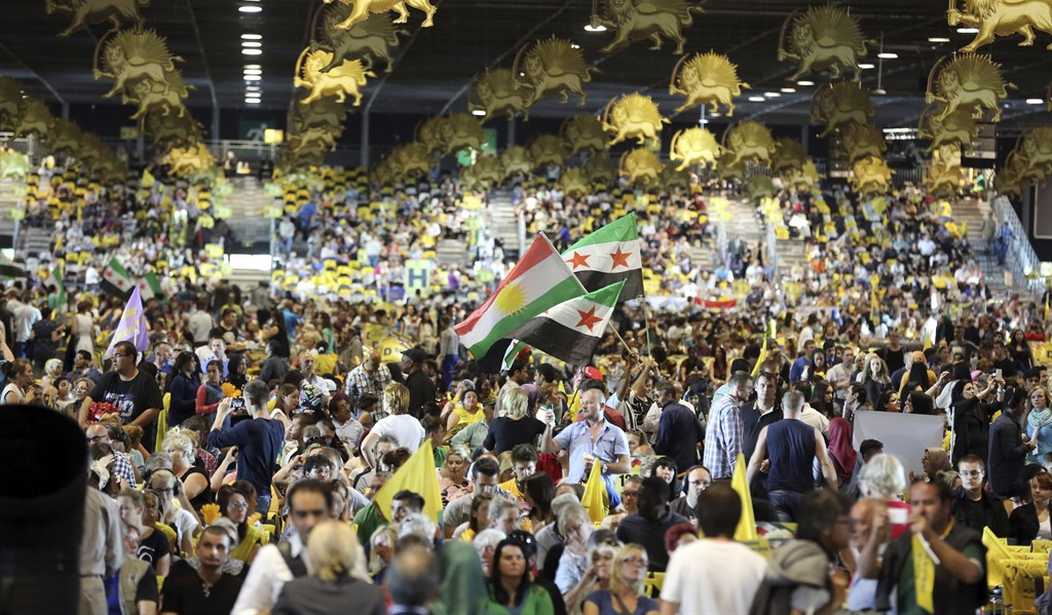
If the U.S. wants to stop Iran from interfering in Syria and elsewhere in the region and put an end to its nuclear program -- not just a temporary halt -- the most effective means would be to recognize the democratic opposition to Iran's theocratic regime flourishing both inside Iran and among the Iranian diaspora around the world. On July 1, tens of thousands of Iranians will gather in Paris to promote "Free Iran." As I have been for the past six years, I will be on hand to emcee the event, which gathers dignitaries from several European counties, the Middle East, Africa and the United States. This year, former House Speaker Newt Gingrich, former U.N. Ambassador John Bolton, former Sen. Joe Lieberman and former Pennsylvania Gov. Ed Rendell, as well as retired U.S. military officials, will be among the Americans addressing the conference, which is sponsored by the People's Mojahedin Organization of Iran and the National Council of Resistance of Iran, whose leader is Maryam Rajavi.
What makes this year's gathering different from those of previous years is recent support for Rajavi's group on visible display within Iran. During the Iranian elections in May, posters of Rajavi appeared on overpasses and on walls in Tehran, Tabriz and other major cities, along with PMOI pleas to vote against the two major candidates -- Ebrahim Raisi, the mullahs' favorite, and the incumbent, Hassan Rouhani. Although media often describe Rouhani as a moderate, he is anything but; his government has actually increased the number of executions and cracked down hard on dissent within the country. But elections in Iran are a sham; all candidates must be approved by the Guardian Council to appear on the ballot, and almost all are rejected. Only with free and fair elections will the Iranian people finally have a chance to determine their future.
In the past year, more than 7,000 demonstrations against the regime have taken place, a number not seen since the Green Movement in 2009. That year, the new Obama administration turned a deaf ear toward Iranians hankering for democracy. If the Trump administration is serious about reversing the Obama administration's Iran policy, it could begin by embracing those Iranian dissidents who offer a different future for their fellow countrymen.
Join the Conversation
VIP members get the ability to comment on articles.