





Every now and then a political story comes along that’s bigger than the person whose name ends up in the headline.
I think this is one of those stories.
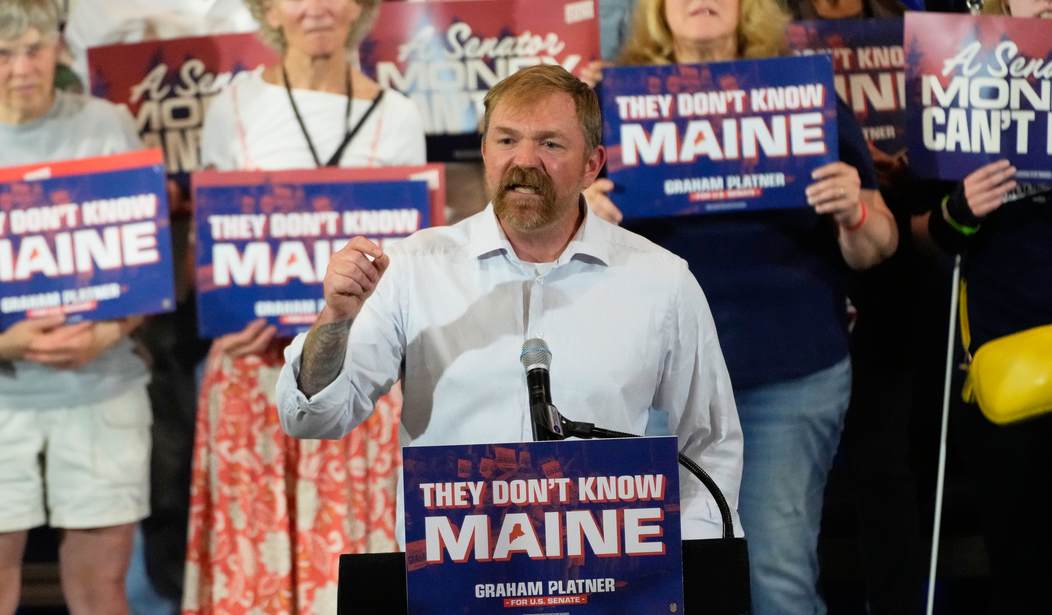
I’ve been watching the coverage surrounding Maine Democratic Senate candidate Graham Platner for several days. Platner has denied a sexual assault allegation made against him. Prominent Democratic leaders, the Democratic Senatorial Campaign Committee, and other party officials have called on him to withdraw. Those are the reported facts. The allegation remains denied and has not been adjudicated in court.
But that’s where I found myself getting stuck.
Not on the allegation itself. Not on the politics. On the conversation.
Everybody seemed to have an opinion about what should happen next. Fair enough. Elections matter. Character matters. Public trust matters.
But I kept waiting for someone to ask a different question.
Why?
Not why should he stay. Not why should he leave. Why do we believe certain conduct is wrong in the first place?
That may sound like an odd question in the middle of a political campaign, but I don’t think it is. In fact, I think it’s the question underneath almost every cultural argument America is having right now.
We’ve become remarkably comfortable declaring that something is unacceptable. We’re much less comfortable explaining why.
As a Christian, I don’t believe moral truth is something we invent as we go. I believe there is a standard outside of us. If that’s true, then none of us—politicians, judges, pastors, presidents, or voters—gets to revise it simply because culture changes.
If it isn’t true, then something else fills the vacuum.
Power. Influence. Popularity.
Whoever can gather the most votes or the loudest applause gets to define right and wrong for the moment, at least until someone stronger comes along and changes it again.
That’s a fragile way to build a society.
Which brings me back to Platner.
I’m actually less interested in predicting what becomes of his campaign than I am in what the debate surrounding it reveals.
Suddenly everyone agrees that character matters. Good. It does.
Everyone agrees allegations of sexual misconduct should be taken seriously. Good. They should.
But then the question comes back.
Why?
Why should honesty matter? Why should faithfulness matter? Why should self-control matter?
Those aren’t simply political questions. They’re moral ones.
Every civilization has to answer them, whether it realizes it or not.
For centuries, much of Western civilization looked beyond government for those answers. It understood moral authority as something higher than kings, legislatures, public opinion, or election returns. You and I didn’t create right and wrong. We discover it imperfectly, and then spend the rest of our lives trying to live up to it.
That doesn’t mean Christians have done that perfectly. We haven’t. Not even close.
Scripture itself refuses to hide human failure. David failed. Peter failed. Churches fail. Families fail. Every one of us has enough reason to approach these conversations with humility.
But Christianity has never solved that problem by lowering the standard. It has always called people to repentance while leaving the standard where it is.
There’s a difference.
Politics sometimes tempts us in another direction.
All of us, regardless of party, have a tendency to become more principled when the scandal belongs to someone else and more patient when it belongs to someone wearing our own jersey. That’s not unique to Democrats or Republicans. It’s one of the oldest temptations in public life.
That’s why this story stayed with me.
Not because it’s unique. Sadly, it isn’t.
Because it forces us to ask a question we’d often rather avoid. What standard are we using?
If that standard changes every election cycle, every polling shift, every media storm, or every political calculation, then it isn’t really a standard. It’s a strategy.
Strategies come and go. Truth isn’t supposed to.
America continues to argue over marriage, family, sexuality, unborn life, religious liberty, and the dignity of every human being. Those debates aren’t merely about policy. They’re arguments about where moral authority comes from. And if we no longer agree on that, we shouldn’t be surprised when agreement on everything else becomes harder to find.
Maybe that’s what has been bothering me all week.
Actually, “bothering” isn’t the right word.
It’s saddened me.
Because civilizations don’t lose their way all at once. They drift. One assumption at a time. One redefinition at a time. One compromise at a time. Eventually, people forget not only what they believe, but why they believed it in the first place.
The Platner story will fade. Another campaign will replace it. Another controversy will dominate the news. The deeper question won’t disappear.
Do we believe morality is something we inherit—or something we invent?
I believe a free society depends on enough ordinary people believing there are truths that no election, no legislature, and no political movement has the authority to rewrite.
I’ve found myself wondering this week where the next generation will learn the answer to that question.
Not who wins elections. Who decides what’s right.
Because every civilization answers it.
And the answer it gives often determines far more than the outcome of a single campaign.
Editor's Note: Do you enjoy Townhall's conservative reporting that takes on the radical left and woke media? Support our work so that we can continue to bring you the truth.
Join Townhall VIP and use promo code FIGHT to receive 60% off your membership.



Join the Conversation
VIP members get the ability to comment on articles.