





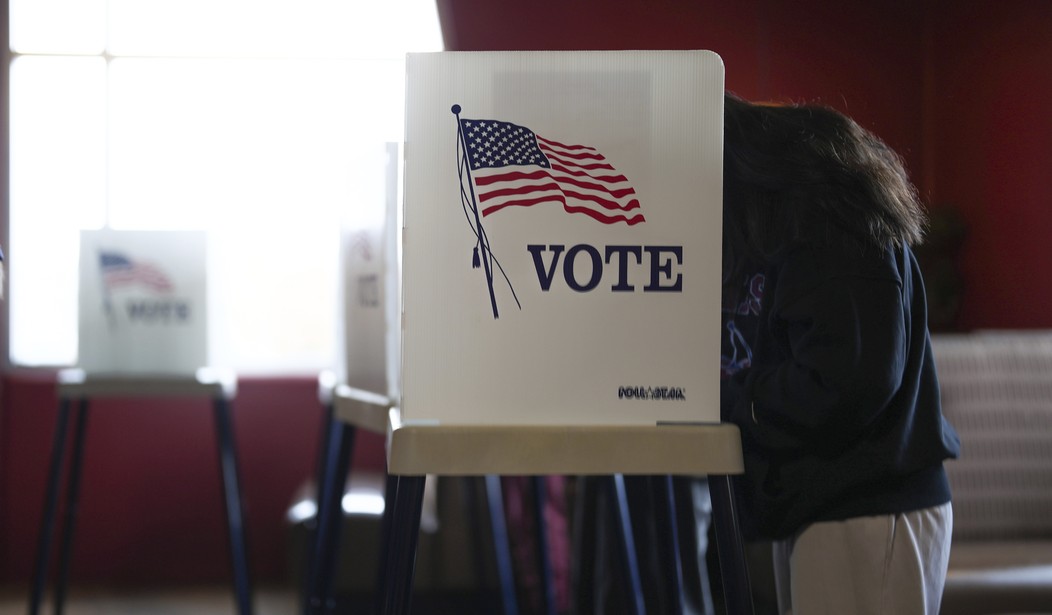
There is something almost comical about the argument unfolding before the Supreme Court right now. Not because it’s trivial. But because it’s so painfully obvious.
The question at hand is simple: Should ballots that arrive after Election Day be counted?
Pause there. Read that again.
Not ballots cast late. Not ballots discovered later. Not ballots “found” in the back of a truck three days after the fact. Ballots that show up after the election is over.
And somehow—somehow—this is controversial.
The Supreme Court’s conservative majority is signaling what every rational American already knows: Election Day should mean… Election Day. Revolutionary concept, I know.
But let’s unpack what’s really happening here—because this moment matters far beyond one case in Mississippi. It goes to the very heart of whether we are serious about election integrity or just pretending to be.
At issue is a law that allows ballots to be counted up to five days after Election Day as long as they’re postmarked on time. Sounds harmless, right? Until you think about what that actually does to an election.
It stretches “Election Day” into “Election Week.” Or “Election Month.” Or, if we’re being honest, into a moving target where outcomes can shift long after votes are supposedly finalized. Even the justices picked up on this.
Justice Samuel Alito warned that public confidence can be “seriously undermined” when results flip due to late-arriving ballots.
Translation: when Americans go to bed thinking one candidate won, and wake up days later with a different result, trust evaporates.
And trust—not turnout, not convenience, not even speed—is the currency of democracy. Lose that, and the whole system begins to wobble.
Now, let’s inject some reality into the numbers. Hundreds of thousands of late-arriving ballots have been counted under these kinds of laws in recent elections—over 750,000 nationwide in 2024 alone. In California, more than 400,000 ballots arrived after Election Day but were still counted. That’s not insignificant. That’s not theoretical. That’s not “rare.” That’s enough ballots to swing close races—local, statewide, even federal.
And this is where the debate stops being academic and starts being fundamental. Because if elections are about certainty, about finality, about confidence—then allowing large volumes of votes to arrive after the fact undermines all three.
Which brings us to the SAVE America Act.
For months now, I’ve been making the case that we need to pursue every single avenue available to strengthen election integrity:
Proof of citizenship. Voter ID. Accurate voter rolls. Transparent counting processes.
All of it. Not some of it. All of it.
And now, what the Supreme Court is considering would be the judicial complement to that legislative effort. Because while the SAVE America Act focuses on who is voting, this case addresses when the vote actually counts.
And the answer should not be complicated.
When the polls close, the election closes. Period.
Anything else invites chaos. And let’s be honest about the counterargument, because you’ve heard it.
“It’s about access.” “It’s about convenience.” “It’s about making sure every vote is counted.”
Those sound noble. Until you realize that every system ever devised requires boundaries to function.
Airplanes don’t wait indefinitely for late passengers. The IRS doesn’t accept your tax return weeks after the deadline because the mail was slow. Sporting events don’t keep playing until everyone feels like they’ve had a fair shot.
Deadlines matter. Not because they’re harsh. But because they create order. And elections—of all things—require order.
Now, opponents of this change argue that eliminating grace periods could impact certain voters, particularly those overseas or in rural areas.
That concern deserves to be addressed. But here’s the key distinction: fixing logistics is not the same thing as abandoning standards.
If ballots need to be mailed earlier, then educate voters. If systems need to be improved, then improve them. If exceptions are required for military service members, then craft them carefully and transparently. But what you don’t do is erase the finish line. Because once you do that, the race never really ends. And that’s exactly the danger the Court seems to recognize.
As one justice pointed out during arguments, if there’s no firm boundary, what stops a state from extending deadlines indefinitely? It’s not a slippery slope. It’s a logical one.
If five days is acceptable, why not 10? Why not 30? Why not until the “right” result appears?
That’s not democracy. That’s manipulation waiting to happen.
And here’s the broader point—the one that ties all of this together.
Election integrity is not a single policy. It’s a framework. It’s a mindset. It’s the understanding that every part of the system must reinforce confidence—not erode it. The SAVE America Act strengthens the front end.
This Supreme Court ruling—if it goes the way it appears—would strengthen the back end. And together, they begin to rebuild something that has been dangerously frayed in recent years: Trust.
Because at the end of the day, elections are not just about counting votes. They are about convincing a nation that those votes were counted fairly, accurately, and within clear, understandable rules. Not shifting rules. Not flexible rules. Clear rules.
Election Day should mean something.
And if we are serious about preserving this republic—if we actually believe that every legal vote should count and only legal votes should count—then we should be pursuing every possible avenue to ensure that outcome.
Every day. No exceptions. No apologies.
Because without integrity, democracy isn’t strengthened. It’s slowly, quietly undone.
Editor's Note: The Democrats are doing everything in their power to undermine the integrity of our elections.
Help us tell the truth about the SAVE America Act and how it will prevent voter fraud. Join Townhall VIP and use promo code FIGHT to get 60% off your VIP membership.

Join the Conversation
VIP members get the ability to comment on articles.