





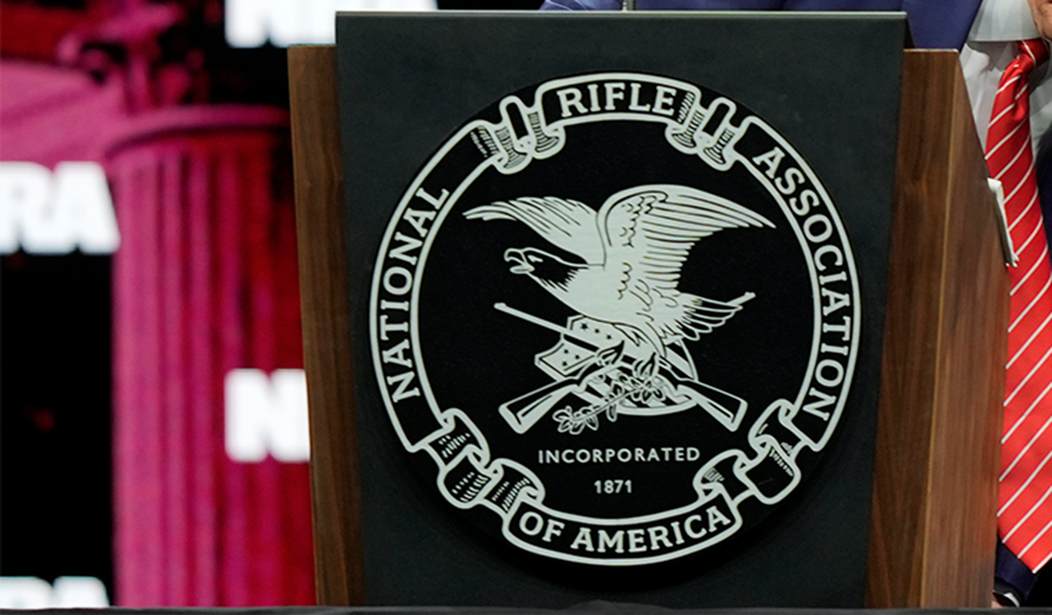
In 2017, under the direction of then-Governor Andrew Cuomo, the state of New York launched a coordinated campaign to cripple the National Rifle Association (NRA) because of its defense of the Second Amendment and protected speech. New York’s Department of Financial Services contacted banks and insurance companies that did business with the NRA and delivered an unmistakable message: Continue associating with the NRA, and the state would investigate, cite, and regulate your business into oblivion. Coming from the state’s top financial regulator, the warning carried real weight – exactly as intended.
The strategy worked. Financial institutions and insurers quickly distanced themselves from the NRA, leaving the organization unable to secure even basic corporate services in the state. If that sounds like an obvious First Amendment violation, that’s because it is. More than 60 years ago, the Supreme Court made clear in Bantam Books v. Sullivan that government “threat[s] of invoking legal sanctions and other means of coercion” against third parties to suppress disfavored speech are flatly unconstitutional.
Because that rule remains as clear today as it was in 1963, the Supreme Court agreed with the ACLJ’s amicus brief and ruled unanimously for the NRA last term. Justice Sotomayor, writing for the Court, put it plainly: “A government official cannot coerce a private party to punish or suppress disfavored speech on her behalf.” When regulators use the power of their office to pressure private actors into isolating or punishing a speaker, they violate the First Amendment just as surely as if they had censored the speech directly.
This case sits squarely at the intersection of the First and Second Amendments. The NRA’s policy views related to the Second Amendment, its speech, its advocacy, and its expression are all protected by the First Amendment. A government that can strangle a gun-rights group through financial coercion can use the same tools to silence pro-life organizations, religious ministries, parental-rights groups, or anyone else who falls out of political favor. That is why the ACLJ fights not just for the substance of constitutional rights, but also against government efforts to punish those who speak about them.
That unanimous ruling should have ended the matter. It should have allowed the NRA’s lawsuit to proceed so a jury could determine the full extent of the constitutional violations. But the Second Circuit had other ideas. In defiance of both the Supreme Court’s clear command and the First Amendment itself, the court held that New York’s officials were entitled to qualified immunity – meaning the case had to be dismissed.
Take action with ACLJ to hold rogue judges accountable. Add your name to the petition: Defend the Second Amendment in Court
Qualified Immunity Was Never Meant to Shield Deliberate Speech Suppression
Many Americans have heard of qualified immunity. At its best, it is a narrow doctrine designed to protect government officials – notably police officers – who must make split-second decisions in dangerous situations, where hesitation might cost lives. Historically, the doctrine tracked a small set of common-law defenses available in 1871, when Congress enacted 42 U.S.C. § 1983 to provide a federal remedy against state officers who violate constitutional rights.
But modern qualified immunity has drifted far from those roots. Instead of a limited, historically grounded defense, it has often become a tool that courts use to avoid deciding constitutional questions. Rather than asking whether an official’s conduct was unlawful, courts search for an escape hatch from constitutional accountability.
This case is a stark example of the modern-day abuse of qualified immunity. Nothing about the New York Department of Financial Services’ conduct involved split-second judgment or uncertain circumstances. These were not on-the-street decisions requiring immediate action. They were deliberate, carefully planned communications by the state’s top financial regulator – memoranda, guidance letters, and back-channel conversations aimed squarely at suppressing the NRA’s advocacy. These actions were made with the luxury of time, institutional authority, and full knowledge of their coercive effect.
No historical version of qualified immunity has ever protected that kind of bureaucratic retaliation. A doctrine created to protect officers facing real-time danger has no application to officials who, with ample opportunity for reflection, intentionally weaponize regulatory power to silence disfavored viewpoints.
The ACLJ Is Asking the Supreme Court to Set This Right
Now that this case is back at the Supreme Court, the ACLJ filed another amicus brief, this time urging the U.S. Supreme Court to reject the Second Circuit’s misuse of qualified immunity. Our position is simple: The doctrine cannot be stretched to shield officials who knowingly and purposefully violate the First Amendment from the safety of their offices. Qualified immunity gives breathing room to officers confronting emergencies – not to regulators engaged in calculated campaigns against protected speech.
New York’s actions were unconstitutional when they occurred. They were unconstitutional when Bantam Books was decided in 1963. And they were unconstitutional when the Supreme Court unanimously reaffirmed that principle last year. No reasonable official could think otherwise.
Qualified immunity should never become a refuge for deliberate viewpoint discrimination. The Supreme Court now has the opportunity – and the responsibility – to restore the doctrine to its proper, narrow role and ensure that government officials cannot evade accountability when they use their power to punish protected speech.
Take action with ACLJ to hold rogue judges accountable. Add your name to the petition: Defend the Second Amendment in Court.


Join the Conversation
VIP members get the ability to comment on articles.