





There's a tension so deep in how we think about free expression, it should rightly be called a paradox.
On the one hand, regardless of ideology, artists and writers almost unanimously insist that they do what they do to change minds. But the same artistes, auteurs and opiners recoil in horror when anyone suggests that they might be responsible for inspiring bad deeds.
Hollywood, the music industry, journalism, political ideologies, even the Confederate flag: Each takes its turn in the dock when some madman or fool does something terrible.
The arguments against free speech are stacked and waiting for these moments like weapons in a gladiatorial armory. There's no philosophical consistency to when they get picked up and deployed, beyond the unimpeachable consistency of opportunism.
Hollywood activists blame the toxic rhetoric of right-wing talk radio or the tea party for this crime, the National Rifle Association blames Hollywood for that atrocity. Liberals decry the toxic rhetoric of the right, conservatives blame the toxic rhetoric of the left.
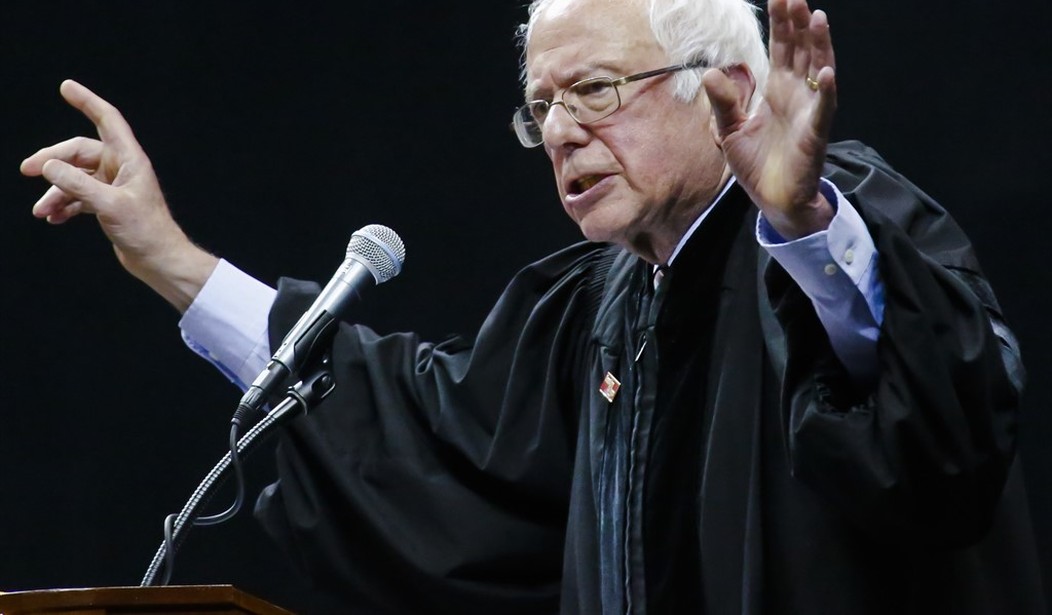
When attacked -- again heedless of ideology or consistency -- the gladiators instantly trade weapons. The finger-pointers of five minutes ago suddenly wax righteous in their indignation that mere expression -- rather, their expression -- should be blamed. Many of the same liberals who pounded soapboxes into pulp at the very thought of labeling record albums with violent-lyrics warnings instantly insisted that Sarah Palin had Rep. Gabby Giffords' blood on her hands. Many of the conservatives who spewed hot fire at the suggestion that they had any culpability in an abortion clinic bombing, gleefully insisted that Sen. Bernie Sanders is partially to blame for Rep. Steve Scalise's fight with death.
And this is where the paradox starts to come into view: Everyone has a point.
"The blame for violent acts lies with the people who commit them, and with those who explicitly and seriously call for violence," Dan McLaughlin, my National Review colleague, wrote in the Los Angeles Times last week. "People who just use overheated political rhetoric, or who happen to share the gunman's opinions, should be nowhere on the list."
As a matter of law, I agree with this entirely. But as a matter of culture, it's more complicated.
I have always thought it absurd to claim that expression cannot lead people to do bad things, precisely because it is so obvious that expression can lead people to do good things. According to legend, Abraham Lincoln told Harriet Beecher Stowe, "So you're the little woman who wrote the book that started this great war." Should we mock Lincoln for saying something ridiculous?
As Irving Kristol once put it, "If you believe that no one was ever corrupted by a book, you have also to believe that no one was ever improved by a book. You have to believe, in other words, that art is morally trivial and that education is morally irrelevant."
If words don't matter, then democracy is a joke, because democracy depends entirely on making arguments -- not for killing, but for voting. Only a fool would argue that words can move people to vote but not to kill.
Ironically, free speech was born in an attempt to stop killing. It has its roots in freedom of conscience. Before the Peace of Westphalia in 1648, the common practice was that the rulers' religion determined their subjects' faith too. Religious dissent was not only heresy but a kind of treason. After Westphalia, exhaustion with religion-motivated bloodshed created space for toleration. As the historian C.V. Wedgwood put it, the West had begun to understand "the essential futility of putting the beliefs of the mind to the judgment of the sword."
This didn't mean that Protestants instantly stopped hating Catholics or vice versa. Nor did it mean that the more ecumenical hatred of Jews vanished. What it did mean is that it was no longer acceptable to kill people simply for what they believed -- or said.
But words still mattered. Art still moved people. And the law is not the full and final measure of morality. Hence the paradox: In a free society, people have a moral responsibility for what they say, while at the same time a free society requires legal responsibility only for what they actually do.

Join the Conversation
VIP members get the ability to comment on articles.