





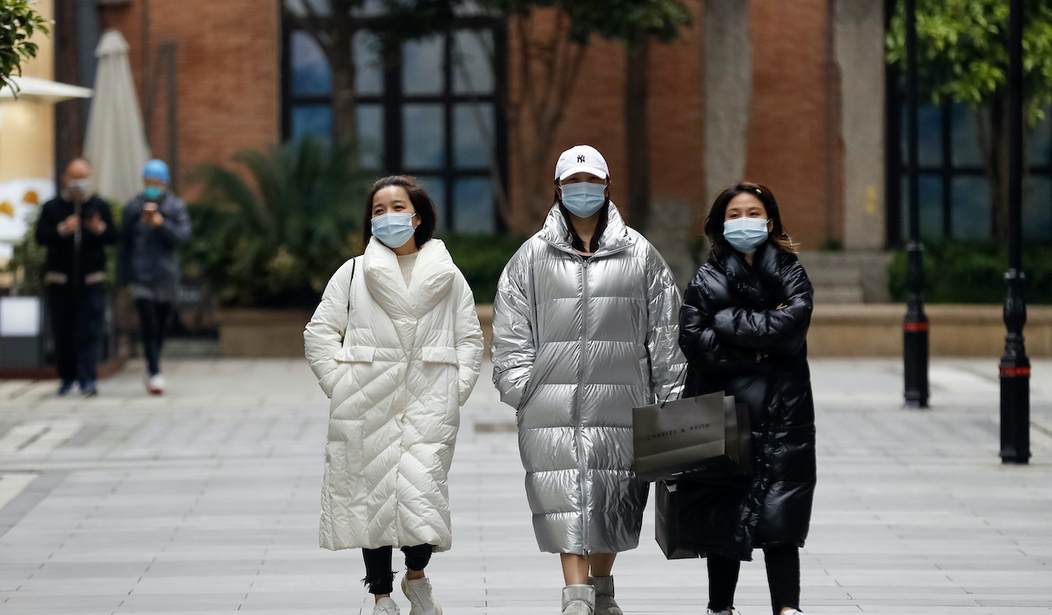
Wading into the bitter debate about face mask mandates in schools, President Joe Biden is threatening civil rights lawsuits against states that ban such requirements.
"Some politicians are trying to turn public safety measures -- into political disputes for their own political gain," Biden complained last week, saying his administration won't "sit by as governors try to block and intimidate educators protecting our children."
Biden's framing implies that school officials are indisputably "protecting our children" by forcing them to cover their faces all day, and that anyone who suggests otherwise is motivated only by crass partisan motives. Yet the evidence that the public health benefits of "universal masking" in K-12 schools outweigh its costs is far less impressive than the president suggests.
Other governments seem to recognize that fact. As David Zweig noted in New York Magazine, "many of America's peer nations around the world -- including the U.K., Ireland, all of Scandinavia, France, the Netherlands, Switzerland, and Italy -- have exempted kids, with varying age cutoffs, from wearing masks in classrooms" without experiencing more school-related COVID-19 outbreaks than the U.S. has seen.
The latest guidance from the Centers for Disease Control and Prevention, by contrast, recommends that everyone, regardless of age or vaccination status, wear face masks in K-12 schools. But the studies the CDC cited to justify that stance generally were not designed to test the effectiveness of mask mandates.
One problem with those studies is that the schools they examined typically implemented several COVID-19 safeguards simultaneously, so there was no way of knowing whether any perceived benefits could be attributed specifically to masking. Another problem: Almost none of the studies compared schools with mask mandates to otherwise similar schools without them, again making causal inferences impossible.
One exception was a CDC study of Georgia schools published in May, which found that COVID-19 infection was 37% less common in schools that required teachers and other staff members to wear masks, similar to the difference associated with "improved ventilation." But the same study found that requiring students to wear masks was not associated with a statistically significant reduction in case rates.
In Florida, the CDC found that school districts without mask mandates had higher infection rates. But the researchers noted that smaller districts were less likely to require masks, and they also "had a higher proportion of students attending in-person instruction," which likewise was "positively correlated with the student case rate."
The CDC says "most studies that have shown success in limiting transmission in schools" involved "prevention strategies" that included requiring "staff only or staff and students" to wear masks. The implication, of course, is that some schools had "success in limiting transmission" even without mask mandates, or with mandates that did not apply to students.
In Florida, where many districts did not require masks, the CDC found that less than 1% of students were infected in schools during the first semester after they reopened in August 2020. During the same period, school-related COVID-19 outbreaks were likewise a minor problem in England, where students were not required to wear masks.
These studies were conducted before vaccines were available. Now that 71% of Americans 12 or older are at least partly vaccinated, school infection rates should be similarly low, even taking into account the prevalence of the especially contagious delta variant.
Assuming that mask mandates in schools do make a difference, the benefits are likely to be small. Adults and older students can more effectively protect themselves by getting vaccinated, and life-threatening COVID-19 symptoms are extremely rare in children and teenagers: The CDC's "current best estimate" of the infection fatality rate among people younger than 18 is 0.002%.
The costs of requiring masks in schools, meanwhile, include daylong discomfort and stress, obstructed breathing and vision (thanks to fogged eyeglasses) and interference with communication, learning and social interaction. To justify those burdens requires more evidence than mandate enthusiasts have been able to muster.
Jacob Sullum is a senior editor at Reason magazine. Follow him on Twitter: @JacobSullum.


Join the Conversation
VIP members get the ability to comment on articles.