







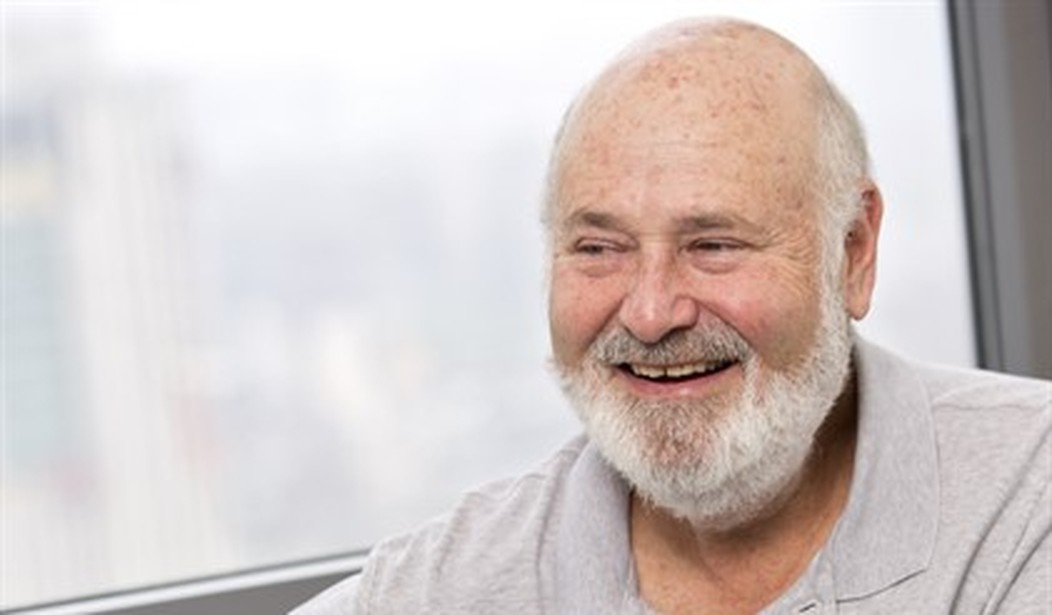
Following the double murder of his parents, Rob Reiner and Michelle Singer, it’s been reported that the alleged murderer, Nick Reiner, the victims’ son, suffers from a history of mental illness that, it’s implied, accounts for his horrific deed.
What few people, regardless of their politics, ever think to ask is: What is a “mental disorder”?
The Diagnostic and Statistical Manual of Mental Disorders (DSM), “the bible” of the American Psychiatric Association (APA), currently lists approximately 300 “mental disorders.” Yet despite the fact that psychiatry uses the grammar of pathology, so-called “mental disorders” are most definitely not natural kinds.
A natural kind exists in the world independently of and prior to human attempts to classify it. It is something that humans discover: chemical elements, infectious diseases, and physiological pathologies like tumors, lesions, and organ failure are all natural kinds. A natural kind exists in nature. It belongs to the furniture of the universe, as it were.
“Mental disorders,” in stark contrast, are nominal or classificatory kinds: They are names or descriptions of clusters of behaviors. They are most definitely not found in the world.
This, of course, doesn’t mean that human beings don’t genuinely suffer or that psychiatrists (and/or other practitioners in the mental health field) cannot be helpful in mitigating human suffering. People do suffer and credentialed experts have indeed been of service in addressing their patients’ needs. This, though, does not change the fact that while psychiatry avails itself of the grammar of pathology, its vocabulary of “mental disorder” or “illness” references nothing in the real world.
Pathologists are etiologists: They search for underlying causes of diseases. Tissue biopsies; bodily fluids like blood, urine, sputum (saliva), cerebrospinal fluid, and fine needle aspirates; cells; and stool are all among the types of samples that pathologists collect in their efforts to diagnose patients. Pathologists rely upon molecular and genetic testing, as well as upon such imaging tests as CAT scans and MRIs.
Psychiatrists have none of these tests at their disposal. There isn’t a single one of the 300 or so “mental disorders” in the DSM for which there exists a single laboratory test. Nor could there be any, for, to reiterate, the terminology of “mental disorders” is descriptive—not explanatory.
“Generalized Anxiety Disorder,” for instance, is not the cause of a person’s anxiety. It is that person’s propensity for anxiety reframed in a short-hand term.
So, to say that something that the APA decided to call “Generalized Anxiety Disorder” is the cause of a person’s anxiety is the equivalent of saying that anxiety is the cause of anxiety. It’s meaningless by reason of redundancy.
Jonathan Shedler is Clinical Professor in the Department of Psychiatry and Behavioral Sciences at the University of California. He’s blunt on this point. Referring to “mental disorders,” he states: “They are not things. They are agreed-upon labels—a kind of shorthand—for describing symptoms” (italics original). What this means is that psychiatrists can never know the causes of the “mental disorders” that they diagnose. “It’s not that we don’t know” the “causes yet. It’s that the DSM diagnoses cannot speak to causes, now or ever. The DSM was not designed to speak to causes, only describe effects” (italics original).
In support of his assertion, Shedler cites Allen Frances, the Chair of the DSM-IV [the fourth edition of the Diagnostic and Statistical Manual of Mental Disorders]. Frances is direct: “Mental disorders are constructs, not diseases. Descriptive, not explanatory. Helpful in communication/treatment planning, but no claims re causality/homogeneity/clear boundaries.” He reminds us that such was explicitly stated in the introduction to the DSM-IV, and laments that “no one read it.”
Some within the field insist that despite disclaimers of the sort supplied by Frances and the DSM-IV, the APA knows exactly what it’s doing in borrowing the grammar of pathology. Eric Maesel is a psychotherapist who refers to the DSM as “a disease-mongering naming game” whose labels are designed to imply that its “disorders” possess underlying “biological causes…for which there is no evidence.” The APA “want[s] us to believe that biological abnormality is at play, so that they can prescribe drugs, without having to frankly say that there are biological abnormalities at play, which might require they prove their assertions.”
One needn’t agree with Maesel that the psychiatric establishment is motivated by pecuniary interests to deceive the public into thinking that “mental disorders” have biological causes. Doubtless, there is no small number of psychiatrists, and possibly a majority of them, who genuinely believe that behind every “mental illness” there is a biological cause. There are two reasons for this.
The first is structural: The entire mental health field, and psychiatry specifically, defaults to a philosophy of the mind that reduces mind to brain. This is a metaphysical position known as “materialism,” which claims that matter is all that is ultimately real. This is the paradigm in which psychiatrists have been trained and in which they must operate. It is the air they breathe.
The second is more empirical: Psychiatrists have seen for themselves how the medications that they’ve prescribed have helped patients to manage their behaviors (“symptoms”).
Neither of these considerations go any distance toward justifying the dogma that there are biological causes for “mental disorders.”
The long-noted problems with materialism are too many to be delved into here. Suffice it to say that it is a controversial theory that, as such, can’t just be supposed without argument.
That prescription drugs have been successful in mitigating or relieving patients of disruptive patterns of thoughts and feelings and the unsettling physical sensations that accompany them no more shows that a “mental disorder” has been biologically identified than the fact that caffeine reduces sleepiness shows that sleepiness is a disorder. Alcohol can reduce social anxiety, but this doesn’t show that introversion is a “mental disorder.” That medications alter moods only proves that the alteration of one’s brain chemistry results in the alteration of one’s experience. It most emphatically does not establish that a chemical imbalance has been restored or identify a disorder.
In short, despite its ubiquity, the belief in “mental illness” (as the function of a biological cause) is one for which there exists no evidence, and “mental illnesses” or “disorders” are names that the APA ascribes to clusters of behaviors that members decide are symptoms of “illness.”
Editor’s Note: Do you enjoy Townhall’s conservative reporting that takes on the radical left and woke media? Support our work so that we can continue to bring you the truth.
Join Townhall VIP and use promo code FIGHT to receive 60% off your membership.



Join the Conversation
VIP members get the ability to comment on articles.