






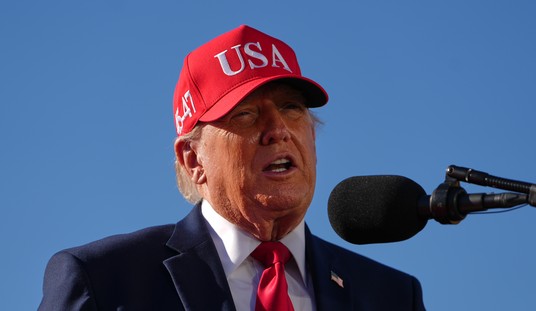
Last month, President Trump issued an executive order to end government-driven “debanking.”
Debanking is what happens when a bank, under pressure from government regulators, either refuses to do business with a potential customer or ends its relationship with an existing one.
It’s a real issue, and President Trump’s EO marks a significant step to put an end to it and bring much-needed transparency to the regulation of banks.
With the EO in place, now is the perfect opportunity to capitalize on the momentum and finally modernize broken or outdated policies like the Anti-Money Laundering (AML) requirements and the Bank Secrecy Act (BSA).
Government-driven debanking began with good intentions through the passage of the BSA of 1970, which enabled government surveillance of financial transactions to prevent money laundering and required financial institutions to establish AML programs. But in their current forms, the BSA and AML requirements are severely outdated, contributing to unnecessary account closures by giving banks little leeway to effectively manage their own risk.
Banks must file currency transaction reports (CTRs) for any cash transactions above $10,000 in a single day, and they are required to file suspicious activity reports (SARs) for transactions that may be related to illicit activity of at least $5,000 in the aggregate. Those amounts are too low and need to be updated to reflect the realities of today’s economy.
Modernizing these laws will ensure the goal of preventing financial crimes is achieved without locking out lawful businesses, individuals or transactions from banks.
On the legislative front, Congress has taken a thoughtful approach with the Financial Integrity and Regulation Management (FIRM) Act that passed through the Senate Banking Committee while its House companion bill passed out of committee with bipartisan support. These bills would remove the subjective criteria of “reputation risk,” which President Trump’s EO also addresses.
“Reputation risk” was introduced in 2011 as informal guidance by federal regulators but quickly became a way for the Obama administration to pressure banks not to do business with entire industries the administration found objectionable. This led to fear-driven overcompliance by banks that closed accounts because they didn’t want to risk being subjected to further government micromanagement.
To address this overreach, regulatory action also presents an ideal avenue to solve government-driven debanking. Multiple federal regulatory agencies have taken steps to remove the overly broad “reputation risk” from their supervision of banks, including the Federal Reserve Board, the Office of the Comptroller of the Currency (OCC), and the Federal Deposit Insurance Corporation (FDIC).
The leaders of these federal agencies should establish a national fair access standard to prohibit religious or political discrimination by federal bureaucrats and ensure banks have the flexibility to operate their business as they deem fit without government interference.
A national fair access standard would also end the need for states to develop their own legislation that could complicate operations for most banks by creating a patchwork of inconsistent, conflicting state laws.
Let banks assess risk on a customer-by-customer basis. The Trump administration, Congress and federal agency leaders should lighten the government overregulation and update reporting requirements to restore fairness, transparency and constitutional oversight to financial regulation.
Glenn Hamer is president and CEO of the Texas Association of Business, and Danny Seiden is president and CEO of the Arizona Chamber of Commerce and Industry.
Editor’s Note: Do you enjoy Townhall’s conservative reporting that takes on the radical left and woke media? Support our work so that we can continue to bring you the truth.
Join Townhall VIP and use the promo code FIGHT to get 60% off your VIP membership!


Join the Conversation
VIP members get the ability to comment on articles.