





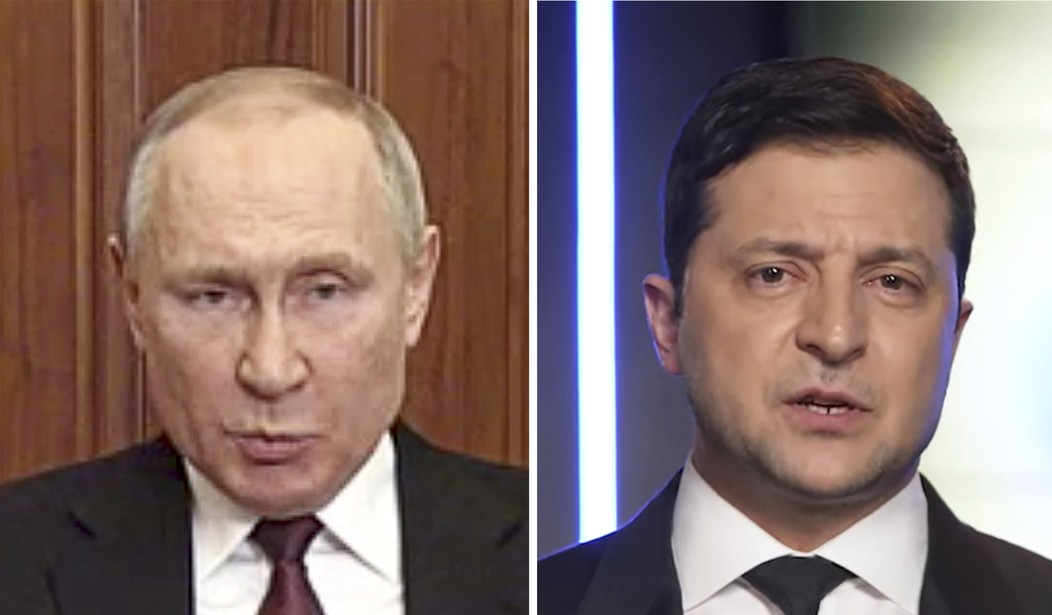
The most consequential global realignment since World War II is unfolding in real time. The United States is forging new alliances across the Middle East, Eastern Europe, Turkey, and emerging markets, reasserting its influence after years of drift. But no strategic reset is complete until the war between Russia and Ukraine ends, not merely with a ceasefire, but with a durable peace that reshapes incentives, restores stability, and re-anchors American leadership in the postwar order. The question is no longer whether the fighting will stop, but whether the United States is prepared to define what comes next.
If we are serious about peace, America must think beyond nightly crescendos of destruction and the headlines of seizing sanctioned oil tankers. Those are the now — but what comes next must be America’s vision for a future where both Russians and Ukrainians find prosperity, security, and a reason to align their interests with ours.
President Trump’s recent decisive, long overdue action in Venezuela, demonstrated U.S. resolve to assert control over our hemisphere and energy flows. The U.S. has found an excellent interim partner in President Delcy Rodriguez, thanks to the careful planning of Secretary of State Marco Rubio, Special Envoy Richard Grenell, and Special Envoy Steve Witkoff. That same assertiveness is being applied to creating peace and prosperity.
American businesses will lead the way. President Trump’s strength and repositioning of America enables successful businesses globally. In this context, he is not just the leader of the United States, he is the global leader.
For years, Venezuela has shown how economic leverage can translate into geopolitical influence. Once a petro-autocracy befriended by China, Caracas is now subject to U.S. authority. With U.S.-backed redevelopment coming soon, Venezuela has the potential to become the next global economic miracle.
When peace finally comes to Russia and Ukraine, the United States must be ready to embrace both nations economically. This isn’t naïve, Wilsonian idealism, it’s strategic realism. The key to long-term success will be building durable business ties in the region.
Economic engagement has the unique power to reshape incentives. Ukrainians need reconstruction, trade, and secure export markets. (Negotiators call it “leverage.”) Cut off from many Western partnerships, Russia still craves access to global capital, technology, and markets. America can be the bridge, a leader in rebuilding and re-engaging both economies.
That means American companies investing in Ukrainian industry and infrastructure. It means facilitating Russian integration into transparent global commerce in return for Moscow becoming an equitable partner in this new global realignment. President Trump has boxed China in, building a bridge to realign the U.S. and Russia.
It means Golden Arches, not tanks, as the cement of peace.
We know from history that economic ties stabilize fractured relationships. (That was the whole point of forming the European Union after World War II.) Venezuela offers a cautionary parallel: where isolation only entrenches hard-line alliances, controlled reintegration can peel adversaries away from malign partners.
Under this paradigm, it’s conceivable that even figures like Abu Mohammad al-Julani, the President of Syria who replaced Bashar al-Assad in a coup, could find themselves part of a broader geopolitical realignment. Al-Julani is a former member of both ISIS and Al Qaeda. But today, the United States, Israel, and Syria are promoting a new ski resort to be built on Syria’s Mt. Hermon. Special industrial districts are planned for former demilitarized zones that were, until recently, rife with armed conflict for decades.
Pragmatic exchange, not moralizing, often opens doors to real change. Peace is good for business.
Violent episodes, sometimes clandestine ones, between American forces and our adversaries across the globe illustrate precisely why conflict must give way to commerce and oversight. In peace, there are no shadow fleets and no incentives to arm every rogue actor. In peace, there are contracts, inspections, and legal port calls. Those conditions are incompatible with the nightmares we are trying to avert.
Realigning U.S. and Russian interests is not fantasy. It is grounded in geopolitical logic. Iran’s weakening grip on the Middle East, impending U.S. military action, combined with dwindling support from traditional allies, creates an historic opening.
And let’s be clear: radical Islamism is as much a threat to Russian domestic security as it is to Europe or America. Although Muslims in Tatarstan have shown themselves to be perfectly peaceful, the Chechen wars, attacks in the North Caucasus, and Islamist insurgencies have long plagued Moscow. There is a shared interest in combating extremist violence, which is part of the reason why President Trump offered Russia a seat on the newly formed Board of Peace in Palestine. A Russia that sees economic benefit with the West and reduces the fertile ground in which terror breeds.
This vision also requires a paradigm shift in Europe. For too long, Europe has deferred its own security obligations while relying disproportionately on U.S. leadership, then whining, or laughing at us, when we tell them they need to pay their bills. A peace anchored in American diplomatic muscle must come with a Europe that finally takes responsibility for its own defense, contributes equitably, and embraces a security framework that does not incentivize Russian coercion.
A strong Europe is not America’s adversary, it is America’s indispensable partner, but they have a long way to go.
When peace comes, it must be comprehensive, leveraging U.S. economic power and moral clarity to build a new era of commerce and cooperation. One that welcomes Ukrainian resilience and Russian reinvention. One that replaces missile attacks with humming factories, secure pipelines, and jobs tied to global growth.
This future belongs to America First strategic thinking that transforms conflict into commerce and enmity into engagement. And it begins with a clear commitment: America will do business with both Ukrainians and Russians out of strength, a transactional world view, and an unshakeable belief that peace forged in prosperity is peace that endures.
This thinking turned our WWII enemies, Japan and Germany, into global powerhouses and indispensable trade partners. It’s what we do.
This time, peace cannot rest on paper guarantees. It must be enforced by American power, anchored in economic diplomacy, and sustained by mutual self-interest. The United States must lead a framework where commerce, reconstruction, and market access become the incentives that make renewed war irrational for all parties.
Ukraine deserves security backed by strength, not promises. Russia must see a future where prosperity flows westward, not toward the Chinese Communist Party – something they’re already taking steps to achieve. That is how wars truly end - when incentives change.
An America First peace does not ask the world to trust. It structures a future where cooperation is the only rational choice.
Gentry Beach is the founder of America First Global, a global investment platform.
Editor’s Note: Do you enjoy Townhall’s conservative reporting and opinion? Support our work by joining Townhall VIP! Use the promo code FIGHT to get 60% off your VIP membership!

Join the Conversation
VIP members get the ability to comment on articles.