





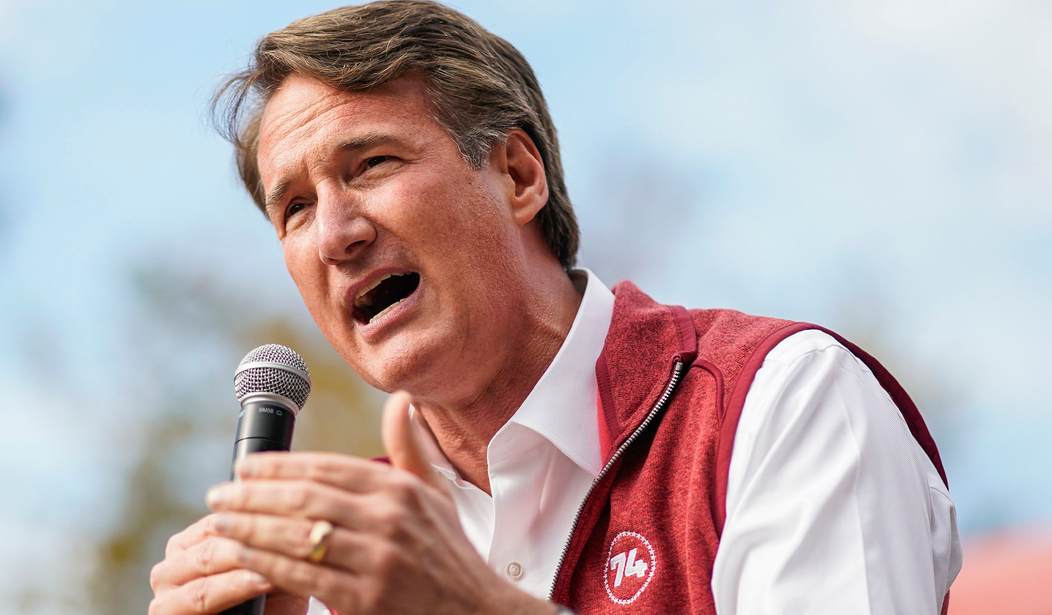
On Wednesday, the Virginia State Air Pollution Board voted 4-3 to remove Virginia from the controversial Regional Greenhouse Gas Initiative (RGGI) carbon market.
Governor Glenn Youngkin (R-VA) - who often equated it to a carbon tax - garnered a vital victory here.
“Today’s common sense decision by the Air Board to repeal RGGI protects Virginians from the failed program that is not only a regressive tax on families and businesses across the Commonwealth but also does nothing to reduce pollution,” Youngkin said in a news release. “The Office of the Attorney General has confirmed the State Air Pollution Control Board has the legal authority to take action on the regulatory proposal using the full regulatory process – and today, the Board voted to do just that – furthering Virginians access to a reliable, affordable, clean and growing supply of power.”
Unsurprisingly, Virginia Democrats tried – but failed– to draw a connection between RGGI withdrawal and smoke from Canadian wildfires currently blanketing Virginia.
Their Twitter account tweeted, “BREAKING: Per Gov Youngkin’s directive, the State Air Pollution Control Board withdrew Virginia from the Regional Greenhouse Gas Initiative (RGGI). Sickly ironic news on a day when the Richmond skyline is blotted out by thick smoke from wildfires.”
The League of Preservation Voters - a notorious virtue signaler - also pounced on Governor Youngkin, but the attempt fell flat.
Talk about blowing smoke.
Let’s clear the air: After taking office in January 2022, Governor Youngkin issued Executive Order 9 to remove the Commonwealth from this controversial 11-state compact. Virginia entered RGGI following the passage of the Virginia Clean Energy and Flood Preparedness Act of 2020. The law tasked Virginia’s Department of Environmental Quality (DEQ) director to create a carbon market-based trading program.
Former Governor Ralph Northam (D-VA) lauded the move at the time, remarking, “This initiative provides a unique opportunity to meet the urgency of the environmental threats facing our planet while positioning Virginia as a center of economic activity in the transition to renewable energy.”
Why did the Youngkin administration prioritize RGGI withdrawal?
First, RGGI is a flawed entity that delivers few to no environmental returns. As I noted in The Virginian Pilot in January 2022, RGGI doesn’t reduce carbon emissions much. The impact is negligible.
I wrote, “The most notable problem with RGGI is its overall negligible impact on carbon emissions. In 2019, the Congressional Research Service observed that nine partner states “account for approximately 7% of U.S. CO2 emissions and 16% of U.S. gross domestic product” and called carbon emissions reductions “arguably negligible” at best.”
It sounds eerily similar to Environmental, Social, and Governance (ESG) investing–strategies often delivering a poor return on investment (ROI).
Second, participation in RGGI meant higher utility bills for residences and businesses. A March 2022 Virginia DEQ report found RGGI’s environmental compliance cost would result in a $2.39 monthly increase for residential customers and a $1,554 monthly increase for industrial customers, respectively. Had Virginia remained in the interstate compact, it would cost ratepayers “between $1 billion and $1.2 billion over the next four years.”
Third, RGGI is a carbon tax imposed on producers that ultimately get passed to consumers.
I also discussed this reality in Virginian Pilot, arguing, “Virginians would see diminished purchasing power because they already pay a premium on electricity and gas. Worse, carbon taxes would disproportionately hurt lower-income Virginia households since they rely and depend on carbon-intensive goods and energy sources for sustenance. Electricity costs would skyrocket in more economically depressed regions of the Commonwealth, including southwestern Virginia.”
Virginia can innovate and produce clean energy without subscribing to obtuse decarbonization goals pushed by Democrats and even some Republicans.
Governor Youngkin understood this “carbon market” doesn’t benefit Virginians. On the other hand, his Virginia Energy Plan is an excellent alternative to power the Commonwealth. It does so, minds you, without admonishing coal, oil, gas, or nuclear. Win-win.
The first-term Governor undeniably promised to get Virginia to quit RGGI. Not only does it boost him, but it’s also a good deal for both Virginia consumers and ratepayers. This is an excellent first step, but his energy policy work isn’t done yet.
Next, the Governor should tackle the horrible Virginia Clean Economy Act (VCEA) – or Virginia’s Green New Deal – forced on us by the prior Northam administration and Virginia Democrats. Without question, it absolutely must be repealed. That, however, will require a cooperative General Assembly in Richmond. Should Virginia Republicans flip the State Senate and keep the House of Delegates in November, this could happen.
Until then, kudos to Governor Youngkin for rejecting destructive policies like RGGI wrought by preservationist environmentalism.

Join the Conversation
VIP members get the ability to comment on articles.