





Wednesday, stocks meandered most of the session, in part to early word that the Organization of the Petroleum Exporting Countries (OPEC) couldn’t come up with an agreement on production, as the post-summer search for a catalyst remained elusive. The OPEC reported that it might have a deal to limit its output to 32.5 million barrels a day (details to come November 30), and the market found its catalyst.
Crude soared +$2.00 or 4.8% to $46.67 while major equity indices finished at the highs of the session. The news on oil, coupled with a string of reports showing inventory drawdowns, is giving much hope that this oil rally is real. If that’s the case, then it’s going to need an assist from the demand side and discipline from the OPEC.
We have oil exposure, but we would be looking to add with a close above $51.00; while that sounds counterintuitive, that’s the level I see as the true breakout that removes a whipsaw risk to the downside.

While oil-related stocks enjoyed big moves, the stock of the session wasn’t in the oil patch, but it needs the same macro drivers.
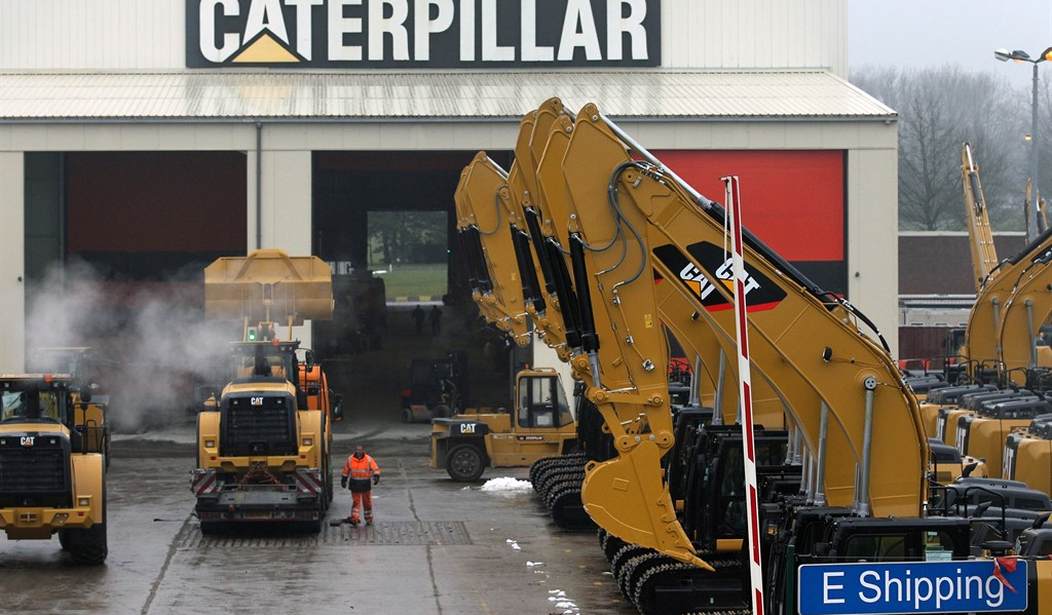
Caterpillar (CAT) shares soared 4.5% on 9.3 million shares, more than twice the daily average. There are signs of impending improvement in demand. Meanwhile, the stock broke out through key resistance at $85.00. I think CAT also benefited from business investments in durable goods that moved higher for the third consecutive month. The business sector is said to be one trillion dollars behind in major projects.
By the way, Caterpillar is one of the names I like in my special Election report; names that rock, regardless of the candidate who wins the election. The main stock in the report was up hugely on Wednesday. Make sure to get a free copy of my commentary at wstreet.com.
With names such as CAT on the move, a major breakout for the Dow through 18,600 could happen sooner rather than later.
Looking at the Dow chart, it’s a thing of beauty, consistently bouncing off the bottom of the trend line; and now, it just needs more volume.

Red Flag: European Bank Turmoil
Banking issues in Europe could begin to reverberate in America, and this is forcing the Fed to rethink its stress test parameters and conclusions. Keep in mind that in addition to the $14.0 billion fine coming from U.S. regulators against Deutsche Bank, there’s still potential fines ranging from $4.0 to $2.0 billion, possibly for Royal Bank of Scotland, Credit Suisse, and UBS.
Management at these banks are making moves like securitizing assets in preparation, and all say they won’t need bailouts, although they are vigorously fighting the would-be fines. This brings back memories of bank contagion, and it could be a drag on the market for some time.
The most recent stress test put 33 major bank holding companies at risk - a loss of $324 billion under a so-called ‘Adverse Scenario.’ Such a scenario sees the stock market declining 25%, home prices off 125 with a ‘mild’ recession coupled with 7.5% unemployment (from 4.5%) and mild deflation.
|
Stress Test Failure Under ‘Adverse Scenario’ |
|
|
$252 billion |
Accrual loan losses |
|
$5 billion |
OTTI securities losses |
|
$53 billion |
global market stock losses and counterparty defaults |
Adverse Scenario
So what is the Fed’s adverse scenario?
I don’t think a 25% decline in stocks would be orderly. I think the idea of a mild recession in the aftermath of a recovery that used all the arrows in the Fed’s quiver is really hopeful thinking. By the way, there is the Severely Adverse Scenario, too, but let’s skip that for now.
Be that as it may, there are some worrisome signs of late, including plunging food prices and an increasing risk of deflation.

All of this, coupled with a greater chance of recession, albeit at only 20%, it’s been increasing all year long. However, I don’t think the economy is slipping into a recession, but the lackluster and an uneven recovery makes it more vulnerable than it should be, as the typical business cycle has been shattered and trepidation has seized the business world.



Join the Conversation
VIP members get the ability to comment on articles.