





The United States is confronting an existential threat -- but not the kind defined by ships on the horizon or missiles in the air. The danger instead stems from a waning sense of national purpose and a growing doubt about America's global role. Nowhere is this more apparent than in the emerging geopolitical alignment linking China, Russia and Iran.
This threat does not imply that China is preparing a direct attack on the United States. Rather, it reflects what will happen as America retreats from the world stage. Russia will expand its influence throughout Eastern Europe. China will widen its reach across the Far East, Africa, Asia and even South America. And with America no longer guaranteeing the freedom of the seas, its own network of economic alliances will weaken. A nation relegated to "secondary partner" status will inevitably face economic contraction and a turn inward.
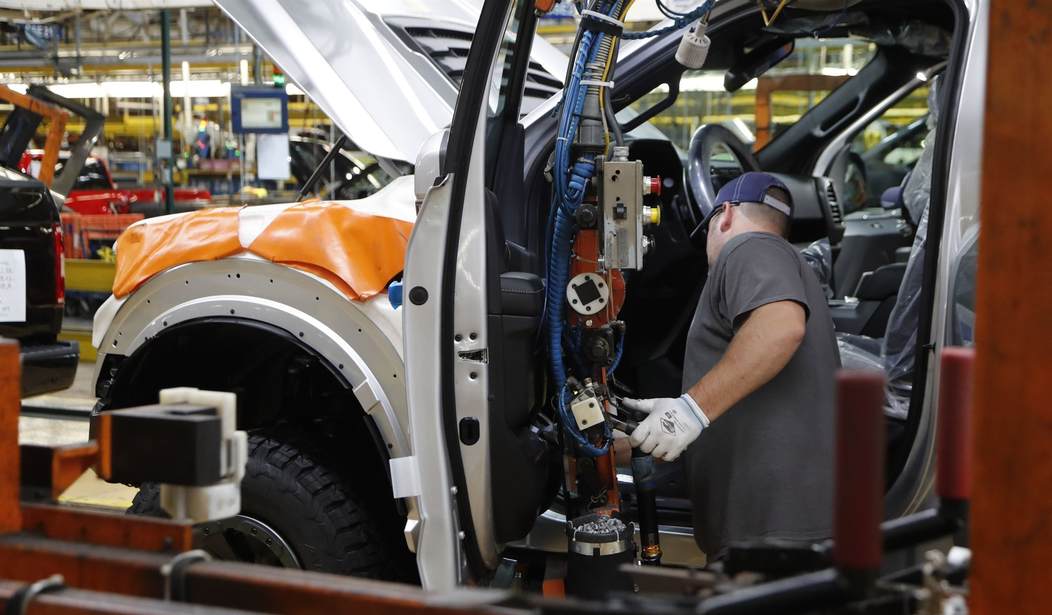
Yet for some on the American right, the idea has taken hold that the United States should withdraw from the world, become an autarky, and redirect foreign or military spending toward domestic needs -- as if global interconnectedness were an optional luxury. But the affordable goods, efficient supply chains and economic dynamism Americans enjoy are possible only because of robust international trade backed by U.S. economic and military strength.
Still, neither political flank has articulated a coherent strategy for dealing with China. On the left, there is a reluctance to acknowledge China as a serious threat. On the right, there is a resistance to the diplomatic, economic and military commitments required to counter Beijing effectively. Calls to slap tariffs not just on China but on allied nations ignore the strategic importance of deepening -- not weakening -- ties with partners in Asia and beyond.
To meet the China challenge, the United States must strengthen trade and security relationships with nations surrounding China: Japan, South Korea, Taiwan and India. Better ties with these countries can help contain Beijing's ambitions. If China insists on cheating or pursuing mercantilist policies, let it. History shows that autarky yields early gains but ultimately leads to inefficiency, stagnation and, often, expansionist aggression. Japan, South Korea and pre-WWII Germany all followed this pattern; Germany, in particular, turned to territorial conquest when its autarkic model collapsed.
Free trade, by contrast, reduces the need for expansionism. It allows nations to exchange resources instead of fighting for them. Thus, containing China requires the United States to reinforce its global economic network -- not dismantle it.
Part of that effort involves Europe. The United States should pressure European nations -- through targeted tariffs, if necessary -- to dismantle protectionist non-tariff barriers and pay their fair share, particularly in areas such as pharmaceutical costs. But ultimately, American policy must emphasize freer trade and stronger alliances. As Treasury Secretary Scott Bessent has argued, Washington needs both carrots and sticks for Beijing -- but mostly carrots for its friends.
America must also diversify its supply chains, reduce reliance on Chinese manufacturing, and cut off China's allies where possible. Supporting nations targeted by Russian aggression is essential -- not only to contain Moscow but because Russia and China increasingly coordinate their geopolitical strategies. Likewise, deepening trade and security ties with India can help pull New Delhi further from Beijing's orbit, particularly given the longstanding border disputes between the two.
Yet Washington continues to send critical technologies -- including advanced U.S.-produced microchips -- into China. Even if such transfers provide only marginal boosts to China's capabilities, it is difficult to justify strengthening a geopolitical adversary already stealing intellectual property, violating trade rules, and pressuring its neighbors.
China, for all its size, is not an unstoppable juggernaut. It faces a shrinking population, massive debt and extensive misallocation of resources. Its gleaming megaprojects obscure the waste and failure typical of centralized economic systems. Capitalism is messy, but it more reliably directs investment toward good ideas; mercantilist systems simply mask their failures until they can't.
The United States still has the tools to contain China and preserve a stable, free global order. The question -- looming larger each year -- is whether the United States still has the will to do it.
Ben Shapiro is a graduate of UCLA and Harvard Law School, host of "The Ben Shapiro Show," and co-founder of Daily Wire+. He is a three-time New York Times bestselling author. To find out more about Ben Shapiro and read features by other Creators Syndicate writers and cartoonists, visit the Creators Syndicate website at www.creators.com. COPYRIGHT 2025 CREATORS.COM
Editor’s Note: Do you enjoy Townhall’s conservative reporting that takes on the radical left and woke media? Support our work so that we can continue to bring you the truth.
Join Townhall VIP and use the promo code FIGHT to get 60% off your VIP membership!


Join the Conversation
VIP members get the ability to comment on articles.