





This week, I bought my wife a present for her birthday: a glass-blowing class. The teacher was, predictably, an eclectically artistic type in Los Angeles, and a down-the-line liberal. As with most conversations these days, the talk turned to President Trump. She quickly let me know her opinion of him (it wasn't high); she then turned to bashing Vice President Mike Pence and Senate Majority Leader Mitch McConnell.
Not once did she raise a policy consideration. Virtually every statement revolved around her personal characterization of political actors -- as good people, bad people or indifferent.
I don't think she's out of the mainstream.
There seem to be two main factors in the United States when it comes to voting. Neither has much to do with policy. The first factor is party identification: We tend to vote for the party that shares certain basic policy preferences. The second factor is personal likability of a candidate: We take into account whether we like a candidate or not. Now, these two factors are intertwined: If we like a particular candidate an awful lot, we're likely to identify more with the party of that candidate, and vice versa. This means that a milquetoast candidate's top support number will be the top support number of the party, since the party defines the candidate more than the candidate defines the party (e.g. Mitt Romney). Conversely, a bigger-than-life candidate whose personality seems untethered to the party can lift or drag down the entire party.
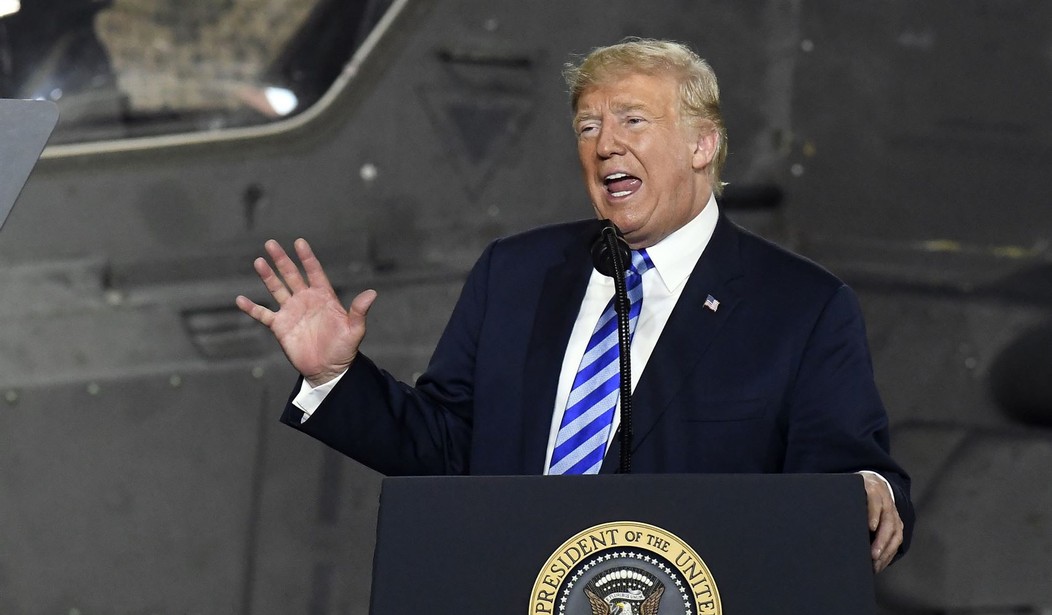
That's particularly true with Donald Trump. In today's political environment, your feelings about Trump actually have an impact on how people feel about you. Among many conservatives, your support for Trump marks you as a hard-nosed patriot; you're willing to go any distance to defeat the left. If you're among liberals and moderates, your support for Trump marks you as a scurrilous ne'er-do-well who's beneath contempt; you're willing to greenlight any vile behavior so long as you get what you want.
In red or blue districts, this may not matter. But in purple districts, it does. If you have friends on the other side of the aisle, it's uncomfortable to defend Trump's excesses and idiocies. That makes you less likely to openly support Trump, and less likely to support the Republican Party in congressional elections. Presidents who make it difficult to defend them depress turnout in swing districts.
All of which means that if President Trump truly cares about retaining Congress, he has to stop thinking about his base and start thinking about those in the competitive districts. How can he make their lives easier? That's not about policy. At the very least, it's about generating fewer headlines. Trump's base is rock-solid, and it's not going anywhere. But he needs more than his base to win in 2018 and 2020. And barring a personality change, that means minimizing the transaction costs of defending him for those who must show up to the polls.

Join the Conversation
VIP members get the ability to comment on articles.