





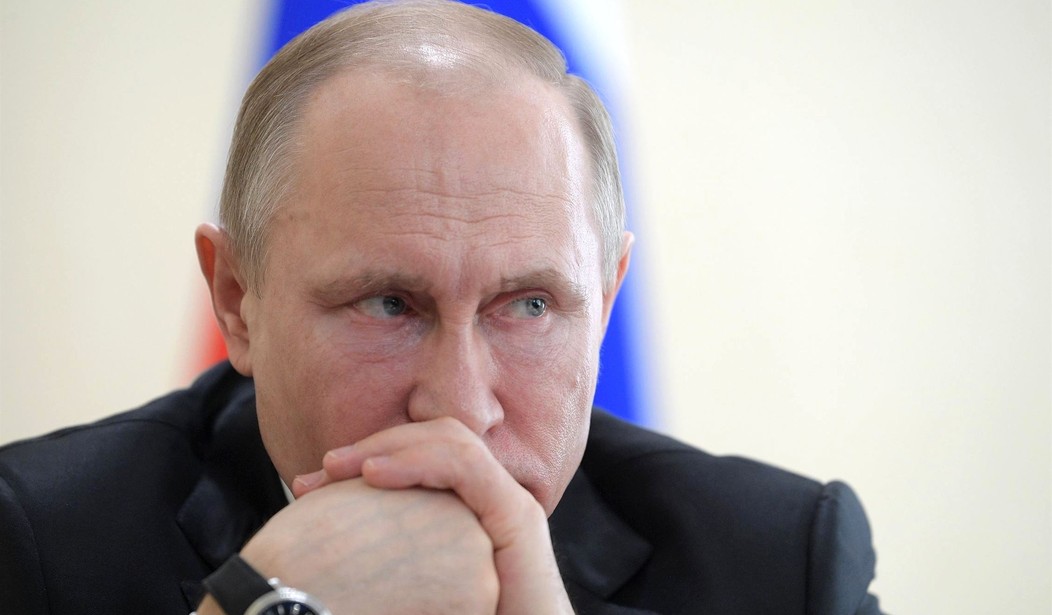
The Kremlin has what a psychological counselor might diagnose as a self-image problem. With the February 2014 Russian attack on Crimea and the March 2014 annexation of the Ukrainian peninsula, that self-image problem became a grave security threat to Europe and potentially the U.S.
Events in the last year confirm that, with Russia's creeping war of aggression in eastern Ukraine and the March 4 attempted assassination of a former Russian intelligence officer living in Britain, it was the most dangerous and the reckless for sensationalist media.
If a self-image problem sounds like a stretch, try deep resentment and anger spurred by the loss of power and international stature. I think those disturbing emotions are present in Russian President Vladimir Putin's April 2005 lament that the USSR's demise was the "greatest geopolitical catastrophe of the (20th) century."
Harsh historical comparisons to past Russian glory also shame today's Kremlin -- which Putin commands.
In their eras, Czarist Russia and the Soviet Union were Great Powers -- big shots with global sway. In 2018, however, Russia is no longer the terrifying Soviet Union with an iron grip on its eastern European and Central Asian empire, but an embittered remnant of that Cold War colossus. Putin's Russia has immense regional military power and its abundant natural resources (like oil) are economic leverage, but it also has a host of economic, demographic and institutional problems that possessing nuclear weapons and ICBMs won't mitigate or solve.
As a result, Russia lacks the global heft and respect of a genuine first-class Great Power.
Putin's Kremlin needs time to restore Russian primacy. Unfortunately, it has not chosen productive cooperation and economic integration with post-Cold War Europe and North America.
It has chosen a more belligerent and dangerous route to world power.
This week, the AP reported Secretary of Defense James Mattis told the Pentagon press pool that the March 4 attempted assassination of a former Russian intelligence officer living in Britain showed "Russia has chosen to be a strategic competitor, even to the point of reckless activity..."
Strategic competitor is one way to describe Russia's belligerent route to Great Power status. "Revisionist power" has its advocates, especially among those who value international law. During the 2012 presidential campaign, Republican candidate Mitt Romney described Russia as America's "chief geopolitical foe." President Barack Obama scoffed at Romney and called him a Cold War relic.
All three terms describe an active adversary, and an adversary that is often reckless. For the record, British foreign secretary Boris Johnson also described the March 4 attempted assassination as "reckless." The assassins used Novichok A-230, an "enhanced" nerve agent -- an illegal weapon of mass destruction. The use of a chemical weapon on British soil is one reason British Prime Minister Theresa May suggested the incident was an act of war.
When a Pentagon reporter asked Secretary of Defense Mattis if the assassination attempt was an act of war, Mattis replied it fit "a pattern" of Russian actions that the Kremlin appears to believe are plausibly deniable.
"Plausible deniability" is a key component of what some military analysts call "gray zone warfare." The gray zone warrior needs deniability in order to escape retribution for dirty and destructive operations.
"Gray zone warfare" really isn't new. It utilizes propaganda, crime, covert influence operations, political agitators, old-fashioned bribery and occasionally terror attacks and assassinations. Cyber agitation and cyber hacking are Information Age wrinkles.
Kremlin "political destabilization operations" throughout Europe and North America employ all of these techniques and more.
Czarist and Communist Russia both employed paranoid anti-Western propaganda themes. So does Putinist Russia. Russian state media and Internet trolls portray real or imagined American diplomatic or military moves as part of an anti-Russian plot.
The information stream of hate and anti-American vitriol is "agitation-propaganda operation" pursued by a "strategic foe."
Join the Conversation
VIP members get the ability to comment on articles.