






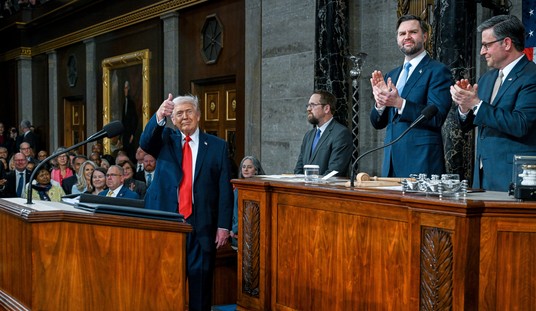
President Trump made it very clear in his State of the Union Address that he wanted to address the high cost of health care, including out-of-control drug prices. Well, what if the simple repeal of a law would generate both tens of billions of dollars in savings for the hospital supply chain (which includes the Medicare and Medicaid programs) while promoting free-market competition for the drug and medical supply marketplace at the same time? Does such an opportunity truly exist?
It does, and it starts and ends with repealing the Medicare Anti-Kickback Safe Harbor Statute, which would level the hospital supply chain playing field. Nearly all hospitals belong to group purchasing organizations (GPOs), which were originally created to leverage the combined purchasing power of multiple institutions. The first hospital GPO was founded in New York City in 1910 to reduce members’ costs by buying supplies in bulk. Hospitals paid dues to the GPOs to cover administrative expenses. The mission of the GPOs was clear: save money for their member hospitals, and for approximately 80 years this “co-op” model worked very well.
This practice began to change in 1987 after Congress enacted a Medicare kickback “safe harbor,” which exempted GPOs from criminal prosecution for taking kickbacks from healthcare suppliers. The safe harbor was implemented in 1991 allowing vendors, not hospitals, to pay GPO administrative expenses. The GPOs’ mission abruptly changed from reducing medical supply costs for hospitals to essentially becoming an agent of vendors.
Right now, hospital group purchasing organizations control buying for over $300 billion annually in hospital goods, including drugs, devices and supplies for about 5,000 acute care hospitals and many more outpatient clinics, surgery centers and long term care facilities.
Administrative fees, as defined by the safe harbor law, were to be limited to 3 percent of sales, but if they exceeded this amount, the GPOs were required to report these fees to their member hospitals. The Health and Human Services Inspector General has the authority to request administrative fee data from the GPOs, but unbelievably, there is no public evidence that they have done so.
Recommended
With virtually no oversight, a pay-to-play system emerged. Medical suppliers and drug manufacturers can simply purchase market share by paying exorbitant fees to GPOs in return for contracts that give their products exclusive access to GPO-member hospitals.
This conflict of interest was noted at a November 2017 Federal Trade Commission workshop on competition in the prescription drug marketplace. At the conference, Stephanie Trunk, an attorney with Arent Fox, a firm that represents the GPO trade group, said “The whole idea of the GPO safe harbor is that they are the purchasing agent of the members, and the members are the hospitals. And I do believe that being paid by the suppliers can create a conflict of interest for the GPOs with those members…”
Furthermore, government studies have shown that GPOs actually increase the costs of goods for their hospital members. In fact, a Senate Finance Committee report stated that empirical evidence is lacking to show the savings that GPOs purport to generate.
This system has also infiltrated prescription drug and device distribution. Pharmacy benefit managers (PBM) were created to administer drug benefits for health plans including commercial, employee and retiree plans and Medicare Part D. However, in 2003 the PBM industry secured safe harbor status for their business.
The safe harbor has unintentionally created a system where purchasing agents, and not clinicians, typically decide which drugs, medical devices and supplies physicians can use for their patients—decisions that are based largely on how much kickback revenue these products can generate for the GPOs and PBMs. A GPO industry publication has even acknowledged that hospital executives include the fees that GPOs “share back” with them as part of their overall compensation.
This system has also forced firms to cease making inexpensive generic drugs rather than produce them at a loss. Members of Congress have reached out to the Government Accountability Office in the past to question whether GPO practices have led to artificial drug shortages. Further, patients and healthcare workers are often denied access to safer and more cost-effective goods, from medications to implants, safety needles and countless other products.
Repealing the safe harbor provision would open the drug and medical supply segment of healthcare to free market competition and foster innovation. In addition, it would result in cost reductions estimated at $100 billion, including savings for the Medicare and Medicaid programs. These estimates were calculated through an analysis of government data, empirical studies, savings achieved from off-contract pricing, the effects of new competitive products, anti-competitive GPO contracting and pricing practices and anecdotal evidence gathered in part from interviews with former GPO executives.
Repeal of the safe harbor provision has resonated with physicians. In November 2017, the 36,269-member American College of Emergency Physicians (ACEP) formally adopted a resolution calling for the repeal of safe harbor for GPOs at their annual meeting in Washington, DC.
The benefits of repealing the safe harbor provision have drawn the attention of Congress, and debate is currently underway. If successful, this repeal could be used as a catalyst for the Trump Administration to fix our broken healthcare system, rid it of Obama-era inefficiencies and finally provide Americans with care that is responsive to their needs.
Andrew Mangione is Vice President at AMAC – the Association of Mature American Citizens, a senior’s organization that represents more than 1.3 million members and stands for fiscal responsibility.








Join the conversation as a VIP Member