





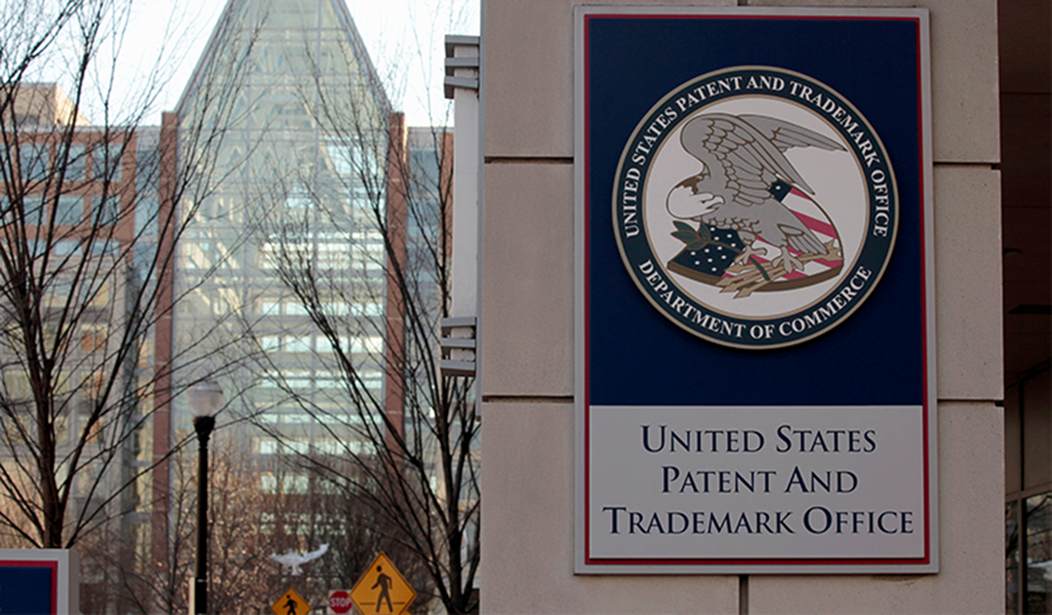
Patents are the grease of American business greatness.
During my doctoral work, I had several opportunities to fly with professors and lab mates to the National Synchrotron Light Source at Brookhaven National Laboratory (BNL). The facility is massive, and the energy of its X-rays was enormous. An experiment that would have taken 6-8 hours to run in Madison could be completed in 10 seconds at Brookhaven or a similar facility. One of my professors and I took the night shift, as the beam technically is available 24 hours a day, and slots are in great demand. So labs work around the clock when they are given time on the machine. Several times a day, the beam goes down as the energy of the circulating electrons is too low. They add electrons, speed them up with powerful magnets, and then announce that the facility is back in business. During one of these breaks in the wee hours of the morning, I wandered around to see what they had in the huge building. In one lonely room, I saw an old Van der Graaf generator that produced electrons, which were added to the beam. The device was small, sat on an old wooden table, and looked pretty ancient. I then realized that the entire massive facility was dependent on this little unit (and maybe others like it) to provide the electrons we all needed. In some ways, patents are like the generator: they are the small thing on which the entire edifice of modern business depends.
Patents are as American as apple pie, baseball, and Tomahawk missiles. None other than Thomas Jefferson helped author the early patent laws of the country. Patents themselves give no positive benefit; rather, they allow the holder to prevent others from either manufacturing or selling the patented item for the duration of the patent (generally 20 years). The U.S. Patent Office is overwhelmed with applications. Someone once told me that when he went to meet an Examiner to discuss an outstanding case, he saw piles of files a meter high on all sides of his desk. Patents are local, so one needs to file where he expects to produce or sell. As such, patents can be very expensive, as lawyer and office fees can balloon as you begin to file and translate all over the globe. Most patents are worthless, though some are bonanzas. A biotech firm had the patent on the key enzyme for PCR, you know, the method that was used to tell us all that we had COVID. Their patent lasted until a court invalidated it for the inventors' misleading the patent office. A patent has to relate to something new and not yet described. An existing patent or paper can torpedo a patent application like an iceberg to the Titanic.
Patents, in some ways, are like changing your kid’s diaper at three in the morning. On the one hand, it’s somewhat annoying, but on the other hand, it means that you have a child and that is wonderful. If you are writing a patent or hiring someone to do it for you, that means that you have passed the "Eureka!" moment in your efforts and are thinking about products and making money. Elon Musk patents a lot but makes it his business to make his patents available to others. He wants humanity to advance and is willing to forgo additional billions so that others can benefit from his companies’ inventions. How important are patents? If you have a newer Apple Watch, please run your “Blood Oxygen” app. After it finishes, it no longer shows the results as earlier models did. Rather, it directs you to your phone’s Health app. Why? Because Apple has been accused of trampling patents. Apple met the firm behind the technology and poached several executives. The firms sued and did well enough in court to prevent Apple from selling devices with the oxygen sensor. A compromise was reached in which watches could be sold in the U.S., but the app was removed so there was no way to access the feature. Eventually, Apple was allowed to provide the functionality, but you still can’t get the results on the watch. My old Apple Watch 6 works and gives me the numbers on the watch screen.
Patents have a language and method unto themselves. I have written about 160 patent applications for everything from diapers to nuclear energy. When I briefly worked for a local patent attorney, there was a pretty funny occurrence. When you file your patent application, you fix both the date and the content of the patent. The date is critical if you are competing with others. There were two groups that had found the gene related to breast cancer. They flew their guys to Washington in order to be “first to file” and thus have ownership of the patent space. The material in the patent application is nearly impossible to amend or modify. What you have claimed is what you get. So patent filings tend to be very broad, so that anything you might claim in the future is already present when you file. In the office, there was a case of a woman who had invented some mixture of chemicals. One could apply her mixture under the nose, and the pleasant smell of the chemicals would drown out horrible odors associated with dead bodies and other unpleasant conditions. In listing examples of sources of unpleasant smells, one entry was “mothers-in-law.” We all got a laugh out of that one, but the lawyer had to take the difficult route of formally requesting the removal of those words from the document.
Many countries demand translations into the local tongue for patent applications. Translation services tend to be very expensive, and they must be hyper-super-accurate, including with technical terms. You might notice that orthodox Jewish men often wear a garment that has tassels or strings hanging out. We won’t go into the details here, but the source is in Numbers 15. A friend showed me a patent related to such a garment. It was written in Hebrew, and the inventor had it translated into English for a U.S. filing. The translator translated the word “chutim,” which means strings, into “wires.” The guy might get the patent, but it would have no relationship whatsoever to his invention. He was furious when he learned of the mistake and threatened to sue the patent attorney who hired the translator.
We know that many countries, China being the biggest, ignore patents and, more broadly, intellectual property rights. The respect given to inventors in the U.S. and the ability for them to profit from their ideas and inventions are major drivers of American wealth. A lot of big companies get bigger by buying up smaller firms. Those smaller companies often revolve around a group of patents that one or a small group of inventors hold for some technology that is of great appeal to the big firm. Without patents, the trillion-dollar companies could simply steal whatever they wanted and leave the little guys in the dust. The story of Apple and the oxygen sensor is probably annoying for the iPhone maker, but it is a testimony to the power of intellectual property and it being guarded like physical property. Without inventors believing that they can profit off their efforts, there would be no innovation. There are people who watch for new patent filings from Apple and other big firms in order to get an idea of where future technologies are heading.
All of the above was written in light of my having to write a bunch of patents this week. I hope to keep up with this website, but if there are any lapses, your patience is greatly appreciated.


Join the Conversation
VIP members get the ability to comment on articles.